srael- Gaza conflict: Key factors and analysis
Nadia Pedro
Israel Extends Military Action to Rafah
The Israel-Gaza conflict continues to escalate inside Palestine and beyond borders, with recent developments showing Israel extending its military operations to Rafah.
On the other front line, Lebanon’s Hezbollah continues to exchange fire on the Southern border between Israel and Lebanon. Israel has since launched multiple long-range airstrikes on the Southern villages of Lebanon in response to Hezbollah’s attack on its villages on the Southern border. Hezbollah has since promised, its attack on Israel won’t stop until Israel’s ceasefire in Gaza.
Historical Roots of Israel-Palestine Conflict
The roots of this conflict run deep, with historical, political, and religious factors contributing to the longstanding animosity between Israel and the Gaza Strip.
The conflict traces its origins to the establishment of the State in 1948 and the subsequent Arab Israeli War, which led to the displacement of hundreds of thousands of Palestinians. The Gaza Strip, a small territory bordered by Egypt, has been a focal point of the conflict since Israel occupied it during the Six-Day War in 1967.
In 2005, Israel withdrew its settlers and military forces from Gaza, but it has since maintained control over the territory’s borders, airspace, and sea access. The Islamist group Hamas took control of Gaza in 2007 after winning Palestinian legislative elections and ousting rival faction Fatah in a violent takeover.
The latest escalation began with clashes between Gaza police and Palestinian protesters in Jerusalem, particularly around the Al-Aqsa Mosque, one of Islam’s holiest sites. Tensions further escalated due to planned evictions of Palestinian families from the Sheikh Jarrah neighborhood in East Jerusalem, leading to protests and clashes.
Civilian Casualties Mount as Israel Responds
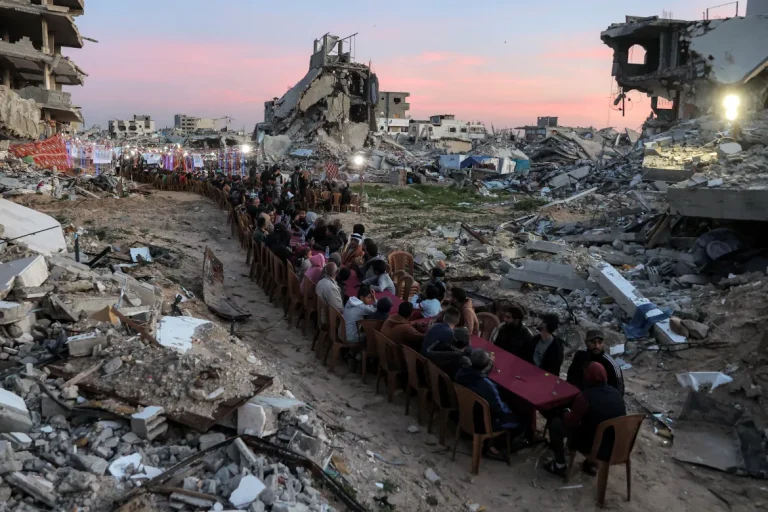
In response to the violence, Hamas fired rockets into Israeli territory, leading to retaliatory airstrikes by Israel targeting Hamas infrastructure and leaders in Gaza. The exchange of fire has resulted in civilian casualties on both sides, including children, and widespread destruction of property. The conflict has also sparked unrest in other parts of Gaza, with intercommunal violence erupting between Jewish and Arab communities. Additionally, there have been protests
and demonstrations in solidarity with Palestinians across the world, highlighting the international ramifications of the conflict.
The international community has called for an immediate ceasefire and urged both sides to de-escalate tensions to prevent further loss of life and suffering. Various countries and international organizations have expressed concern over the violence and called for a peaceful resolution to the conflict through dialogue and negotiations. Efforts to broker a ceasefire have been underway, with mediators engaging with both countries officials to reach a cessation of hostilities.
However, deep-rooted grievances and distrust between the two sides continue to pose significant obstacles to
achieving a lasting peace. The conflict remains a volatile and deeply entrenched issue with no easy solutions.
As the violence persists and civilian casualties mount, the urgent need for a negotiated settlement becomes increasingly evident. However, achieving lasting peace will require addressing the underlying causes of the conflict and addressing the legitimate grievances of both Israelis and Palestinians. Until then, the cycle of violence and suffering is likely to continue, with innocent civilians paying the heaviest price.
About the Author