imago0414874562h 1024x819 1
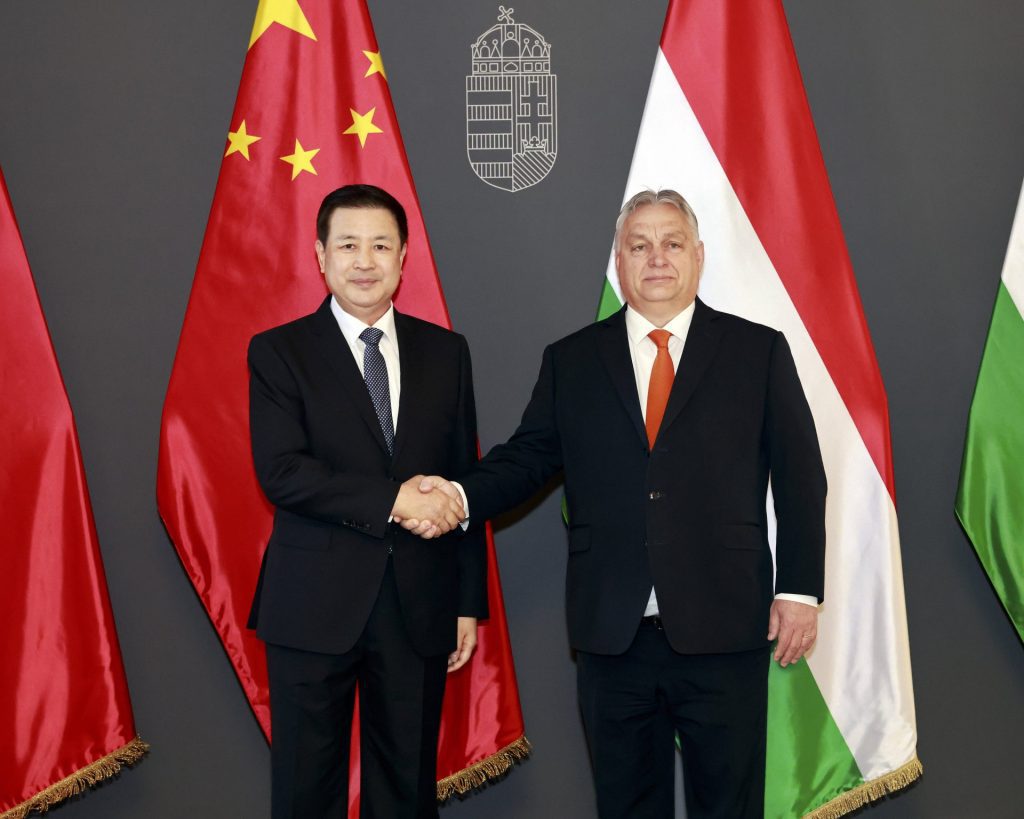
Picture courtesy: table. Media- In Beijing, Chinese Minister of Public Security Wang Xiaohong met with his Hungarian counterpart.
Nadia Pedro
In a move that could reshape geopolitical dynamics in Europe, China has extended an offer to deepen security cooperation with Hungary. The announcement, made following a meeting between Hungarian Prime Minister Viktor Orbán and China’s Minister of Public Security, Wang Xiaohong, signals a significant pivot towards Beijing at a time when Budapest’s relations with its traditional allies in the EU and NATO have soured.
Wang Xiaohong expressed China’s intention to bolster collaboration in counter terrorism, combating transnational crimes, and enhancing security and law enforcement capacity building under the Belt and Road Initiative. This move underscores Beijing’s strategy to integrate Hungary further into its geopolitical sphere and make security cooperation a cornerstone of bilateral relations. The timing of China’s offer is notable. Hungary, despite being a member of both the European Union and NATO, has been increasingly cosying up to Beijing while maintaining close ties with Moscow.
Prime Minister Orbán was notably the sole EU leader to attend a forum of the Belt and Road Initiative in Beijing last year, highlighting Budapest’s growing alignment with China’s strategic interests. Additionally, Hungary’s willingness to engage with Chinese investment, such as hosting the first European production factory of China’s electric vehicle manufacturer BYD, further underscores its pivot towards the East. The prospect of enhanced security cooperation with China comes as Hungary’s relationship with its Western allies reaches a nadir. Budapest’s decision to backtrack on its promise not to delay Sweden’s NATO accession has strained relations with its NATO partners.
The absence of senior Hungarian officials at the Munich Security Conference further underscores Budapest’s growing isolation in Western circles. While Hungary’s ties with the West deteriorate, Prime Minister Orbán’s recent declaration to ratify Sweden’s accession to NATO signals a potential shift in alignment. However, Orbán’s domestic political challenges, including protests and a presidential scandal, add complexity to Hungary’s foreign policy maneuvers. In a further illustration of Budapest’s shifting priorities, Hungarian officials declined to meet with a visiting bipartisan US congressional delegation in mid-February.
This move drew criticism from the US ambassador to Hungary, David Pressman, highlighting the widening gulf between Budapest and its traditional Western allies. Prime Minister Orbán’s public endorsement of former US President Donald Trump, coupled with his desire for Trump’s return to the White House to “make peace” in Eastern Europe, underscores Hungary’s divergence from the broader EU and NATO consensus.
As Hungary navigates its geopolitical allegiances, China’s offer to deepen security ties presents both opportunities and challenges, potentially reshaping the balance of power in Europe amidst evolving global dynamics.
About the Author