Vladmir Putin
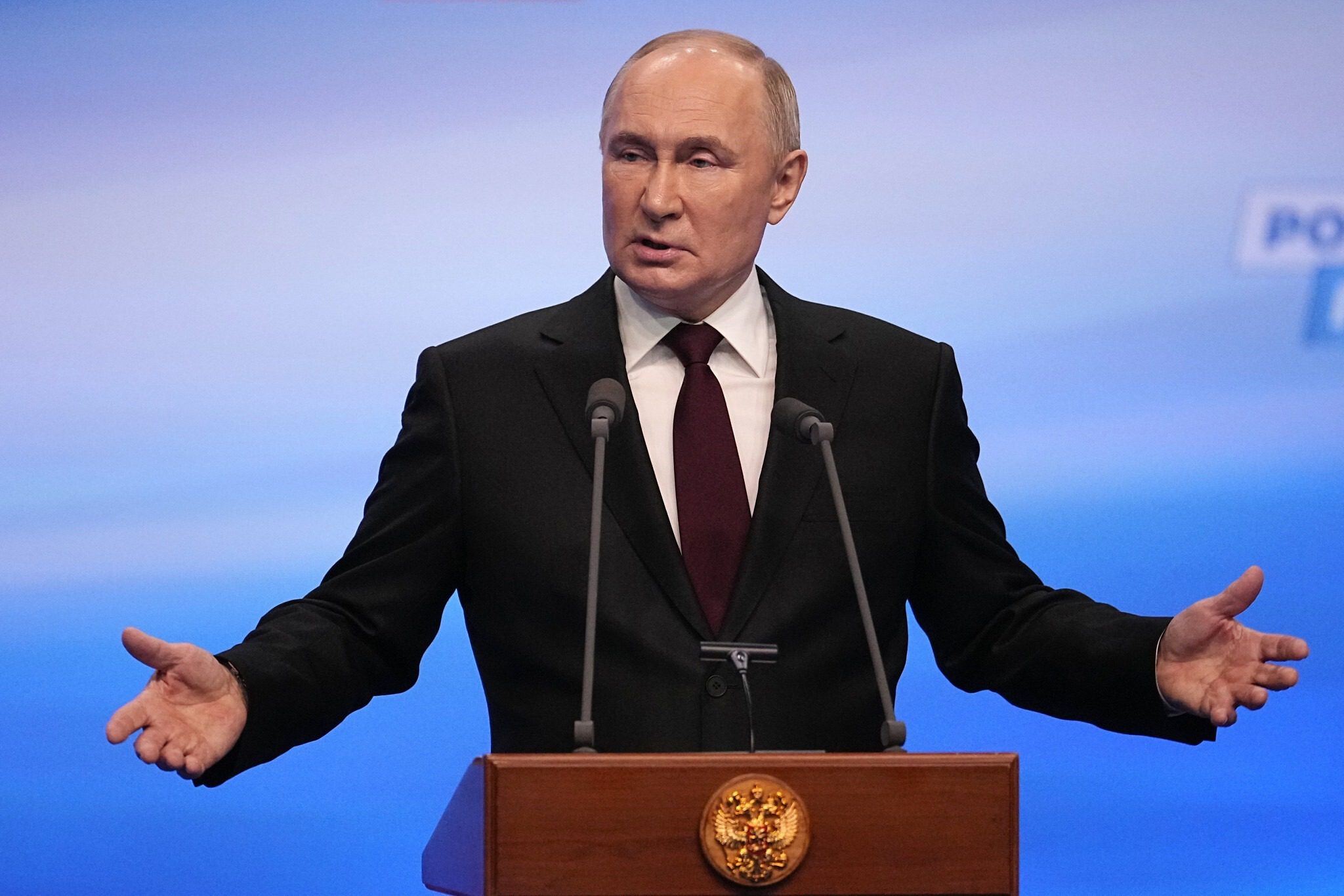
Russian President Vladimir Putin wins 2024 election- Image soured: AP/ Exander Zemlianichsko
Vladimir Putin’s electoral win has sparked a myriad of opinions regarding its legitimacy. Russia has once again embraced the 71-year-old as the country’s president for a fifth term, bringing him just one term away from surpassing Joseph Stalin as the longest-serving head of state. Putin’s unprecedented victory solidified his position, with him securing approximately 87% of the votes, followed by Nikolay Kharitonov, newcomer Vladislav Davankov, and Leonid Slutsky, respectively.
On Sunday, 17 March, thousands of protesters congregated at the polls to peacefully voice their dissent against Putin’s re-election. Dubbed the “noon against Putin,” demonstrators utilized various methods, including spoiling their ballot papers or voting for one of the three candidates opposing Putin.
Some protesters also honoured the memory of opposition leader Alexei Navalny, who passed away in February in an Arctic prison, by inscribing his name on the ballots. Congratulatory messages flooded in for the former KGB lieutenant from figures like the deputy chairperson of the Security Council, Dmitry Medvedev, and Russia’s allies, including China, Iran, and Venezuela, who regard Russia as “comprehensive strategic cooperative partners. “Nevertheless, certain states and unions expressed scepticism regarding the legitimacy of these elections.
A spokesperson for the White House Security Council cited Putin’s history of imprisoning political adversaries and contended that the elections were neither fair nor free. Josep Borrell, the EU Foreign Policy Chief, echoed sentiments from the USA, further asserting that these elections were “based on repression and intimidation.
“In a statement, Volodymyr Zelenskyy, president of Ukraine, characterized Putin as someone who would “stop at nothing to rule forever.” He emphasized, “There is no evil he would not do to maintain his personal power, and no one in the world would be safeguarded from this.
About the Author