IMG 20240420 WA0003
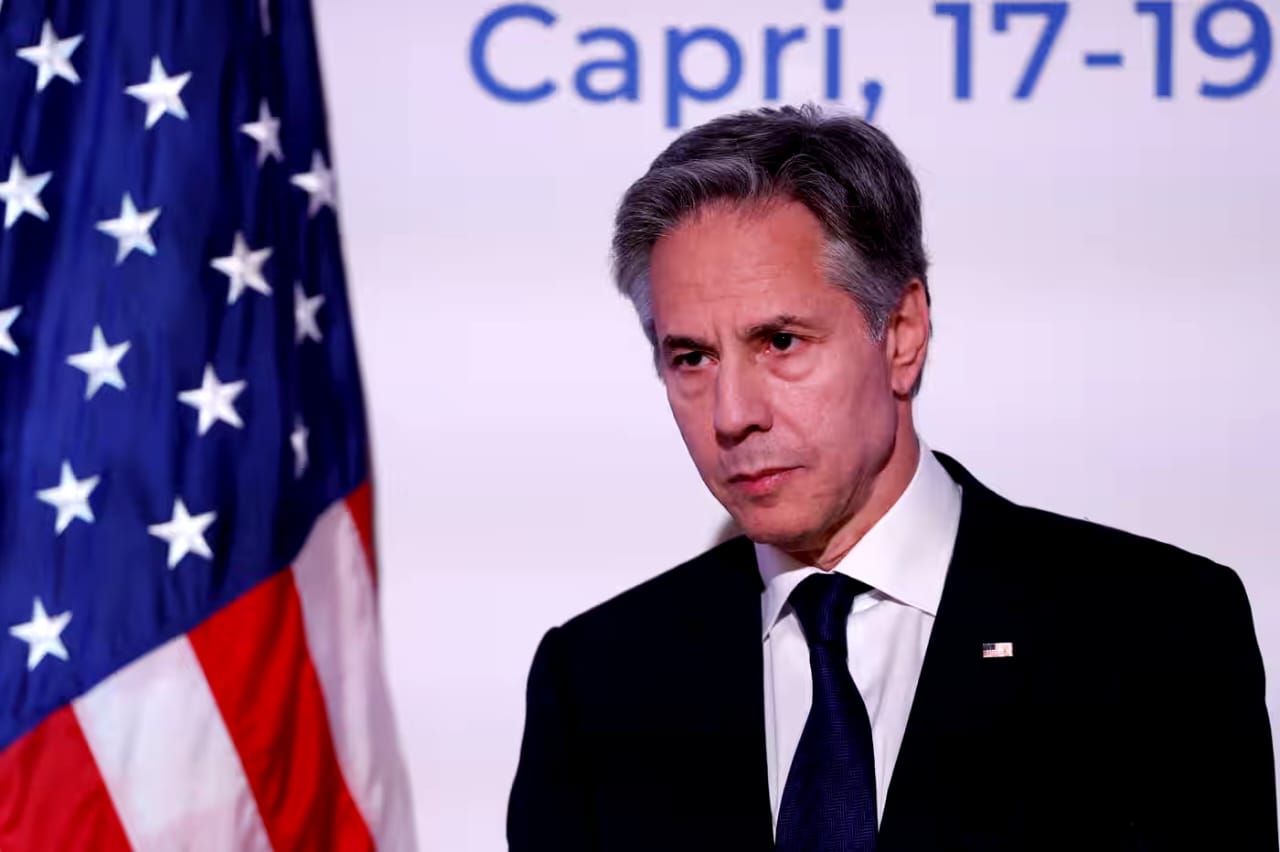
Picture courtesy: (Remo Casilli/ Reuters) US Secretary of State Antony Blinken walks a tightrope in the volatile Middle East, striving to prevent regional escalations. His mission: defuse conflicts, establish peace, and keep the world’s gaze fixed on stability.
Phetolo Sematha and Mavhungunekuvule Mungomeni
(The Post News)- US Secretary of State Antony Blinken walks a tightrope in the volatile Middle East, striving to prevent regional escalations. His mission: defuse conflicts, establish peace, and keep the world’s gaze fixed on stability
Antony Blinken warned of the dangers of regional escalations amidst growing tensions in the Middle East. As tensions simmer across the Middle East, the specter of a broader conflict looms large, drawing in neighboring nations and threatening stability. The warning comes as the capitals of Jerusalem, Washington, Beijing, Moscow, and Tehran remain silent on the issue, leaving the international community in suspense.
The roots of this crisis trace back to the October 7 killings perpetrated by Hamas in southern Israel. Earlier this year, the guardian reported that the aftermath of these attacks has cast a long shadow, with the risk of a wider conflagration growing steadily. While international attention has been focused on Israel’s relentless assault on Gaza, where the death toll has surpassed 22,000, according to Palestinian health authorities, other developments have intensified the danger.The US Secretary of State, Antony Blinken, addressed the media at a summit held in Capri, stating that the United States had not participated in the reported Israeli offensive against Iran.
He emphasized the US’s non-involvement by asserting, “The United States has not been involved in any offensive operations.” Blinken also called for immediate de-escalation. “The world cannot afford another conflict; we urge all parties to exercise restraint and engage in dialogue.” Reports indicate that an Israeli missile struck Iran overnight, targeting Isfahan Province. This region is home to a large airbase, a major missile production complex, and several nuclear facilities.
Iranian state media have cited unconfirmed reports of explosions in the central province, but they have downplayed the severity of the attack. The International Atomic Energy Agency (IAEA) has confirmed that Iran’s nuclear sites have not sustained any damage. The agency, through a statement on an unspecified platform, has been closely monitoring the situation and has urged all parties to exercise the utmost restraint, emphasizing that “nuclear facilities should never be a target in military conflicts.”Iranian officials have emphasized their capability to retaliate.
Tehran’s air defense system was activated above Isfahan, underscoring the seriousness of the situation. However, they have not confirmed any immediate plans for retaliation. The incident has left the world on edge, with fears that further escalations could plunge us into a global conflict.The silence from Jerusalem, Washington, Beijing, Moscow, and Tehran is deafening. These capitals are usually vocal about their positions, but their current silence has left analysts speculating about their next moves.
The situation is particularly tense in Jerusalem, where recent developments have sparked fears of a potential conflict. The city, which is of significant religious and strategic importance, has often been at the center of regional disputes.The recent events in the Middle East underscore the fragile state of regional security and the potential for escalation. Diplomatic efforts must be intensified to address underlying tensions and foster an atmosphere conducive to peaceful resolution.
The international community’s role in facilitating dialogue and supporting measures that build trust is crucial in this volatile context. As developments continue to unfold, it is imperative that all stakeholders exercise restraint and prioritize diplomatic channels to address their concerns and grievances.
About the Author