IMG 20240509 WA0020
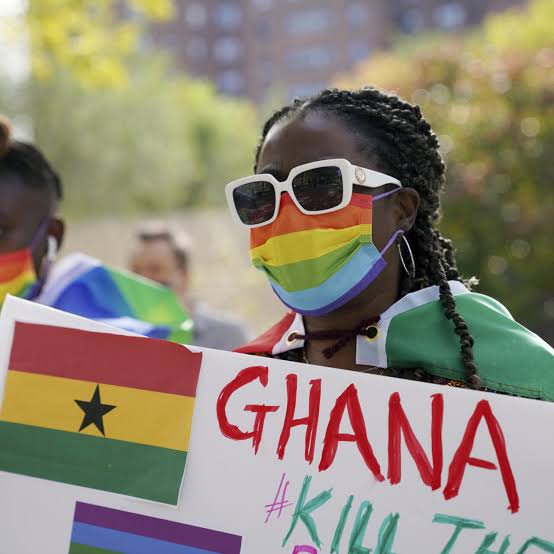
Picture courtesy: (RFI) Ghana is set to pass anti-LGBTQ bill, Ghanaians protest over this bill.
(The Post News)– In a drastic turn of events, the Supreme Court of Ghana has postponed the hearing on challenging the anti-LGBTQ+ law that was passed by parliament in February. The law aims to punish individuals identifying as homosexuals for up to three years in prison. Richard Dela Sky, a journalist and lawyer, was given the go-ahead by the court to contest the legislation that criminalises LGBTQ+ individuals.
The legal challenges are pressure from international human rights groups and local activists who have been campaigning for the bill to be declared unconstitutional. The majority of the public views this legislation as undermining fundamental human rights and freedom guaranteed by Ghana’s constitution. On Wednesday, the judge gave Dela Sky a week to file a fresh motion with more documents to challenge the bill, and the case will be moved to a later date.
The opposition to the bill expresses the potential harm it can cause, not only to the LGBTQ community but to Ghana’s civil society at large, while the supporters of the bill argue that it is necessary based on their family values and morals. Individuals who disagree with the bill worry that if it is passed, violence towards the LGBTQ community and allies will rise. Ghana’s attorney general pleaded for the court proceedings to be a live broadcast to allow more transparency, which is very uncommon for the Supreme Court to hold public hearings.
The last time the court held one was in 2020. “It is my respectful view that the transparency to be engendered by coverage of the proceedings would be in the best interest of the administration of justice,” said the attorney general. Until legal challenges against the bill are resolved and dealt with by Akufo-Addo, Ghana’s president will not sign it off. International criticism and concerns sparked, as did the finance ministry in Ghana, which highlighted the risk of losing billions of dollars in World Bank funding.
According to the ILGA (International Lesbian, Gay, Bisexual, Trans, and Intersex Association), about thirty African countries ban and criminalise homosexuality. The results of this case could have a far-reaching impact extending beyond Ghanaian borders, influencing legislative approaches towards LGBTQ rights across other countries in Africa that are facing similar situations.
Chief Justice Gertrude Torkorno adjourned the court on Wednesday, stating that the amendments should be filed by May 17. As uncertainty amongst all parties involved leaves national and global observers anticipating Ghana’s next step in this case, many still wonder about the implications for human rights in Ghana if the bill passes into law.
About the Author