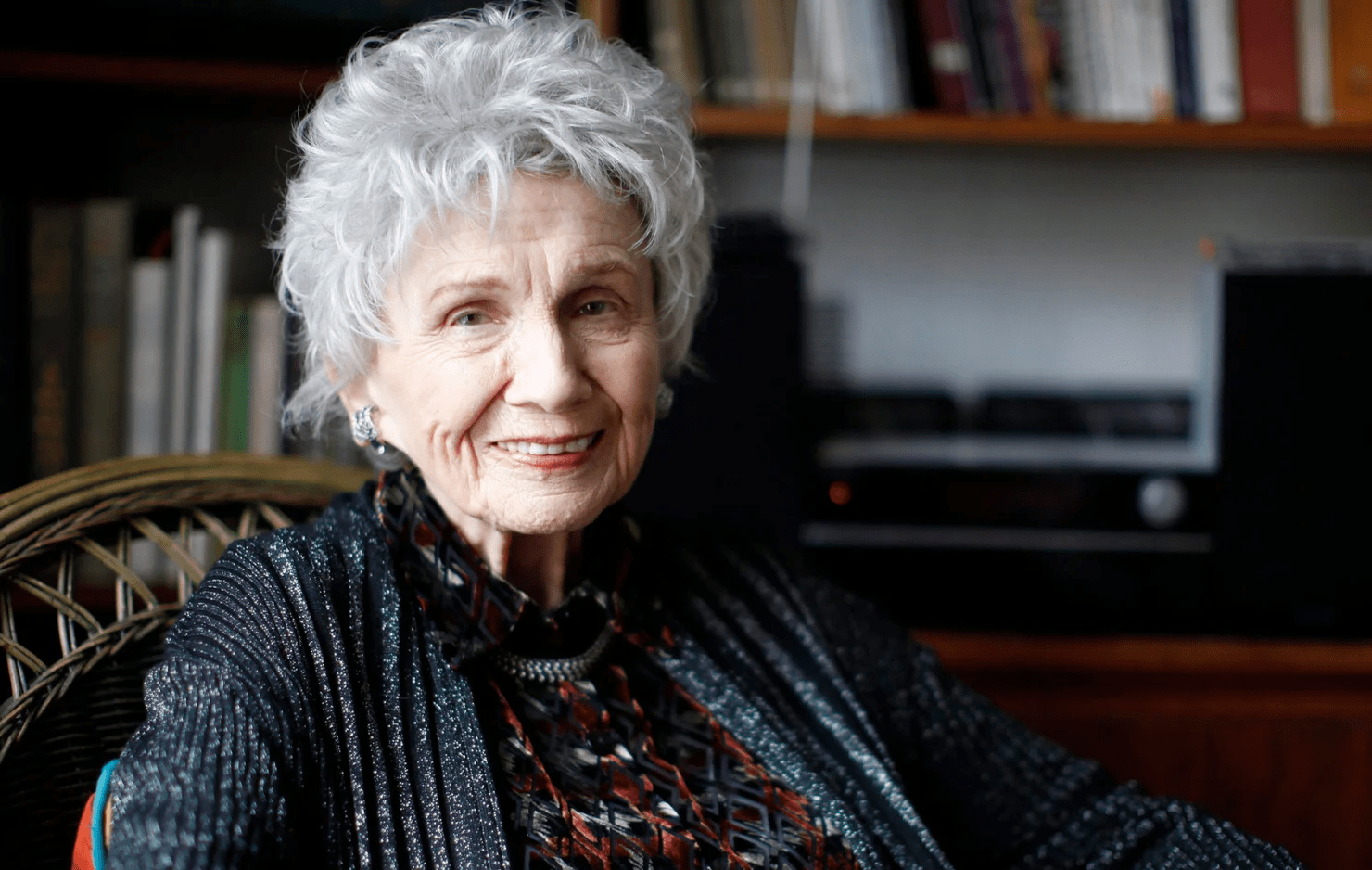
image Chad
Picture courtesy: (Chad Hipolito/AP)
Munro’s journey began on the rugged landscapes of a fox and mink farm in Wingham, Ontario, in 1931. Despite the harsh realities of farm life, she found solace and escape within the pages of books, igniting a lifelong passion for literature. Munro often expressed her deep affection for storytelling, hoping to share its transformative power with others.
Graduating as valedictorian in 1949, she got a scholarship to the University of Western Ontario. At first, she studied journalism but later switched to English. Money was tight, so she had to work many jobs while studying, like picking tobacco and doing secretarial work. But through it all, Munro never lost sight of her dream to become a writer.
Following her marriage to fellow student James Munro, the couple embarked on a literary journey together, navigating the complexities of raising a family while nurturing their creative ambitions. Despite facing personal tragedy with the loss of their daughter Catherine, Munro remained steadfast in her pursuit of literary excellence.
Their relocation to Victoria in 1963 further immersed them in the vibrant literary community with the opening of a bookstore.Her breakthrough came in 1968 with the publication of her debut collection, “Dance of the Happy Shades,” a work that garnered critical acclaim and earned her Canada’s prestigious Governor General’s Award for Fiction.
Through her semi-autobiographical tales, she skillfully delved into themes of self-discovery, love, and independence against the backdrop of rural life, captivating readers with her keen insights into the human condition. Over her illustrious career, Munro penned 14 collections of short stories, leaving an indelible mark on the literary landscape.
Her narratives transcended the page, inspiring acclaimed cinematic adaptations such as the Oscar-nominated “Away from Her” and the Oscar-winning “Boys and Girls.” she literary prowess earned her admiration and accolades from peers and critics alike. Revered as an “international literary saint” by Margaret Atwood and hailed as “our Chekhov” by James Wood, Munro’s impact resonated far and wide. Her 2013 Nobel Prize in Literature cemented her legacy as a masterful storyteller, praised for her unparalleled ability to capture the essence of the human experience.
The Nobel Committee lauded Munro’s profound influence on readers worldwide, acknowledging her unparalleled skill in crafting modern short stories. While her earthly journey may have reached its end, Munro’s legacy endures through her timeless tales, each capable of stirring hearts and prompting introspection. “I want my stories to move people,” Munro once declared a sentiment that echoes profoundly among all who have been touched by her literary brilliance.
About the Author