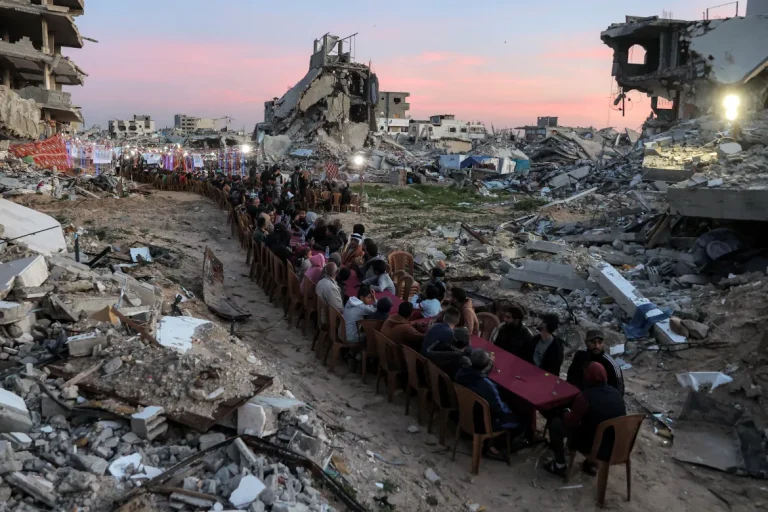
Mediators navigate complex web of demands and counter-demands in pursuit of peace. Image: (EPA)
(The Post News)- In the Qatari capital of Doha, a high-stakes diplomatic endeavor has unfolded, seeking to bring an end to the protracted Gaza conflict. The talks, facilitated by the United States, Qatar, and Egypt, have been marked by intense negotiations and subtle shifts in position.
At the heart of the discussions lies a complex matrix of demands and counter-demands, with each party seeking to secure key concessions. Hamas, while not directly engaged in the talks, has voiced criticism of Israel’s purported introduction of new demands, which have seemingly altered the contours of a previously agreed-upon proposal.
Conversely, Israeli Prime Minister Benjamin Netanyahu has emphasized the imperative of military control over the Gaza-Egypt border, citing the need to prevent arms smuggling. This stance has been met with resistance from Hamas, leading to a cycle of recriminations and delays.
Undeterred, the mediators have persevered, seeking to bridge the gaps between the parties. A revised proposal, building upon the initial plan presented by U.S. President Joe Biden, has been introduced, with the aim of addressing outstanding issues.
While progress has been acknowledged, the path forward remains fraught with challenges. The White House has underscored the need for further effort to finalize the agreement, as the talks are set to resume in Cairo next week.
In this delicate dance of diplomacy, the stakes are high, and the margin for error is slim. Yet, amidst the complexities and competing demands, a glimmer of hope persists. The pursuit of peace, though arduous, remains the guiding principle, driving the mediators forward in their quest for a lasting resolution.
About the Author