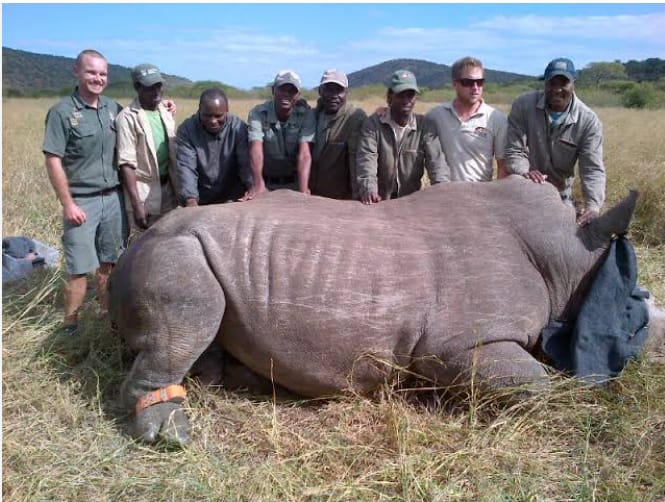
Large-scale dehorning operation implemented to reduce poaching in KwaZulu-Natal, South Africa. Image: Wildlife ACT
(The Post News)- Escalating rhino poaching crisis in KwaZulu-Natal, the Somkhanda Game Reserve has completed a large-scale dehorning operation. This drastic measure aims to reduce the incentive for poachers by lowering the value of a rhino’s horn. The operation, funded by the Rhino Recovery Fund, was supported by key conservation organizations, including Wildlife ACT, Ezemvelo KZN Wildlife, and African Wildlife Vets.
The reserve, known for being the first community-owned game reserve to introduce a black population under the WWF’s Black Rhino Range Expansion Project (BRREP) in 2007, has faced increasing pressure from poachers. With almost 325 rhinos lost to poaching in KZN in 2023, the reserve has intensified its counter-poaching measures, including the dehorning operation.
Managing director of Somkhanda, Meiring Prinsloo, expressed gratitude to the Rhino Recovery Fund and Wildlife ACT for their support, which has aided the reserve in its mission to safeguard its rhino and other wildlife. Despite controversy surrounding dehorning, it has been established as a preventative measure to reduce the incentive for poachers.
The procedure was carried out by experienced veterinarians under sedation, ensuring the rhinos’ safety and well-being. Conservation coordinator at Wildlife ACT, Chris du Toit, highlighted the importance of intensive on-the-ground monitoring, combined with technology such as tracking devices, to gather vital information and make informed management decisions.
The reserve has integrated advanced tracking technologies, including a solar-powered LoRaWAN system, to enhance coverage across areas with high rhino densities. This allows conservation teams to monitor rhinos remotely and respond rapidly to possible threats.
About the Author