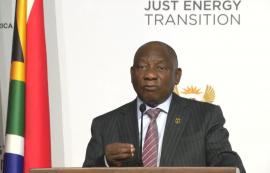
Ramaphosa addressing the just transition, revealing municipalities must lend a helping hand as well.
(The Post News)- On Monday, President Cyril Ramaphosa said that the national effort against must not come at a higher cost for electricity users. Ramaphosa said in a keynote address to open the inaugural municipal just energy transition conference in Midrand that South African households, like many around the world, are battling and reeling from the rising cost of living, he further continues that it has to be ensured that the just transition does not contribute to energy poverty, in order that it does not deepen the inequality that is so rife and a part of the lives of South Africans.
The President has taken note that while free basic electricity subsidy for indigent households is one of the most important policies the government has implemented to tackle poverty, unfortunately it is not being used to good effect in a few municipalities, therefore it will be important to sustain and expand this support during the just energy transition and ensure that many poor households benefit from the subsidy.
According to Ramaphosa, electricity generated from fossil fuels accounts for most of the country’s carbon emissions because industry is still mainly reliant on power that is produced by Eskom’s coal-fired power stations, therefire it makes the country carbon-intensive. He adds that with the world changing, the country’s reliance on fossil fuels to industrialise poses a significant risk for South Africa, if the just transition isn’t driven in appropriate ways to local and national circumstances.
With South Africa being a signatory to the Paris Agreement, it is committed to contributing its fair share to the global change effort.The Integrated Resource Plan has set out a viable energy mix over the medium and long term to achieve decarbonisation objectives and has since attracted more than R200 billion in investment, adding a much-needed capacity to the electricity grid according to Ramaphosa.
Central efforts to decarbonise the energy sector are municipalities as they own and operate about half of the state’s electricity distribution grid, also facilitating universal access to electricity, which also makes them responsible for addressing the electrification backlog.
With Ramaphosa signing the Electricity Regulation Amendment Act into law, it has paved way for a new and competitive electricity market. He adds that transition to a low-carbon, climate-resilient economy and society must take the needs and interests of people affected into account.
About the Author