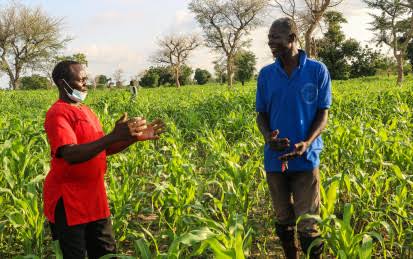
A crippling drought in Northern Cameroon has left farmers reeling, threatening food security and livelihoods in a region already vulnerable to climate change and economic hardship. Image: Situation Reports – OCHA
(The Post News)- In the parched fields of Northern Cameroon, the usually resilient farmers are facing an unprecedented crisis. The seasonal rains that nourish their crops have vanished, leaving behind a trail of withered dreams and uncertain futures.
Dandy Emma, a seasoned farmer, surveys his barren maize and millet fields with a mix of despair and desperation. The eight hectares of land, once a testament to his hard work and dedication, now lie dormant and still, like a canvas stripped of its vibrancy.
“The rain, it’s like a distant memory,” Emma laments, his voice cracking with concern. “Last year, I harvested enough to feed my family and sell at the market. This year, the crops are dying, and I fear for our survival.”
The drought’s impact is far-reaching, with cotton farmers like Emma’s neighbor, struggling to contain the damage. Caterpillars, emboldened by the dry conditions, devour the precious crop, leaving behind a trail of destruction.
As the situation grows more dire, the community turns to their faith, organizing fasting sessions to pray for the return of the rains. The usually stoic farmers, worn down by the relentless sun and dry earth, plead for relief.
Yinda Martial, a local weather expert, offers a grim explanation for the drought. “Climate change and a high-pressure system have conspired against us,” he says, his voice laced with concern. “The rain clouds, they just aren’t forming.”
The consequences of the drought are far-reaching, with cereal prices skyrocketing on local markets. The dry season, once a manageable challenge, has morphed into a monster, threatening to consume the very fabric of the community.
As the farmers wait and hope for a change in the weather patterns, their stories serve as a poignant reminder of the human cost of climate change. In Northern Cameroon, the drought has become a harbinger of uncertainty, a constant reminder that the land, once a source of sustenance and pride, can quickly turn against those who depend on it.
About the Author