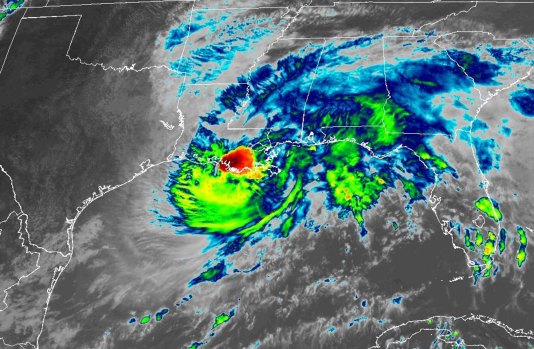
Hurricane Francine forces residents of Louisiana to bunker down. Image: Orlando Sentinel
(The Post News)- Hurricane Francine hit Louisiana on Wednesday with potential for life-threatening flooding and storm surge as the residents of the southern US state were advised to hunker down indoors. Forecasters said the storm weakened as it moved over land, but was still causing flooding, power outages and heavy rain and wind, issuing a flash flood emergency for the city of New Orleans.
According to the National Hurricane Center (NHC), Francine made landfall as a Category 2 hurricane on a five-level scale in Terrebonne Parish on the southern edge of the state at 5pm local time. The storm was downgraded to Category 1 two hours later, sustaining winds of 140 kilometres per hour and could bring up to three metres of storm surge and a foot of rain in some parts of Louisiana.
The NHC said life-threatening storm surge, hurricane-force winds and heavy rains continue to affect southern Louisiana. With the National Weather Service’s New Orleans office having issued a flash flood emergency for the city and nearby districts, LaToya Cantrell, Mayor of New Orleans urges residents to shelter in place.
The NHC said the storm is expected to weaken quickly as it moves inland over Louisiana and neighbouring Mississippi. Jeff Landry, Louisiana Governor declared a state of emergency, and a federal emergency declaration was requested from Joe Biden, which was approved quickly.
The Louisiana National Guard said that its soldiers were fuelling up vehicles in preparation for the storm, and said on Tuesday it was mobilising helicopters, boats and supplies for evacuations and search and rescue.
Curfews were issued for communities across the Louisiana capital region, starting as early as 6pm.
The 2024 Atlantic hurricane season, having commenced on the first of June and will end on the 30th of November was expected to be busy, but so far only three hurricanes have been reported, which leaves scientists puzzled.
Scientists say climate change has a possible influence in the rapid intensification of storms because there is more energy in a warmer ocean for them to feed on.
About the Author