Berlin’s cautious approach sparks debate as Western powers consider allowing Kyiv more freedom to use advanced weapons, while Russia warns of dire consequences. Image AFP
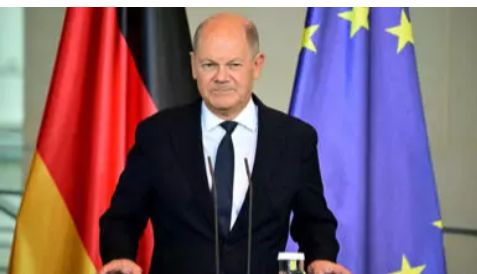
(The Post News)- German Chancellor Olaf Scholz has reaffirmed his country’s stance on not providing Ukraine with long-range missiles, despite growing pressure from Western allies and Kyiv’s increasing demands for more advanced weaponry. This decision has sparked a heated debate about Germany’s role in the ongoing conflict and its implications for European security.
Scholz’s unwavering position was made clear during a press conference, where he stated, “Germany has made a clear decision about what we will do and what we will not do. This decision will not change.” This statement comes as the leaders of the United States and Britain convene in Washington to discuss the possibility of granting Ukraine permission to fire Western-provided long-range missiles into Russia.
The German government’s reluctance to supply Ukraine with long-range Taurus missiles stems from concerns about escalating the conflict with Russia. This cautious approach has been met with criticism from some quarters, who argue that Berlin’s stance undermines Ukraine’s ability to defend itself against Russian aggression.
In contrast, the United States and Britain have provided Ukraine with ATACMS and Storm Shadow long-range missiles, respectively. German Defence Minister Boris Pistorius acknowledged that the decisions made by these countries “remain their business,” but emphasized that allowing Ukraine to strike targets in Russia would be “fully in line with international law.”
Germany’s contribution to military aid in Ukraine has been significant, making it the second-largest donor after the United States. However, plans to halve the budget for this aid next year have raised concerns about Berlin’s commitment to supporting Kyiv.
Domestic pressure has been mounting on Scholz’s government, with opposition parties gaining ground in recent regional elections. Despite this, the government remains resolute in its support for Ukraine, stating that it is “fully committed” to assisting Kyiv “for as long as necessary.”
As tensions continue to escalate, the international community remains divided on the best course of action. Russia’s warning that providing Ukraine with long-range missiles would mean NATO is “at war” with Moscow has only added to the complexity of the situation.
About the Author