(The Post News)- This week, the Pacific Northwest has encountered a storm of heavy rain, snow, and strong winds, bringing dangerous conditions. It has been predicted that by Friday, about 16 inches of rain are expected in Northern California. This kind of storm is known as an atmospheric river, a long, narrow strip heavy with moisture that flows into the mountains of the West Coast and releases large amounts of rain.
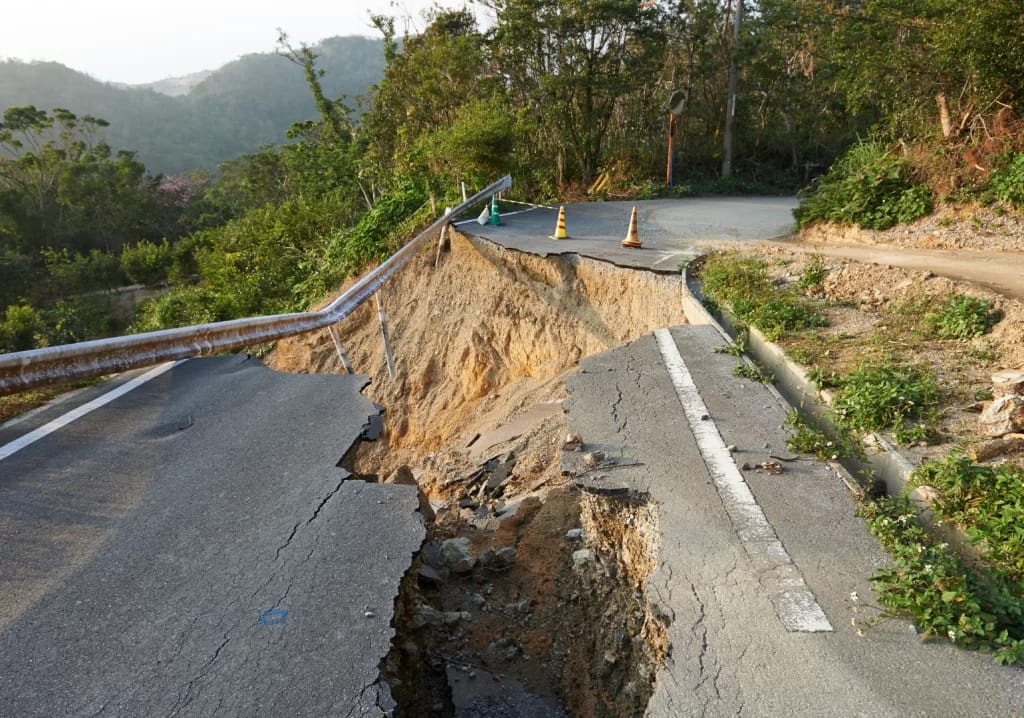
According to experts, scientists have not yet concluded whether atmospheric rivers are increasing due to climate change. A warmer atmosphere, caused by burning fossil fuels, has the potential to hold more moisture, possibly leading to extreme rain events. This increase in extreme rain events has the potential to cause more landslides.
Debris flows, fast-moving landslides composed of mud and rocks, are most likely to occur in areas recently and severely burned, such as regions affected by wildfires. The July Park Fire, California’s fourth-largest fire on record, occurred in an area that could receive up to 12 inches of rain and remains under a flood watch until Saturday morning, according to the National Weather Service.
About a dozen small landslides, including one that resulted in a car wreck, have been reported in Northern California so far. According to landslide expert Dr. Dave Petley, who collects global landslide data for the American Geophysical Union, 2024 has so far broken all records for landslide occurrences, with over 679 landslides claiming 4,460 lives across the globe.
Based on new data from the United States Geological Survey, it indicates that 44% of the U.S. is prone to landslide risk, a kind of risk that increases in mountainous regions with steep slopes and narrow valleys, particularly in the Appalachian Mountains, Rocky Mountains, the Pacific Coast, and parts of Alaska, Hawaii, and Puerto Rico.
The Pacific Northwest has already faced its first atmospheric river of the season. Alaska Senator Lisa Murkowski and California Senator Alex Padilla have introduced a bill to improve forecasting of atmospheric rivers, which could assist in reducing flood risks and bolstering emergency preparedness.
This announcement came a year after a landslide in Wrangell, Alaska, linked to an atmospheric river, took the lives of six people, including three children.
About the Author