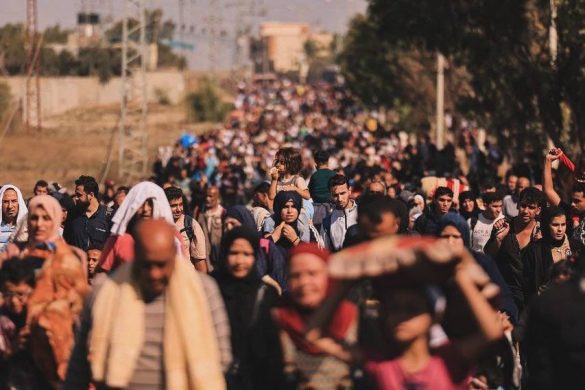
Palestinians fleeing from northern Gaza to the Southern/Humanitarian areas. Image: Carthage Magazine
(The Post News)- Former Israeli Defense Minister Moshe Ya’alon has ignited a political firestorm by accusing Israel of conducting ethnic cleansing of Palestinians in northern Gaza. The remarks, in an interview with Israel’s Democrat TV, have drawn sharp criticism and intensified debate over Israel’s ongoing military operations in the region.
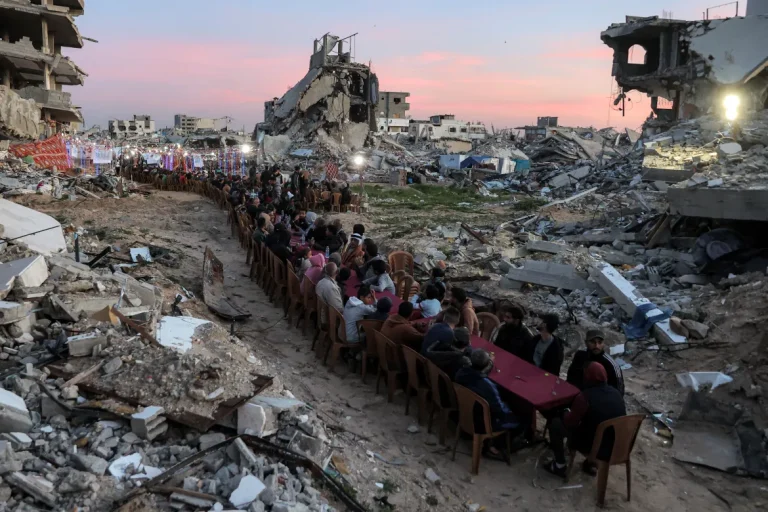
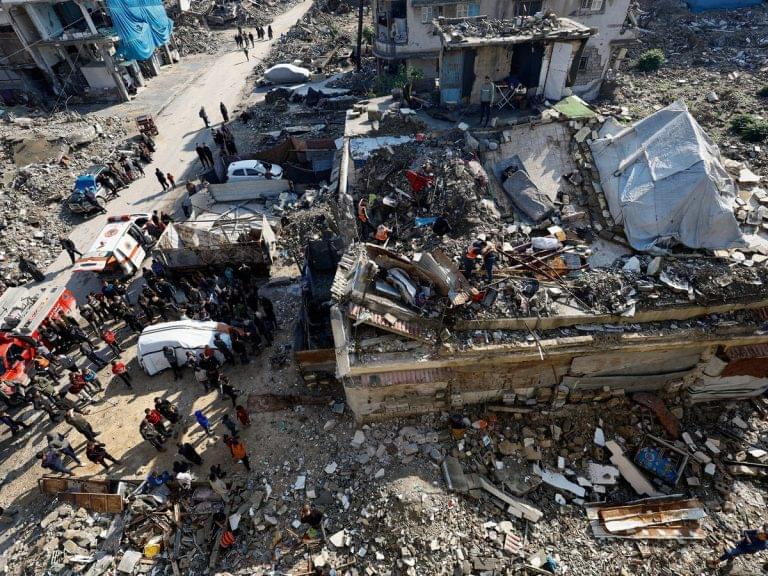
Ya’alon, a decorated veteran of the Israel Defense Forces (IDF) who once served as the military’s chief of staff, expressed grave concerns about Israel’s current trajectory. “Conquering, annexing, ethnic cleansing—look at northern Gaza,” he said. When the interviewer pressed him on the use of the term “ethnic cleansing,” Ya’alon stood firm, citing the destruction of towns like Beit Lahia and Beit Hanoun and ongoing operations in Jabalya. “They’re essentially cleaning the area of Arabs,” he asserted.
The IDF has been carrying out a sustained and deadly military campaign in northern Gaza for the past two months, aimed at eliminating Hamas militants. The military has ordered civilians to evacuate to the south for their safety, but thousands have resisted, citing previous strikes on so-called safe zones. Aid deliveries to northern Gaza have been sparse, with the World Food Programme reporting a critical shortage of supplies.
In response to Ya’alon’s allegations, the Israeli military denied any intent to commit ethnic cleansing, emphasizing that operations are conducted in “accordance with international law” and that evacuations are necessary for civilian protection. The government has not outlined a plan for post-war governance in Gaza but has rejected proposals such as the “surrender or starve” strategy suggested by retired general Giora Eiland.
Ya’alon’s critique extended beyond military operations. He lamented what he perceives as Israel’s transformation from a liberal democracy into a “corrupt and leprous fascist Messianic state.” He later clarified on Channel 12 that his choice of words was deliberate, intended to “ring the alarm bells” about the direction of Israeli policy and governance.
The former defense minister’s remarks have found resonance among critics of the government’s actions in Gaza. Human Rights Watch recently accused Israel of orchestrating the mass displacement of Palestinians, describing it as a war crime in a 154-page report. Similarly, European Union foreign policy chief Josep Borrell and others have pointed to the growing use of the term “ethnic cleansing” in international discourse regarding northern Gaza. Israeli newspaper Haaretz published an editorial titled, “If it looks like ethnic cleansing, it probably is.”
The International Criminal Court has also issued arrest warrants for Israeli Prime Minister Benjamin Netanyahu and former Defense Minister Yoav Gallant, citing allegations of war crimes, including “starvation as a method of warfare” and other crimes against humanity.
Extremist factions within Israeli politics have advocated for renewed Jewish settlement in Gaza, a contentious proposal since Israel’s unilateral withdrawal in 2005. At an October conference near the Gaza border, far-right Finance Minister Bezalel Smotrich called for establishing “a flourishing Jewish settlement” in Gaza, framing it as both a biblical mandate and a security imperative.
Ya’alon argued that while military leaders might view their actions as operationally necessary, the intentions of certain political figures are clear. “The intention of Smotrich, National Security Minister Ben Gvir, and others is an open and declared one,” he said.
Ya’alon’s comments have drawn fierce criticism from his former military peers and government officials. Benny Gantz, another former IDF chief of staff, accused Ya’alon of undermining the state and its military. According to Gantz It is lawlessness to lie and hurt the State of Israel and the IDF; this is not moral behavior. Naftali Bennett, a former prime minister, defended the IDF’s actions, asserting that civilian evacuations are conducted to ensure safety.
Despite the backlash, Ya’alon has refused to back down. “The IDF is not the most moral army today,” he said, challenging a long-standing narrative. The controversy underscores deepening divisions within Israeli society over the Gaza conflict and its broader implications for the country’s identity and values. Ya’alon’s stark warnings have amplified calls for accountability and transparency as the war in Gaza continues.
About the Author