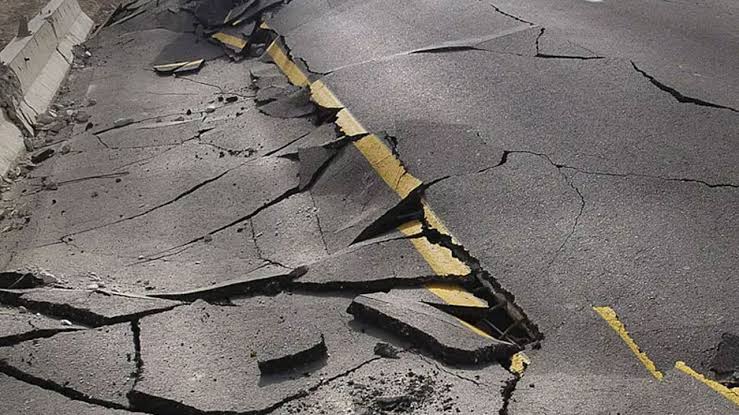
(The post News)- Last night, a strong ground tremor was felt across a vast area of Johannesburg at around quarter to nine PM. Fortunately, there were no reported injuries or damage to infrastructure, as confirmed by Robert Mulaudzi, spokesperson for the city of Johannesburg’s emergency management regarding natural disasters.
Mulaudzi emphasized, “No injuries or damage were reported through our emergency services call center overnight and this morning. We urge residents to remain vigilant and prioritize their safety.” The regions most affected included Soweto, Roodepoort, and nearby areas.
According to the South African National Seismograph Network, the Council for Geoscience has calibrated the earthquake at an amplitude of 3.1. The geographical epicenter of the tremors was located near Randfontein, approximately 40 km east of Johannesburg. Additional details and the definable scales of impact are still being analyzed.
It is important to recognize that this incident cannot simply be dismissed as an isolated occurrence, given Johannesburg’s history of tremors. Recently, residents reported minor seismic activity on June 1 and June 29, when a tremor of magnitude 2.6 was recorded. Shortly thereafter, on July 1 and July 3, another tremor measuring 2.3 occurred. Moreover, in February, Soweto experienced an earthquake with a magnitude of 3.4, all of which took place in and around Nasrec, in southern Johannesburg.
Experts during a TimesLive interview suggest that all the tremors registered in Johannesburg are primarily linked to mining-related activities. Dr. Herman van Niekerk, a senior lecturer in the Geology Department at the University of Johannesburg, explains that there is a causal relationship: “These tremors are often a direct consequence of old mining sites. While some tremors may be felt during blasting operations, most are related to the collapse of previously mined areas of rock. Changes in water levels or the destabilization of old mines caused by illegal miners removing support pillars can contribute to these events.”
Residents are advised to remain vigilant, especially while the Council for Geoscience continues its investigation. Although this most recent tremor does not appear to be as serious as previous ones, further developments from the Council are expected soon as the inquiry begins.
About the Author