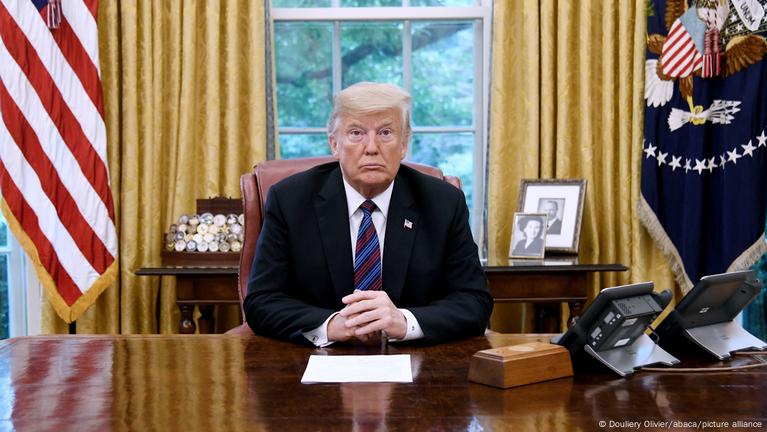
Trump proposes one Bill to cover Tax, Immigration and Energy. Image: Deutsche Welle.
(The Post News)– On January 5 in Washington, President-elect Donald Trump asked Republican lawmakers to back a big law package. This package aims to lower taxes, make borders safer, and increase energy production at home. Trump wants to keep his campaign promises in his second term.
He said that Republicans should unite and grant “these big wins” to Americans and requested that lawmakers act fast. This package could cost trillions of dollars. Trump thinks higher taxes on goods from other countries could help pay for it. His idea makes things more complicated for Republicans. They have small majorities in both parts of Congress and are dealing with big disagreements within their party.
Republicans are currently weighing the use of the budget reconciliation process—an approach that allows legislation to progress in the Senate with just a simple majority. This method, however, permits them to bypass the usual 60-vote barrier that is necessary to overcome a filibuster. Nevertheless, this tactic does impose restrictions on the nature of the bill; reconciliation measures must primarily relate to budget-related issues.
Speaker Mike Johnson stated on Sunday that the president-elect supports a singular, combined bill rather than several separate measures. Although some Republicans have advocated for a phased approach—suggesting an initial bill focused on border security, followed by a separate tax reform package later in the year—Johnson communicated to Fox News that he plans to submit the unified reconciliation bill for a House vote in early April.
Trump’s proposal, which includes extending the 2017 tax cuts, is set to expire this year, eliminating taxes on tipped income and boosting funding for border security. The push for tax changes, however, is exposing rifts among Republicans. Lawmakers from high-tax states—such as New York and New Jersey—are pressing to amend provisions of the 2017 tax law that they assert disproportionately hurt their constituents.
Additionally, Trump’s assertion that tariffs on imports would cover the costs of the proposed tax cuts and spending has drawn scepticism from some economists and lawmakers. They warn that tariffs could, in fact, lead to higher consumer prices and trade tensions; this is a concern that cannot be overlooked. The Republicans hold a narrow 219-215 edge in the House, making it tough for their leaders to keep the party together. Just a few members breaking ranks could stop the plan, so leaders must juggle the needs of different groups within the party.
This push to pass laws comes at a key time as Republicans try to show they can lead well while controlling both parts of Congress. For Trump, getting these “big wins” would mark a strong start to his second term and fulfil his main campaign promises. No one knows if enough Republicans will back this big plan. As lawmakers head back to Washington in the coming weeks, talks about what’s in the bill and how to move it forward will take up most of Trump’s early days in office.
About the Author