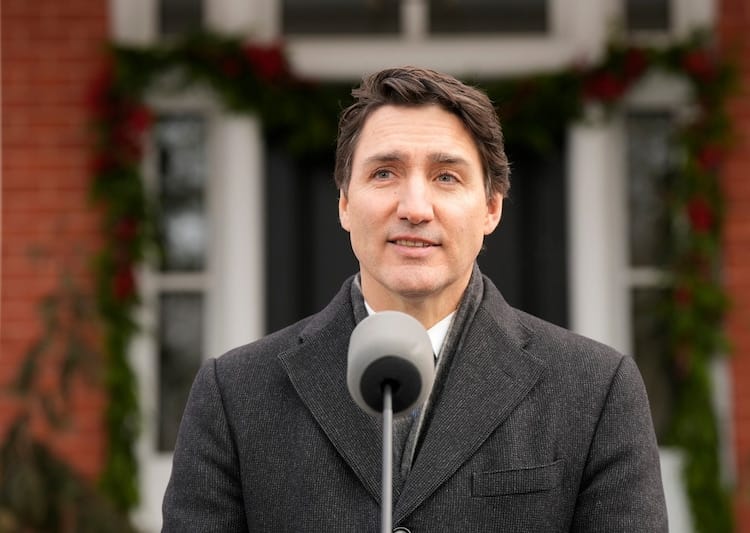
Prime Minister Justin Trudeau of Canada delivers an announcement outside Rideau Cottage in Ottawa on Monday, Jan. 6, 2025. Image: AP
Prime Minister Justin Trudeau of Canada delivers an announcement outside Rideau Cottage in Ottawa on Monday, Jan. 6, 2025. Image: AP
(The Post News)- On Monday, Prime Minister Justin Trudeau declared his intention to resign, stating that he plans to leave his position and step back as the leader of Canada’s governing Liberal Party when a new party leader is appointed.
Trudeau announced that Canada’s parliament will suspend activities until a new leader is selected. It will restart in late March, enabling a leadership contest for the Liberal Party.
Trudeau stated at a news conference that ‘internal conflicts’ indicate he ‘cannot serve as the best choice’ in an election.
Trudeau admitted that it is “clear” he cannot guide the Liberal Party into the upcoming election, which must constitutionally occur this year.
Mr. Trudeau, 53, who came to power almost ten years ago and swiftly became viewed as a symbol of progressivism, is the most recent leader in the West to be displaced by a wave of anti-incumbent sentiment, a reaction against immigration, and frustration over the ongoing impacts of a surge in inflation during the COVID-19 pandemic. Even though inflation in Canada has fallen to under 2 percent, unemployment stays elevated, exceeding 6 percent.
Trudeau’s leadership has encountered major difficulties following the COVID crisis, resulting in a decline of trust among Canadians from diverse backgrounds. Critical factors like housing affordability, increasing living expenses, and high immigration levels led to widespread dissatisfaction. This increasing frustration prompted Trudeau’s own Liberal backers to begin demanding his resignation.
On December 17, the Toronto Police Association expressed via a social media post that it has lost trust in Trudeau’s administration, stating it’s “time to step down and allow others to handle these essential public safety matters.”
About the Author