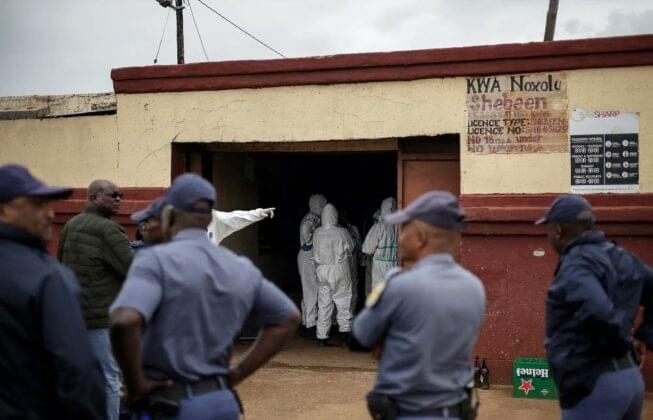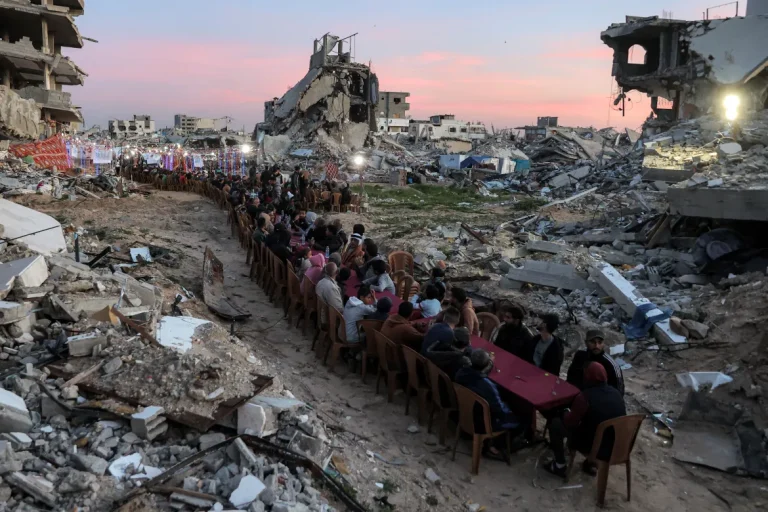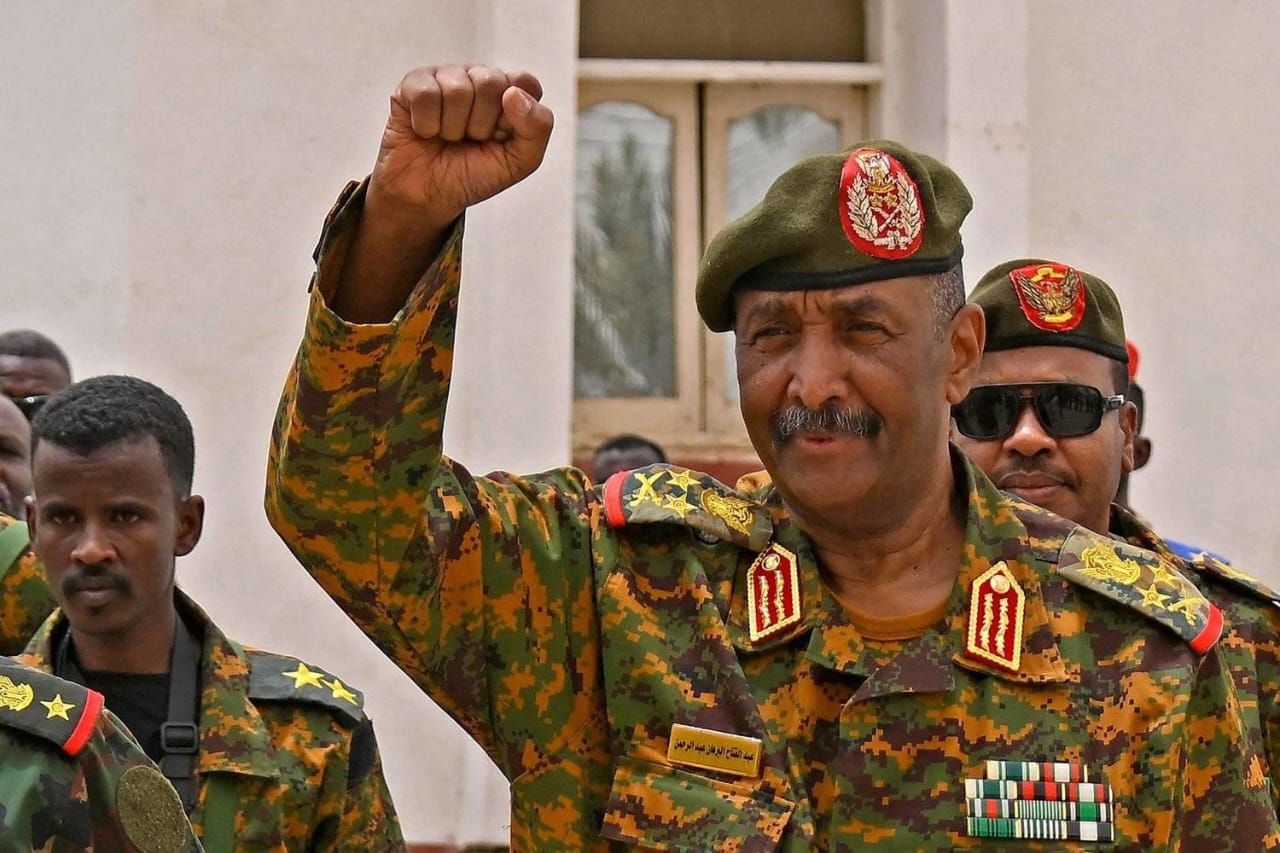
Sudan’s army chief Burhan is received in Egypt. Image: Asharq Al-Awsat media.
(The Post News)– The United States has imposed sanctions on General Abdel Fattah Al-Burhan, the leader of the Sudanese Armed Forces (SAF), along with a company and an individual involved in weapons procurement. This action comes as a response to the SAF’s continued atrocities, including targeting civilians, obstructing humanitarian aid, and hindering the transition to a civilian government.
The US government has determined that members of the SAF, under Al-Burhan’s leadership, have committed war crimes, including targeting civilians and civilian infrastructure, as well as executing civilians. The SAF’s actions violate international humanitarian law and disregard commitments made in the 2023 “Jeddah Declaration of Commitment to Protect the Civilians of Sudan.”
A particularly grave concern is the SAF’s use of food deprivation as a weapon of war; by deliberately obstructing the flow of emergency humanitarian aid, the SAF has contributed to a massive humanitarian crisis. Over 25 million Sudanese face acute food insecurity, and over 600,000 are experiencing famine. This situation constitutes one of the world’s largest humanitarian crises.
Beyond the humanitarian crisis, Al-Burhan has actively obstructed peace efforts and the transition to a civilian government. He refused to participate in international ceasefire talks in Switzerland in August 2024 and has repeatedly hindered the political transition.
This sanctioning of Al-Burhan follows the designation of Rapid Support Forces (RSF) commander Mohammad Hamdan Daglo Mousa (Hemedti) on January 7, 2025. These combined sanctions send a clear message from the US: neither Al-Burhan nor Hemedti is considered fit to govern a future, peaceful Sudan. The United States remains committed to holding those responsible for atrocities committed in Sudan accountable for their actions.
U.S. sanctions aim to disrupt weapon flow and hold combatants accountable in the Sudan conflict. The U.S. also penalised a key arms procurer for Burhan’s forces. These sanctions highlight American frustration with the lack of progress in resolving the Sudanese conflict. The situation will now be addressed by the Trump administration.
Humanitarian organizations have previously criticized the Sudanese military for imposing difficult conditions on aid delivery, including denying permission for convoys to pass through crucial border crossings to famine-stricken areas last year. In December, the military withdrew from the U.N. body responsible for declaring famine.
The United States has repeatedly attempted to bring the warring parties together for peace talks. However, only the RSF attended the most recent meeting in Switzerland in August. The conflict has been fuelled by various foreign powers. The United Arab Emirates, a U.S. ally, has been supplying weapons to the RSF, while Iran has been supplying weapons to the Sudanese military. Washington also asserts that Russia has armed both sides of the conflict.
Additionally, these sanctions are uniquely and exclusively against an individual, unlike the common sanctions against a country. So the impact of these sanctions is limited to the army chief—the properties, financial, and trade ambitions he has with the USA or its allies, and Al-Burhan might not be able to gain access to the U.S, as he has been blacklisted. Therefore, if the army chief has no intentions of relating with America in any way, the sanctions might not have a dire impact, or no impact at all, on him or his life.
About the Author