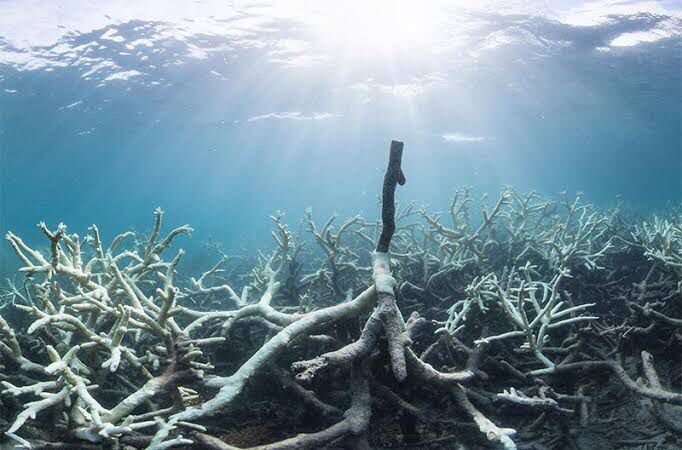
Catastrophic bleaching in the Great Barrier Reef causes concern for Australian scientists. Image: Vox
(The Post News)- A new study has found rising ocean temperatures devastate natural wonders, causing catastrophic coral bleaching on Australia’s Great Barrier Reef. Australian scientists report over 50% of corals near a southern reef island died from severe bleaching last year.
The reef experienced its worst summer on record in 2024 as soaring ocean temperatures broke records. This then caused the reef’s seventh mass bleaching event. The event included marine heatwaves, and stress corals, causing them to expel algae, lose color, and turn white due to bleaching. The main cause is the burning of planet-heating fuels, which is driving up global temperatures. The El Niño weather pattern caused significant damage to the coral.
Limnology and Oceanography Letters found that 52% of bleached corals died by July, affecting 370 colonies. Researchers report an alarming 95% mortality rate in some coral species, triggering colony collapse and reef degradation.
The Australian Institute of Marine Science visited eight reefs in the same Capricorn-Bunker sector of the reef in November. A record 41% drop in hard coral cover was observed, the largest annual decline since monitoring began in the 1980s. Similar declines in coral cover were also seen in the northern reef section, described as a “coral graveyard.”
Maria Byrne, an employee at the University of Sydney, shared her concerns. She says they have been trying to get the message about climate change across for ages. Ana Vila Concejo, co-author of the study, said the study is a wake-up call for policymakers and conservationists.
However, if there is no change in global climate action, the Great Barrier Reef may disappear within this generation. Scientists concluded this after observing the recent sea surface temperature trends. They uncovered the extreme ocean heat recorded between January and March in 2017, 2020, and 2024 was the highest in 400 years. Anthropogenetic influence is the cause of the extreme heat on the climate system. Therefore, it poses an existential threat to the reef’s ecosystem.
The study concluded that the reef is at risk of experiencing “near-annual coral bleaching” at this rate. This would then further the ecological function and outstanding value of one of Earth’s greatest natural wonders.
About the Author