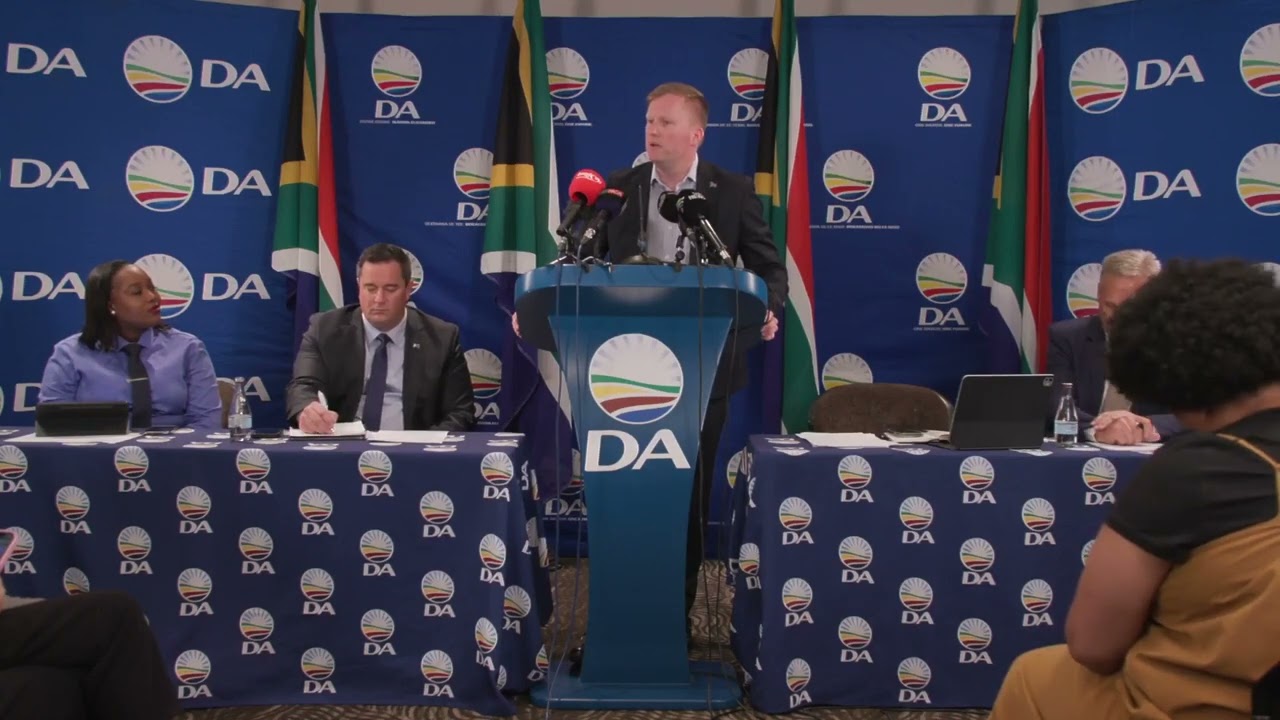
DA Member of Parliament as well as a DA Minister within the government of national unity, Minister of Public Works and infrastructure giving clear directives on what the DA’s will be doing regarding the expropriation act. Image: DA.
(The Post News)– The Democratic Alliance (DA) is contesting the Expropriation Act primarily due to concerns regarding its constitutionality, the negative implications it has for property rights in South Africa, economic stability, and the functioning of the coalition government. The DA’s opposition to the act was detailed through several main points at a media briefing held on Saturday.
Dean McPherson, a DA Member of Parliament (MP), highlighted that the Expropriation Bill contains contradictory provisions that render it unconstitutional. He said, “Effectively, there is a contradiction in the sequencing of how expropriation is supposed to take place between sections seven, eight, and 19.” Section 19 states that if the expropriating authority and owner cannot agree on the amount of compensation to be paid, the parties must first try to settle the dispute through mediation. If they are unable to do so, either party may initiate court proceedings within 180 days of receiving the notice of expropriation to decide or approve the amount of just and equitable compensation.
Specifically, there is a conflict between the processes outlined for determining compensation for expropriated property, which creates an unworkable situation. The bill requires that compensation be determined before a notice of expropriation is served, while also allowing for court proceedings to determine compensation only after the notice is issued. McPherson further pointed out that within 90 days of receiving the notice, the party in dispute may request that the expropriating authority perform such proceedings, requiring the authority, the expropriating authority, or the government to go to court to decide the proper compensation.
According to McPherson, it is evident from these provisions that the intended process to determine the amount of compensation must be instituted within 180 days. However, sections seven and eight stipulate that the amount of compensation must already have been determined by the time the notice of expropriation is issued and served, and that the court process to approve or determine the amount referred to in Section 19 is that contemplated by Section Eight. He also stated that the legal framework and fairness of the expropriation process are undermined by this contradiction.
Additionally, the DA further expressed frustration over the lack of communication and consultation from the African National Congress (ANC) regarding the signing of the Expropriation Act, noting that they were not informed about the bill’s assent until it was announced publicly. The DA pointed out that the ANC’s act is a sign of disrespect, and it indicates a breakdown in the coalition’s collaborative spirit.
The DA also accused the ANC of undermining the coalition agreement and disregarding the interests of its partners. DA Parliamentary leader, John Steehuisen, is adamant that the DA will not be reduced to being mere spectators in the government. Steenhuisen noted that the ANC needs to accept that it is no longer the ruling party and described it as “another minority party,” with which the DA is in partnership in the GNU.
The DA has called for a ‘reset in relations’ by invoking clause 19.3 of the Statement of Intent; that was specifically put in place to deal with situations where disagreements within the coalition arose. Clause 19 confirms the procedure to be followed when differences arise between parties to the Government of National Unity.
About the Author