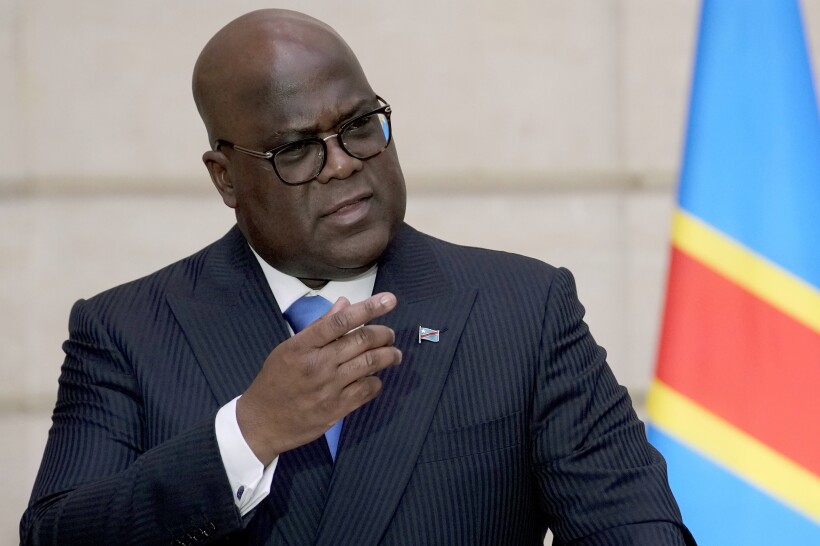
Democratic Republic of Congo President Félix Tshisekedi has rejected calls for crisis talks as the M23 rebel group seizes control of key territories, Image: AP
(The Post News)- President Félix Tshisekedi’s refusal to participate in peace negotiations in the face of growing violence in the east has the Democratic Republic of Congo (DRC) on the verge of a full-blown regional crisis. Fears of a full-scale conflict and a deteriorating humanitarian crisis have increased as the M23 rebel group, purportedly supported by Rwanda, has taken control of sizable areas of Goma.
Tshisekedi turned down an offer from Kenyan President William Ruto, who is presently the regional bloc’s head, to attend a high-stakes East African Community (EAC) conference on Wednesday. With the goal of promoting peace, the virtual gathering brought together a number of East African dignitaries, including President Yoweri Museveni of Uganda, Evariste Ndayishimiye of Burundi, Samia Suluhu Hassan of Tanzania, Hassan Sheikh Mohamud of Somalia, and Salva Kiir of South Sudan. Tshisekedi’s absence, however, highlighted the widening gap between regional powers.
However, it was not surprising that he chose to abstain from the discussions. The Congolese leader has been increasingly doubtful about Kenya’s involvement in the peace process and has long accused Rwanda of aiding the M23 insurgents. Additionally, Kinshasa has repeatedly dismissed requests for talks with M23, characterizing the organization as terrorists.
The crisis meeting was anything but diplomatic. Rwandan President Paul Kagame, whose government has repeatedly denied supporting M23, lashed out at regional leaders, particularly South Africa’s Cyril Ramaphosa and Burundi’s Ndayishimiye.
“We have MONUSCO, we have SAMIDRC, we have mercenaries, we have Burundi, we have FDLR that has joined them, and everybody is there watching this thing and we pretend like we don’t understand what has been going on for all these years?” Kagame said in frustration.
Turning his ire toward Burundi, he accused Burundian forces of ethnic cleansing in eastern Congo. “And then when things like these of last week erupted, we behave like we are surprised, we are concerned about the humanitarian crisis. Isn’t persecuting people and killing people and displacing them part of that humanitarian concern? As East Africans, we sit here and then do what about it?” he added.
Meanwhile, the situation on the ground in Goma has deteriorated rapidly. The M23 rebels have seized significant portions of the city, including its airport and critical infrastructure. On Wednesday, sources confirmed that they had pushed further south, capturing Kiniezire and Mukwidja in South Kivu without resistance.
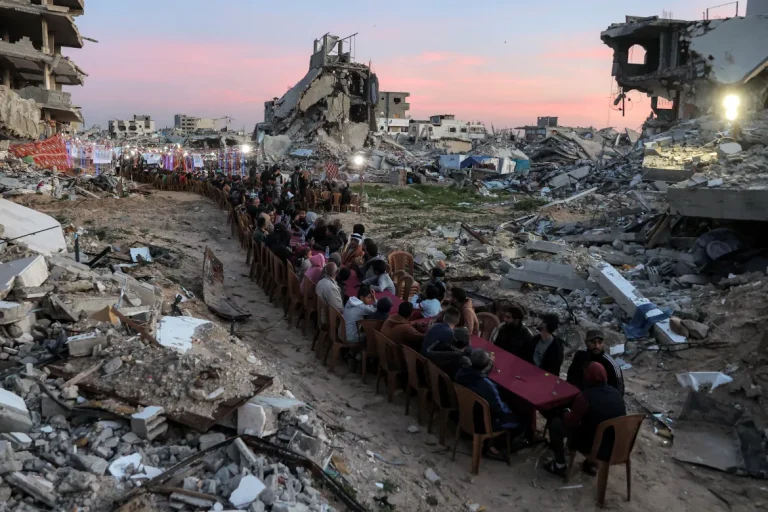
Goma, home to over two million people, has become the epicenter of the conflict. Residents report widespread looting, power outages, and food shortages as the humanitarian crisis worsens. Bodies lie in the streets, and many civilians remain trapped under rebel control with no safe passage out of the city.
In his first public address since the latest escalation, Tshisekedi condemned what he called the “inaction” of the international community, warning that global silence in the face of Rwandan-backed aggression was an “affront” to the DRC. “Your silence and inaction… are an affront,” he declared in a televised speech. He warned that the ongoing violence could trigger a larger conflict in the Great Lakes region.
Despite growing international pressure, Tshisekedi remains steadfast in his refusal to engage in negotiations with Kagame, insisting that the Congolese army is mounting a “vigorous and coordinated response” against what he calls “terrorists and their sponsors.”
About the Author