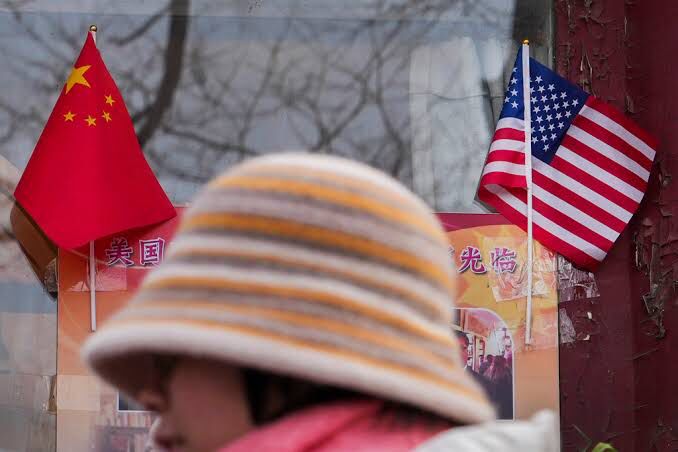
China responds to U.S. tariffs with counter-measures, also investigating Google. Image: Daily Journal
(The Post News)- China countered President Donald Trump’s across-the-board tariffs on Chinese products with tariffs on select U.S. imports. China also announced an antitrust investigation into Google and other trade measures.
Trump has agreed to the 30-day pause on US tariffs on Canada and Mexico after border security concessions. Trump anticipates talking with Chinese President Xi Jinping in the upcoming days. Professor of International Business and Economics in Beijing, John Gong, said the Chinese response was “measured.” He says he does not think they want the trade war escalating as they see this example from Canada and Mexico, and probably they are hoping for the same thing.
The US and Canada have a history of retaliatory trade actions. However, the latest dispute is not their first exchange. The US-China trade war began in 2018 with Trump’s tariffs on Chinese goods, prompting retaliatory measures from China. China is better prepared to counter the US. Furthermore, they announced measures across sectors, from energy to individual US companies.
China is yet to impose a 15% tariff on coal and liquefied natural gas. Additionally, a 10% tariff on crude oil, agricultural machinery, and large-engine cars imported from the U.S. is yet to be implemented. As of next Monday, these tariffs will be placed in effect.
The State Council Tariff Commission said in a statement that the U.S.’s unilateral tariff increase seriously violates the World Trade Organization. It adds that it is not only unhelpful in solving its problems but also damages normal economic and trade cooperation between China and the U.S.
U.S. export impact may be limited despite China’s tariffs on crude oil, coal, and other American goods. However, the U.S. is the largest exporter of liquid natural gas internationally; it doesn’t export much to China. According to the U.S. Energy Information Administration, the U.S. exported 173,247 million cubic feet of LNG to China in 2023. This represents about 2.3% of total natural gas exports.
Founder of the Automobility Limited consultancy in Shanghai, Bill Russo, said China imported only about 700,000 cars overall in 2024, and the leading importers are from Europe and Japan.
China imposes export controls on key elements crucial for producing advanced high-tech goods and electronics. Elements such as tungsten, tellurium, bismuth, molybdenum, and indium are essential. Moreover, the U.S. has designated many of these as critical minerals by the U.S. Geological Survey. This means that they are essential to U.S. economic or national security and have supply chains vulnerable to disruption.
China expands export controls on key elements, adding to restrictions on gallium and others imposed in December. “China’s export control regime is more developed,” says Philip Luck, an economist at the Center for Strategic and International Studies. He said they depend on them for a lot of critical minerals: gallium, germanium, graphite, and a host of others.
China’s market regulator launches an antitrust probe into Google, citing suspected violations of antimonopoly laws on Tuesday. China announces a Google antitrust probe just minutes after US tariffs on Chinese goods take effect, escalating trade tensions. It is uncertain how the investigation will affect Google’s operations. Gong says the company has long faced complaints from Chinese smartphone makers over its business practices surrounding the Android operating system.
Nonetheless, Google has a limited presence in China. Google’s search engine has been blocked in the country as with most other Western platforms. Google then left the Chinese market after it refused to comply with censorship requests from the Chinese government and following a series of cyberattacks on the company.
Google did not comment or issue an immediate response.
About the Author