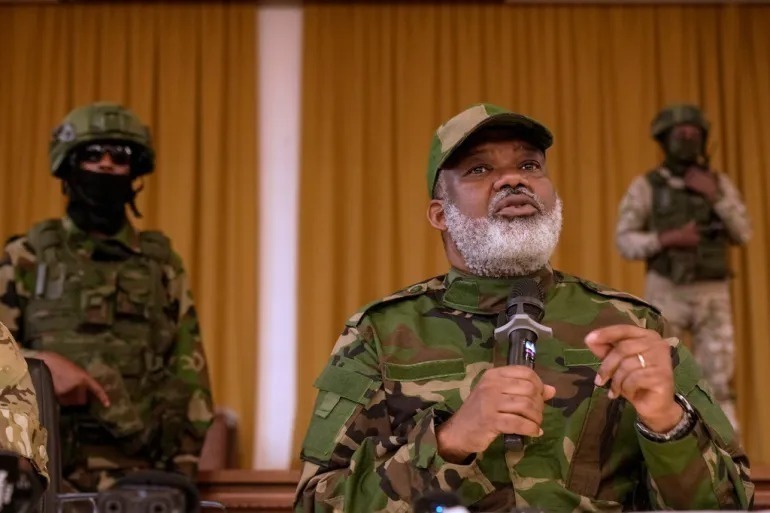
Corneille Nangaa leader of the Alliance Fleuve Congo (Congo River Alliance, or AFC) that includes M23 has announced a unilateral ceasefire. Image: AP.
(The Post News)– The M23 rebel coalition, backed by Rwandan forces, has announced a unilateral ceasefire in the eastern Democratic Republic of the Congo (DRC), citing humanitarian concerns. The group made the declaration late Monday, stating that the ceasefire would take effect on Tuesday, February 4, 2025.
The rebel group took to their X page to announce that as a result of the humanitarian crisis in Kinshasa, a ceasefire would be declared beginning on February 4, 2025. The ceasefire comes after weeks of intense fighting between M23 and Congolese government forces, which has left hundreds of thousands displaced and led to the deaths of an estimated 900 people, according to the United Nations. The rebels recently seized Goma, a strategic city in eastern DRC, escalating tensions in a region already burdened by decades of conflict.
The announcement precedes a high-level summit scheduled for Saturday in Tanzania, where leaders from the Southern African Development Community (SADC) and the East African Community (EAC) will convene to address the worsening security situation. Tanzanian President Samia Suluhu Hassan has agreed to host the meeting, with several key leaders, including Congolese President Félix Tshisekedi and Rwandan President Paul Kagame, expected to attend.
Kenyan President William Ruto confirmed that he had engaged South African President Cyril Ramaphosa, Ugandan President Yoweri Museveni, and other regional leaders to participate in diplomatic efforts aimed at resolving the crisis.
The summit follows a recent SADC meeting in Zimbabwe, where regional leaders called for the immediate deployment of defence ministers and top military officials to the DRC to ensure the safety of SADC troops stationed in the country. The meeting also focused on the urgent repatriation of 14 South African soldiers killed in recent clashes.
Despite M23’s announcement, the response from the Congolese government remains unclear. Authorities in Kinshasa have yet to comment on whether the national army will honour the ceasefire. Previous truces in the region have been short-lived, often collapsing amid renewed fighting.
The conflict in eastern DRC is deeply rooted in historical grievances, ethnic tensions, and competition over the region’s vast mineral resources, including rare earth elements. M23 claims to be protecting ethnic Tutsis, who fled to the DRC following the 1994 Rwandan genocide.
Meanwhile, the Congolese government accuses both M23 and Rwanda of exploiting the country’s resources under the guise of rebellion. Rwanda has consistently denied supporting M23, despite reports from the United Nations and other international bodies suggesting otherwise.
About the Author