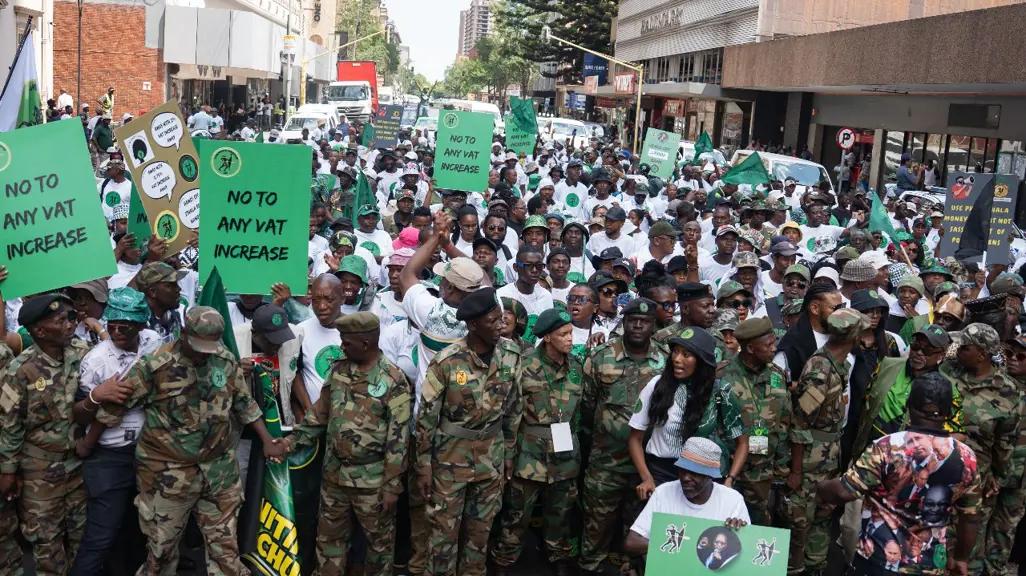
(The Post News)– The UMkhonto weSizwe (MK) Party, which is an opposition party, is planning a national shutdown in protest against the Value-added Tax (VAT) increase.
During the budget speech delivery, Minister of Finance Enoch Godongwane announced that his department would increase the VAT by one percentage point over the next two financial years. The minister had previously stated that his intentions behind this decision were to earn R60 billion to cover the government’s “critical expenditures” this year.
Prior to Godongwane’s budget speech, the MK Party’s parliamentary Chief Whip, Mzwanele Manyi, promised to make the country ungovernable if the VAT is increased. He said that they are consulting their partners in the Progressive Caucus to join them on their mass demonstrations. The party vowed to go to the “picket lines” and put the nation to a “standstill,” while also stating that they are not “playing games.”
In a statement released on social media, the party accused President Cyril Ramaphosa’s administration of “economic assault,” saying that the decision is anti-poor and it came at a time when millions are barely surviving, “burdened by rising food prices, unaffordable electricity, fuel hikes, and worsening unemployment and poverty.”
According to MK Party, unemployment in the country is sitting at 42%, with a staggering 60% among the youth, and over 23 million people are uncertain of where their next meal will come from. The party stated that rather of delivering relief, the Ramaphosa government, along with its white coalition allies, has decided to force the people farther into poverty to suit the interests of big enterprises and foreign capital.
Additionally, MK Party said increasing VAT was unnecessary and provided alternatives that they believe are “clear and practical” and would spare the poor and working class additional suffering.
Amongst the “alternatives” that they mentioned was to strengthen South African Revenue Services (SARS) by recovering R800 billion lost annually through tax fraud, leaks, and illicit financial flows. They also suggested the incrementing of the company tax to redistribute wealth and fund essential services. They said despite all the alternatives, the government never took into consideration the options that they believed to have been economically viable.
About the Author