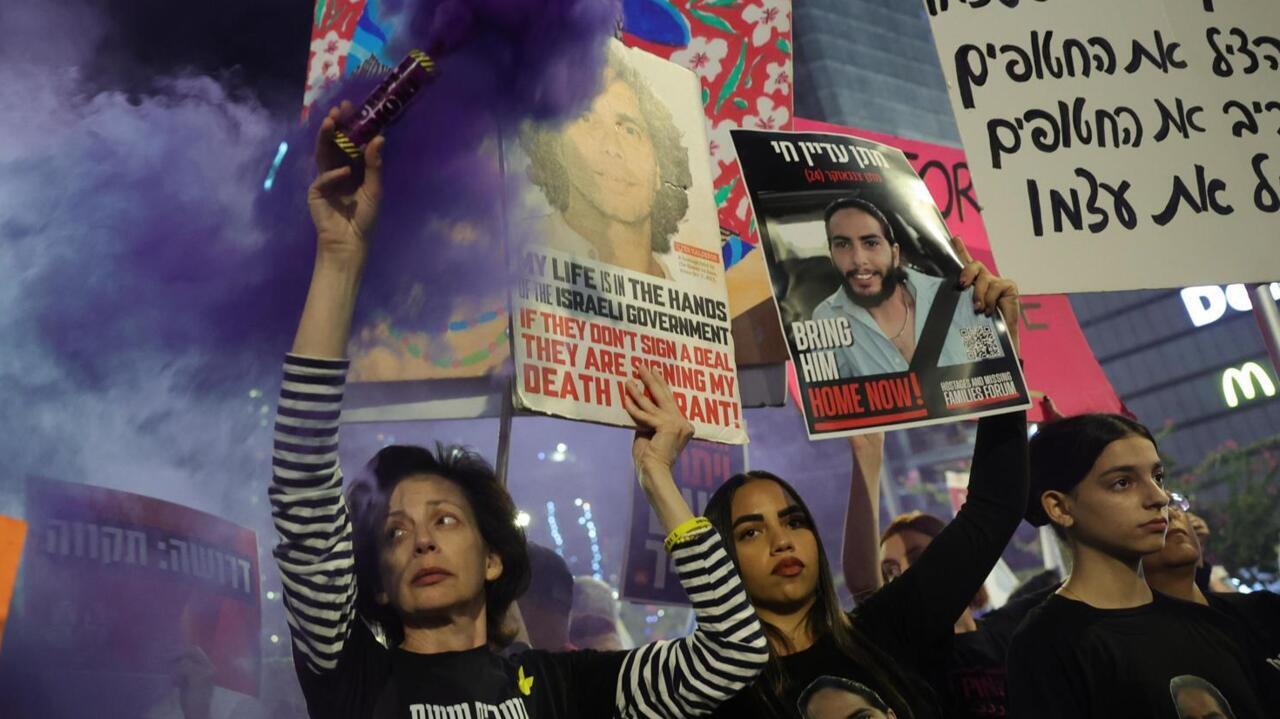
https://www.theguardian.com/world/2025/mar/18/netanyahu-banks-on-political-dividends-as-he-restarts-gaza-war-israel. Image: France 24.
(The Post News)– As the Gaza ceasefire wore on from weeks to days, Israeli Prime Minister Benjamin Netanyahu was cornered. With released hostages beginning to surface with gruesome descriptions of their experiences as hostages, Netanyahu’s room for maneuver in the constantly shifting political dance would appear to be closing.
Betwixt the ultra-hardline right-wing elements of his government—yearning for the war in Gaza to intensify—and most Israelis impatient for the liberation of the remaining hostages, Netanyahu’s position has grown ever more untenable. There has also been broad popular support in opinion polls for a second phase of the ceasefire agreement, including complete Israeli pullout from Gaza and the release of all remaining hostages.
But Netanyahu is being subjected to mounting pressure from members of the government coalition, most prominently Finance Minister Bezalel Smotrich, who have loudly denounced the ceasefire since it was first declared. Smotrich has vowed to resign if the war does not continue, piling more pressure on Netanyahu to maintain his delicate coalition.
The clock is ticking since next month the Knesset will vote to pass the 2025 budget. Had that not been approved prior to March 31, it would result in the collapse of the government automatically and early polls being announced. The latest Gaza bombardment, the deadliest phase of escalation in the war since its outbreak, has caused only more outrage at Netanyahu’s war leadership. Hostage activists have accused Netanyahu of having betrayed the hostages, and some families have also confronted ministers in person. One such example is where Ayala Metzger, whose father-in-law Yoram Metzger was killed while being held captive by Hamas, publicly defied Smotrizfch’s stance in the Knesset.
Former Major General Amos Yadlin, former commander of Israeli military intelligence, feared keeping the war going with the hostages still in Gaza would undermine the military and its performance. “A prudent Israeli leader…would return all the hostages before resuming the war,” Yadlin explained. The principal motivation of the reservists when they signed up in October 2023 was to rescue the hostages. Now, they have to be convinced that the current ground campaign will return them alive, not killed. These are echoed within the armed forces themselves, where morale has started to disintegrate. A recent sacking of a combat navigator who refused to report for duty in protest at the government’s reaction to the incident reflects spreading discontent among ranks. Senior officials have talked of fears that others will follow.
One further source of tensions is Netanyahu’s refusal to set up a state commission of inquiry into the failure in the October 7 Hamas attacks, and this has fueled further anger at critics accusing the prime minister of prioritizing political survival over national security.
Netanyahu is sticking to his plan, though, insisting that pressure applied by the military is the most effective way to bring the hostages home and that the total eradication of Hamas is necessary for Israel’s long-term security. The shaky ceasefire deal that has repeatedly been violated by the two sides is now placed in doubt after an expiration of a deadline on a second round of talks with absolutely no progress. Netanyahu’s deferment of negotiation for this round only compounded issues, with even critics like Yadlin arguing that such strategy had weakened the negotiation leverage of Israel. Despite political losses, the short-term impact of overnight bombardment has seen unambiguous political dividends accruing to Netanyahu.
Right-wing leaders like Itamar Ben-Gvir, who resigned in January in protest at the ceasefire, were quick to reassert themselves in the government, praising the attack as a moral imperative. This suggests that Netanyahu is preparing for an all-out confrontation with Gaza, in which evacuation orders were given for parts of the strip and for steps taken to prepare an invasion.
The night raid has been universally condemned by world leaders, including British leaders, the United Nations, and other humanitarian groups, all of whom have made dire threats of apocalyptic consequences for the over 2 million Palestinians in Gaza. Israeli leaders, though, like Foreign Minister Gideon Saar, defended that the United States were warned and in favour.
With the international giants like America in support of Israel’s action and President Donald Trump signaling a tough line to deal with hostages, Netanyahu’s challengers both from within and beyond his nation could struggle to tell the course of the conflict. As events unfold, Israel stands at crossroads, and Netanyahu’s politics and military activities thereafter are more likely to influence the direction of the conflict for the future in addition to his own political prospects.
About the Author