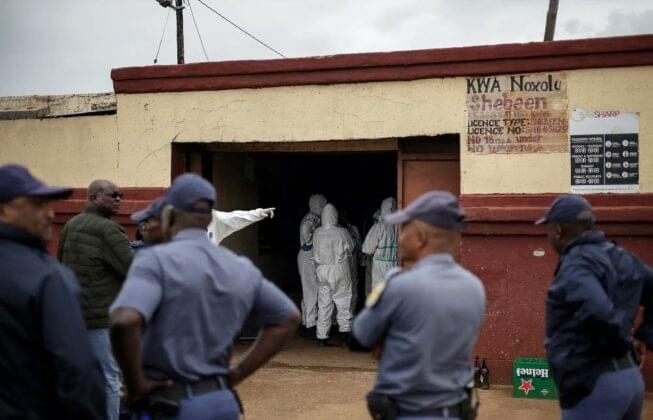
A remote Antarctic research station turned into a scene of terror when a crew member reportedly snapped, attacking colleagues in the isolated, icy wilderness. Image: CNN.
(The Post News)– A scientific expedition in Antarctica turned into a harrowing ordeal when a crew member reportedly snapped, launching a series of violent attacks against colleagues in the isolated, icy wilderness. The chilling incident has shed light on the psychological toll of extreme isolation and the dangers of working in one of the most inhospitable places on Earth.
The team, stationed at a remote Antarctic research facility, was conducting long-term studies on climate change and ice core samples when the situation spiralled out of control. According to reports, a male crew member, whose identity remains undisclosed, exhibited erratic behaviour in the days leading up to the attack. Sources suggest that the prolonged confinement, lack of sunlight, and limited social interaction may have contributed to his psychological breakdown.
Witnesses state that the individual in question became increasingly agitated, culminating in a violent outburst that saw him physically attacking his colleagues. In the confined space of the research station, panic ensued as the crew struggled to subdue the attacker. With no immediate escape route or backup, their survival instincts kicked in, forcing them to barricade themselves in rooms while attempting to de-escalate the situation.
One scientist, speaking under anonymity, described the terror of being trapped with an unpredictable attacker. “We were completely cut off from the outside world. There was nowhere to run, and the freezing conditions outside meant that leaving the station wasn’t an option. It was one of the most terrifying experiences of my life.”
Given the remote location of the research station, authorities were unable to send immediate assistance. Emergency protocols were enacted, with the team reaching out to their headquarters via satellite communication. A rescue mission was swiftly arranged, but the severe Antarctic weather delayed external intervention for hours.
In the meantime, the crew managed to restrain the attacker using improvised methods, ensuring the safety of others on the base. A medical officer on-site provided initial psychological intervention until help could arrive. Eventually, the individual was evacuated for further psychiatric evaluation and treatment.
This incident highlights the immense psychological pressure faced by those working in extreme environments. The combination of months-long isolation, harsh living conditions, and limited interaction with the outside world can take a heavy toll on mental well-being. Researchers in Antarctica often undergo rigorous psychological screenings before deployment, but even the most resilient individuals can be vulnerable to the extreme conditions.
Following the attack, the research station has implemented stricter mental health monitoring protocols to prevent similar occurrences. Psychological check-ins, remote counselling sessions, and improved conflict-resolution training are now being prioritised.
While this event was a nightmare for those involved, it serves as a stark reminder of the human challenges behind scientific discovery. Antarctica, a land of frozen beauty and scientific wonder, can also be a place where the mind is pushed to its limits. For those who dare to explore its icy depths, resilience isn’t just an asset – it’s a necessity.
About the Author