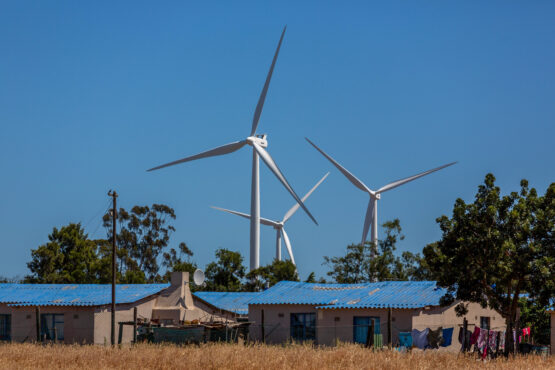
Reports indicate that the United States is delaying the distribution of $2.6 billion in climate finance to South Africa; which could potentially impact South Africa's climate initiatives and transition to a greener economy. Image: Bloomberg.
(The Post News)– The United States has delayed the provision of $2.6 billion in climate money to South Africa, increasing concerns that the payments will be completely halted.
Sources familiar with the matter revealed that US representatives recently prevented the World Bank-linked Climate Investment Funds (CIF) from approving a $500 million allocation to South Africa. This $500 million was crucial for unlocking an additional $2.1 billion from multilateral development banks and other financial sources. Another attempt to approve the funds may take place at CIF meetings in June.
This delay exacerbates tensions between South Africa and the US, already strained under US President Donald Trump’s administration. In addition to declaring its ambassador “persona non grata”, the US had accused South Africa of land expropriation and shut off aid to the nation. South Africa, however, has refuted these allegations, claiming that since apartheid ended in 1994, no private property has been seized.
The delay also signals a wider US pullback from global climate agreements. Under Trump, the US withdrew from the Paris Climate Agreement, cancelled a $4 billion commitment to the Green Climate Fund, and abandoned plans to assist countries like South Africa in reducing coal dependency. As a result, South Africa lost $1 billion in loans.
CIF disbursements can be blocked if any of the 15 contributing nations object. The US, as the largest contributor to CIF with $3.84 billion, has the authority to hold up the process, although it remains unclear which specific objection it raised. The CIF declined to comment on the matter, stating that “member deliberations are not made public,” while South Africa’s climate finance unit also refrained from comment.
South Africa hoped to secure the funds late last year under the Biden administration but delayed the process to renegotiate terms. The country sought to keep three coal-fired power plants operating beyond the 2030 deadline initially set for closure. Without the $2.6 billion, South Africa’s efforts to transition to renewable energy and shut down coal plants that provide more than 80% of its electricity will face significant setbacks. The country remains one of the world’s most carbon-intensive economies.
This most recent delay, if verified, would join the expanding list of US measures that undermine international climate policies. The United States also left the board of the United Nations climate damage fund, which aids countries affected by climate-related calamities, in March. The situation is dire for South Africa. Its efforts to cut emissions, diversify its energy mix, and fulfill global climate objectives would be hampered if it lost the climate finance package.
About the Author