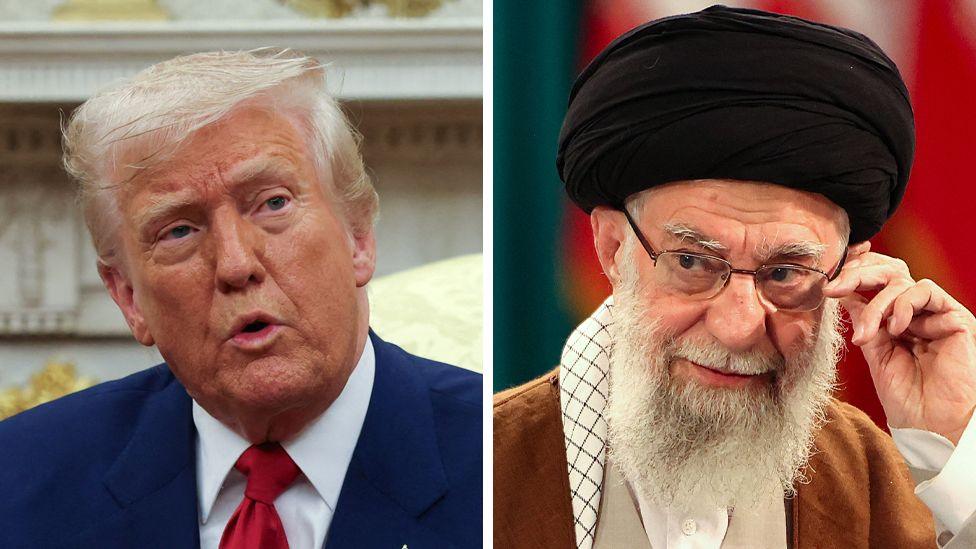
Iran has confirmed its willingness to engage in talks with the United States regarding its nuclear program, aiming to reach an agreement at discussions scheduled for this Saturday in Oman. Image credit: BBC
(The Post News)- Iran said it is prepared to discuss its nuclear program with the United States as part of an effort to reach a deal this Saturday at talks in Oman, Iranian Foreign Minister Abbas Araghchi stated. But he made it clear that the talks would proceed only if US President Donald Trump agreed to rule out military action and that Iran would “never accept coercion.”
Iran negotiated the Joint Comprehensive Plan of Action (JCPOA) with world powers, including the US, in 2015 to limit its nuclear activities in exchange for sanctions relief. The US, however, withdrew from the agreement during Trump’s term of office in 2018, claiming it was not strong enough to prevent Iran from developing nuclear weapons. Iran has retaliated by increasingly violating some of the agreement’s conditions, including enriching uranium beyond specified levels.
Trump has shown his openness to a new deal, warning that unless there are negotiations, there will be military action, something that raised tensions and stakes for both sides. “It would be a very bad day for Iran” if the talks fail, he said, showing that the US would look for a stronger approach if a deal is not made.
Iran, on the other hand, insists that its nuclear program is peaceful and only for energy purposes. Araghchi, in an op-ed in the Washington Post, reiterated that Iran would take steps to explain its peaceful intentions and ease fears, if the US would meet it with a sincere commitment to diplomacy. He stressed that the US needed to demonstrate that it would honor any future agreement.
The United States, however, is pushing for a complete dismantling of Iran’s nuclear program, including the cessation of uranium enrichment in its entirety. Trump’s special Middle East envoy, Steve Witkoff, will lead the US delegation to Oman. Israeli Prime Minister Benjamin Netanyahu, a vocal critic of Iran’s nuclear push, has called for a “Libyan-style” agreement, referring to the 2003 Libyan decision to give up its weapons programs.
Even while diplomatic pressure was being exerted, Iran’s Foreign Ministry has stated categorically that it would never agree to eliminating its nuclear program totally. Iran views its nuclear potential as a deterrent, especially given regional tensions and sanctions.
The stakes are high with the two sides moving towards their meeting in Oman. The success or failure of the negotiations could determine the future of Iran’s nuclear ambitions and its relations with the US, and indeed Middle Eastern stability as a whole. If the talks collapse, the path to armed conflict could become more prominent with disastrous implications for the region and beyond.
About the Author