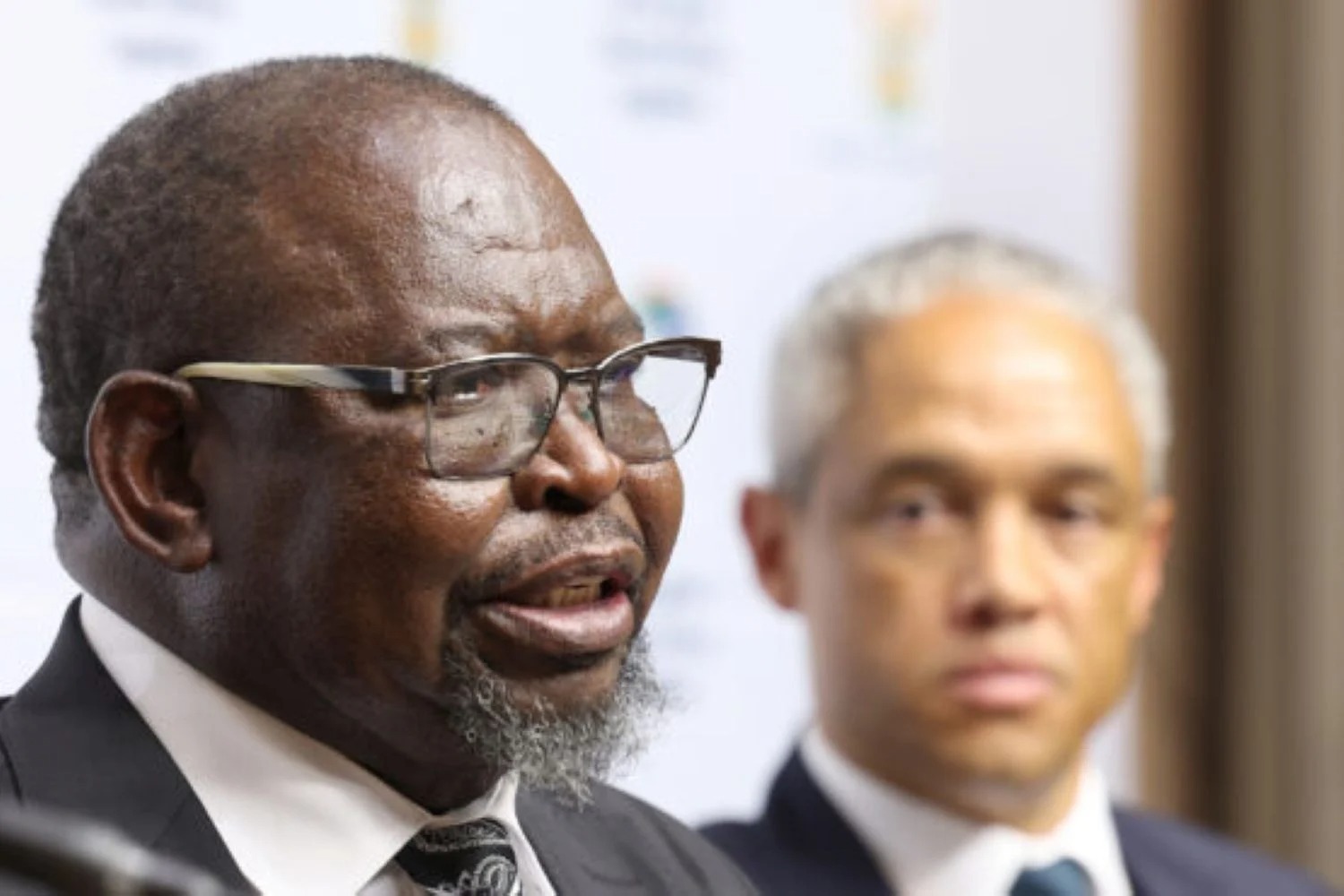
Finance Minister Enoch Godongwana (left) and National Treasury Director-General Duncan Pieterse are both defending the Vat hike in court. Photo: GCIS
In court papers filed in response to an urgent application by the Democratic Alliance (DA) and Economic Freedom Fighters (EFF), Godongwana rejected claims that he had misled the public or suggested he might reverse the increase. He says it’s always been clear, both from him and institutions like the National Treasury and SARS, that the VAT rate would rise this year and again next year. The DA and EFF are asking the Western Cape High Court to urgently halt the implementation of the increase and block SARS from putting it into effect. But Godongwana says their legal arguments don’t hold water.
At the heart of the DA’s challenge is Section 7(4) of the VAT Act, which gives the finance minister the authority to temporarily change the VAT rate for up to 12 months—pending parliamentary approval. The DA argues this section is unconstitutional, but Godongwana says they’re misunderstanding the law. “Section 7(4) doesn’t allow the minister to rewrite Section 7(1),” he says. “It’s a stopgap—used to meet urgent spending or debt needs—and has been in the tax law since 2017 without any challenge.”
Legal experts echo this. Des Kruger, a VAT specialist at Webber Wentzel, points out that this temporary power has been used many times before and is mirrored in other tax laws like the Income Tax Act. “There’s nothing new here. The minister is acting within the law,” Kruger says. Cliffe Dekker Hofmeyr’s tax director, Gerhard Badenhorst, agrees but says businesses are facing practical headaches. Updating systems for the May increase, then again for another one in April 2026, only to revert to the old rate a month later, is costly and complicated.
Still, Godongwana is confident Parliament will back the changes, making the increases permanent. He defended the legality of his March Budget announcement, saying section 7(4) of the VAT Act gives him the power to make short-term VAT adjustments. That provision, introduced in 2017, has never before faced a constitutional challenge. He also took aim at the DA’s timing, suggesting this legal challenge is more about politics than principles. “They’ve sat on this law for years. Only now, after not getting what they wanted in the budget, they run to court claiming a constitutional crisis,” he said.
As for the EFF, Godongwana says their application isn’t clear, questioning whether they’re challenging the budget report itself or the VAT hike directly. Godongwana has previously warned that stopping the upcoming VAT increase could blow a R13.5 billion hole in the budget, forcing the government to either borrow more or slash public spending. The High Court is set to hear both applications today.
About the Author