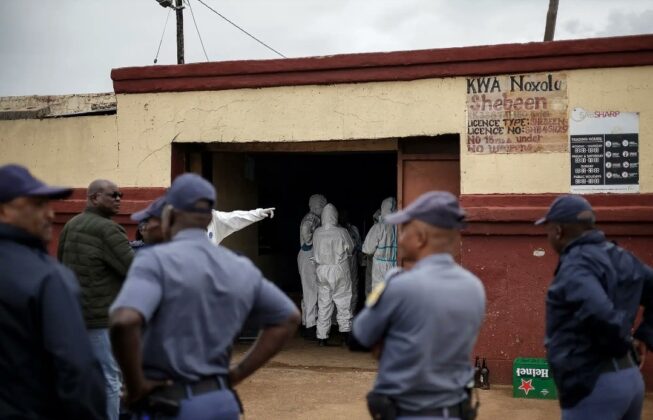
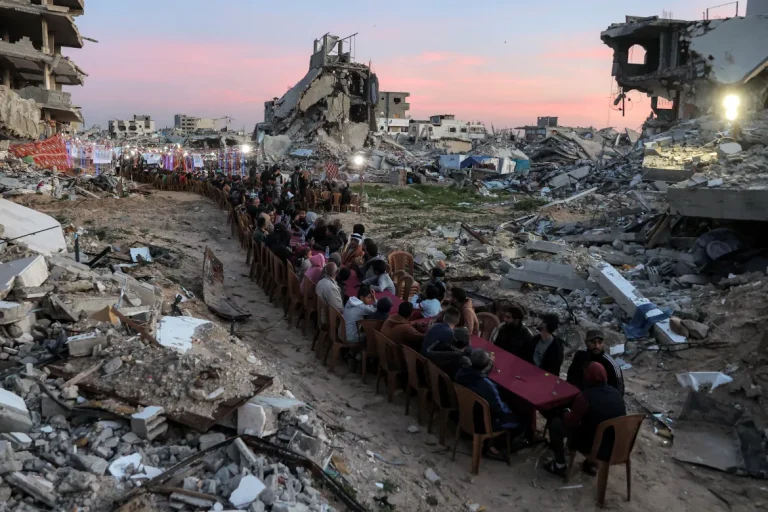
India-Pakistan tensions escalate as Diplomats scramble to prevent further conflict. Image: BBC News.
(The Post News)– The Pakistani military has threatened severe consequences for India following Wednesday’s airstrikes, which resulted in at least 31 fatalities in Pakistan and Pakistan-administered Kashmir, escalating concerns of a full-scale conflict between the two nuclear-capable nations.
According to India, Pakistan’s shelling across the Kashmir border has claimed the lives of at least 16 Indian civilians, comprising three women and five children. The exchange of gunfire across the border intensified overnight, further heightening tensions.
Despite the ongoing hostilities extending into Thursday, both nations have stressed their commitment to restraint. Meanwhile, reports suggest that security officials from India and Pakistan have initiated communication channels to potentially ease tensions.
Experts believe that international mediation is crucial for de-escalating the situation, allowing both countries to claim a form of victory and paving the way for a peaceful resolution.
Pakistan, denying any role in the terrorist attack, claims to have achieved a partial victory by shooting down five Indian fighter jets and 25 drones during the Indian assault. However, India has yet to verify these claims.
Military spokesperson Ahmed Sharif Chaudhry stated on Thursday that Indian drones are still entering Pakistani airspace, warning that India will face severe repercussions for its aggressive actions.
The US Consulate in Lahore instructed its personnel to shelter in place due to reports of drone activity and potential airspace breaches. Meanwhile, India’s Foreign Minister S. Jaishankar stated that while India doesn’t intend to escalate tensions, it will respond strongly to any retaliatory action from Pakistan.
US President Donald Trump hopes India and Pakistan can put an end to their tit-for-tat actions and resolve their issues. Trump, familiar with both nations, expressed his willingness to help if needed. The situation between the two nuclear-armed neighbors escalated after India’s airstrikes on Pakistan and Pakistan-administered Kashmir, resulting in over 30 deaths. Pakistan retaliated by shooting down Indian aircraft and vowing to respond further.
Experts believe the conflict’s trajectory depends on Pakistan’s ability to frame its response as sufficient and find a diplomatic solution. According to Moeed Yusuf, a senior fellow at Harvard’s Belfer Center, there’s real anger in Pakistan over India’s actions, particularly since India didn’t provide evidence linking Pakistan to the alleged terrorist attack.
The US has been in touch with both countries, with Secretary of State Marco Rubio discussing efforts to de-escalate tensions. Trump has termed the rising tensions a shame and emphasized his desire for India and Pakistan to work out their differences.
A recent attack in Kashmir, a region claimed by both India and Pakistan, has been particularly devastating for Indian civilians, marking the worst incident in 20 years. The dispute over Kashmir, India’s only Muslim-majority region, has led to three wars between the two countries and a prolonged separatist insurgency that has claimed tens of thousands of lives.
India accused Pakistan of backing cross-border terrorism and claimed to have “credible evidence” linking Pakistan to a recent Kashmir attack, warning of potential further attacks. However, Pakistan denied these allegations and challenged India to provide concrete evidence to support its claims.
Lt. Gen. Deependra Singh Hooda, former head of the Indian Army’s Northern Command, believes it’s up to Pakistan to take the next step in resolving the conflict. According to Hooda, India is tired of the ongoing situation and expects Pakistan to act. As someone with experience in Jammu and Kashmir from 2012 to 2016, Hooda’s perspective carries weight in understanding the complexities of the region.
He stated that evidence of infiltration is already known and the infrastructure has been in place for years, questioning the need for concrete proof.
Experts like Moeed Yusuf believe the international community should play a more active role in easing India-Pakistan tensions, but this is challenging after the 2021 US withdrawal from Afghanistan, which previously helped deter violence. According to Praveen Donthi, Trump’s focus on trade deals is giving India and Pakistan space to engage in further conflict.
Within Pakistan, there’s debate about whether the country’s response to India, including downing Indian aircraft, is sufficient or if more action is needed.
Moeed Yusuf stated that Pakistan won’t offer India a diplomatic exit strategy like it did in 2019 by releasing the captured Indian pilot.
Praveen Donthi believes the stakes are higher than ever, and a miscalculation or mistake could escalate the situation further, given the pressure on both governments to retaliate. Even if tensions ease, Donthi warns that the recent violence will have lasting impacts, potentially uniting anti-India militants in Pakistan and increasing the likelihood of future attacks in India.
About the Author