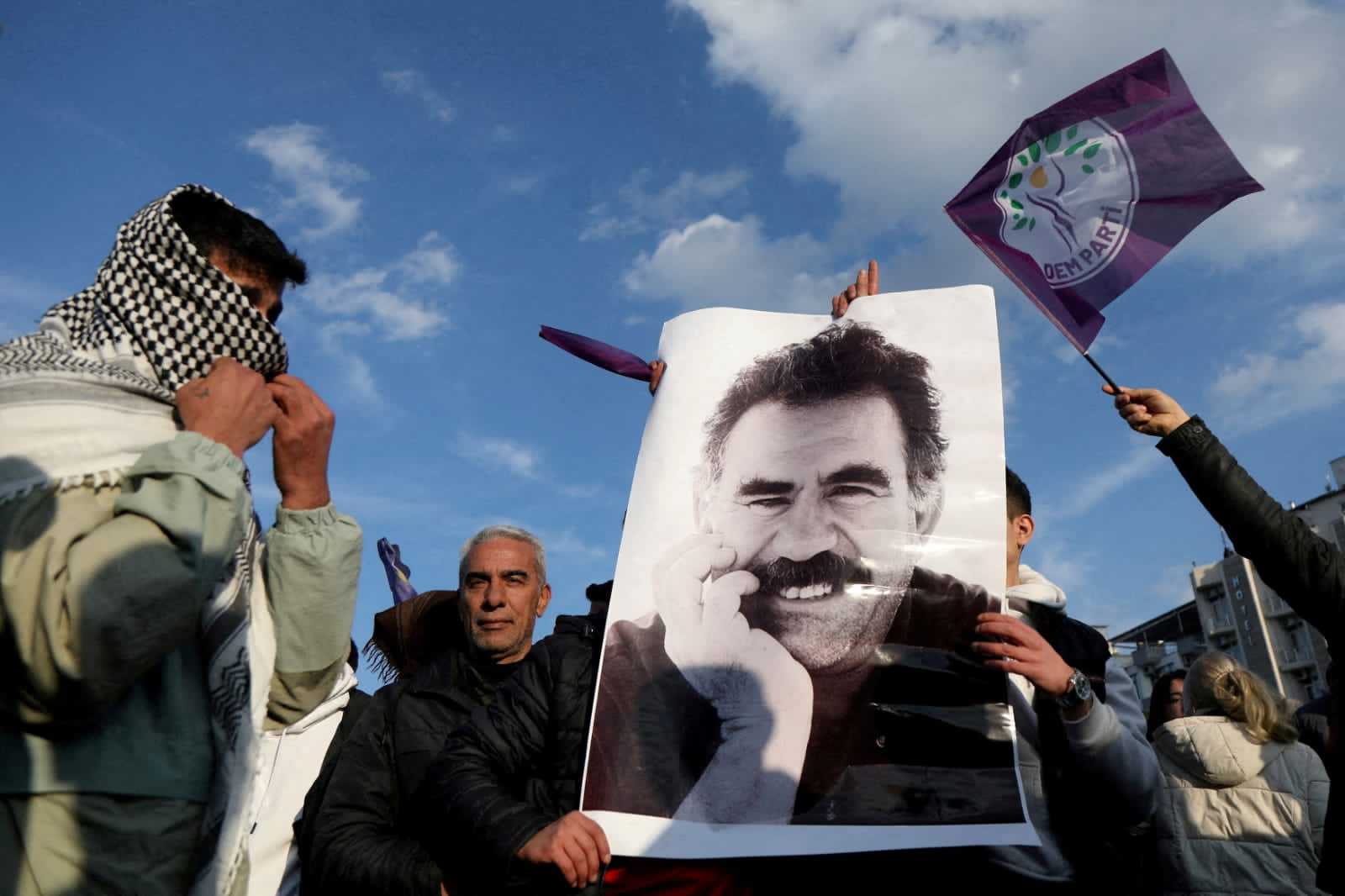
The Kurdistan Workers' Party (PKK), a Kurdish militant group that has been involved in a conflict with the Turkish state for over four decades has announced its decision to disarm and demobilize its guerrilla forces. Image credit: MarketScreener
The Kurdistan Workers’ Party (PKK), a Kurdish armed group whose four-decade conflict with the Turkish state has killed tens of thousands of people, has announced that it will disarm and demobilize its guerrilla force. The step follows a call in February from the group’s jailed leader, Abdullah Öcalan.
The statement could prove to be a milestone in the fighting that has marked recent Turkish-Kurdish relations. The PKK, designated as a terrorist organization by Turkey, the US, and the UK, stated that its armed struggle had “brought the Kurdish question to a resolution through democratic politics” and that its “historical mission” was complete.
The declaration was made at the 12th Congress of the PKK, and officials stated that all military operations would cease “immediately.” They did add, however, that disarming would be conditional on how Ankara engaged with Kurdish rights and how PKK fighters were treated.
The PKK was formed in 1978 and began an insurgency in 1984 with the goal initially of an independent Kurdish state, later scaling back its demands to greater rights and autonomy for Kurds, who make up around 20% of Turkey’s population. The violence has claimed over 40,000 lives and exacted a heavy economic and social cost to the country, especially the predominantly Kurdish southeast.
The group’s actions have also influenced nearby Iraq and Syria, where allied Kurdish forces have been active. The announcement of dissolution is likely to influence PKK-affiliated groups centered along Turkey’s borders and allied parties in northeast Syria.
The Turkish government has reacted with guarded optimism. Foreign Minister Hakan Fidan called the move “historically important” and one that could lead to “lasting peace and stability.” Ömer Çelik, a spokesperson for President Recep Tayyip Erdoğan’s ruling Justice and Development Party (AKP), greeted the announcement but emphasized that the total disbandment and dissolution of the PKK’s infrastructure would be required before any meaningful political change.
No formal peace talks have been disclosed, and Ankara has not clarified whether Öcalan, imprisoned since 1999, will be permitted any role in overseeing the group’s dissolution of the central request of the PKK leadership.
The disbanding of the PKK would change dynamics across the region. In Syria, where the Kurdish-led Syrian Democratic Forces (SDF) are under pressure to integrate into the post-Assad Syrian military, the decision has raised questions about the future of aligned forces. SDF commander Mazloum Abdi distanced his forces from the announcement, saying, “This concerns only the PKK and is nothing to do with us here in Syria.”
At home, the step is after political alignment. Erdoğan’s ultra-nationalist ally, Devlet Bahçeli, has been credited with initiating an olive branch in October, possibly as part of an effort to secure Kurdish political support for constitutional change that would extend Erdoğan’s rule beyond 2028.
The pro-Kurdish People’s Equality and Democracy (DEM) Party, which facilitated Öcalan’s appeal for peace, welcomed the PKK initiative. Deputy leader Tayip Temel described it as “important for Kurdish people and the Middle East,” but warned that it must be followed by a shift in Ankara’s policy on Kurdish rights.
Despite widespread fatigue after decades of bloodshed, skepticism is running deep among Kurds. Many cite the collapse of previous peace processes, in particular the 2013–2015 ceasefire, as a reason for doubt. But some residents of the biggest city in the southeast, Diyarbakir, were hopeful.
“It is very important that people don’t die anymore, that the Kurdish issue is resolved in a more democratic framework,” said Hasan Huseyin Ceylan, a resident.
If realized, the dissolution of the PKK could bring to a close one of the longest insurgencies in the world and pave the way for political reconciliation. However, with mutual distrust running deep and many specifics still to be worked out, whether this is the start of enduring peace is unclear.
About the Author