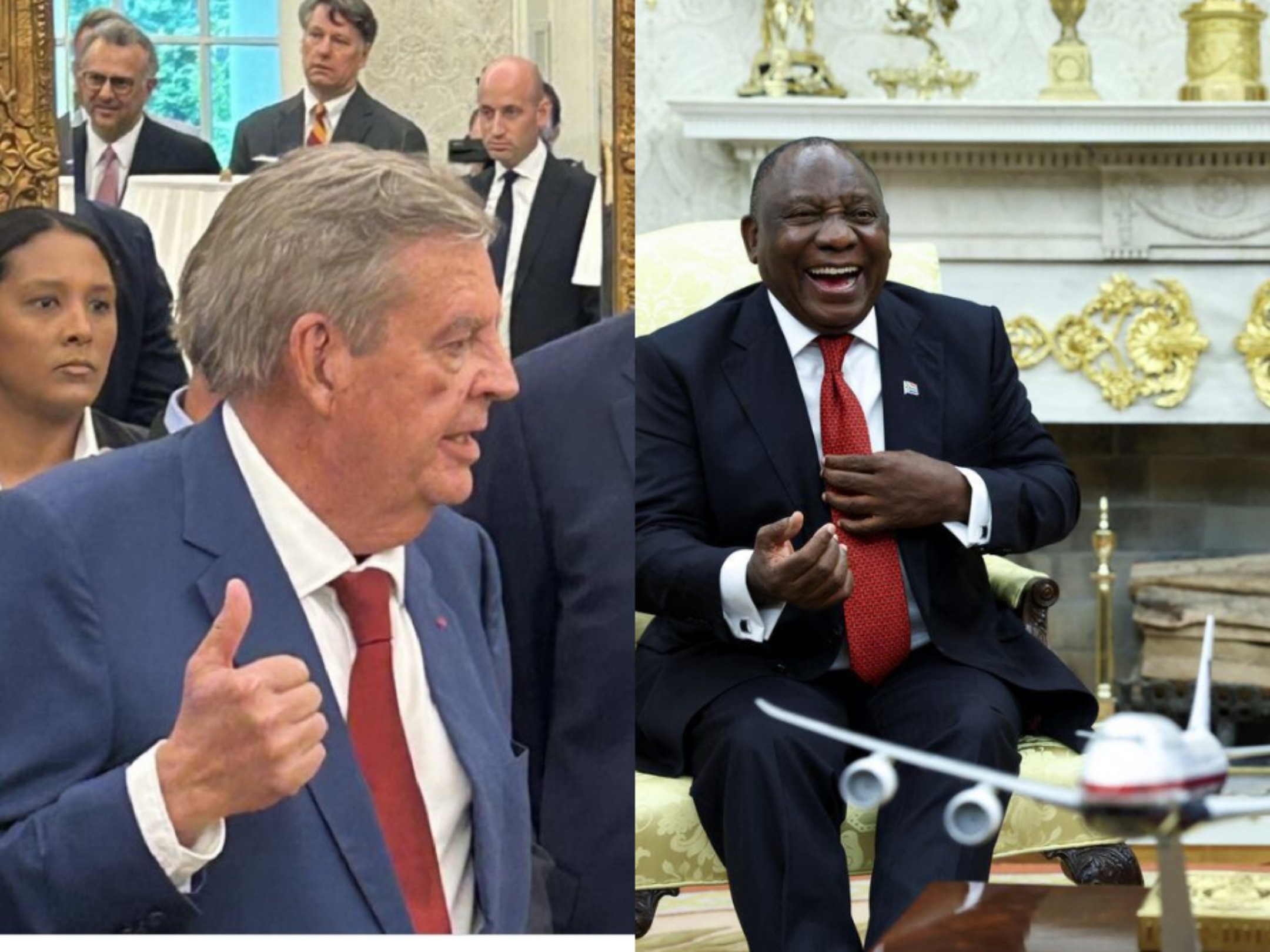
South African President Cyril Ramaphosa and U.S. President Donald Trump face off in the Oval Office on May 21, 2025, during a tense exchange over claims of violence against white farmers, as billionaire Johann Rupert and other high-profile figures look on.
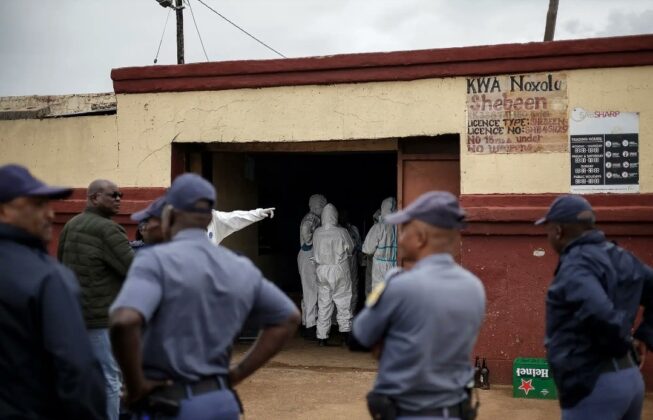
(The Post News)– In a tense Oval Office meeting on May 21, 2025, South African President Cyril Ramaphosa and U.S. President Donald Trump sparred over claims of targeted violence against white farmers in South Africa. The issue had taken centre stage in a conversation initially expected to focus on trade and bilateral cooperation.
President Trump dramatically presented a series of unverified videos featuring EFF leader Julius Malema, in which the controversial politician is heard chanting “Kill the Boer.” Trump cited the footage as proof of what he called a “white genocide” in South Africa.
“These are human rights violations, plain and simple,” Trump asserted. Trump said that white farmers in South Africa are being attacked because of their skin colour and that a dozen white Afrikaners have been welcomed in the United States, with more on the way. He promised that they will find the security they deserve there.
“Let me be clear,” Ramaphosa said. “There is no state-sanctioned violence against white farmers. South Africa is a constitutional democracy founded on Nelson Mandela’s legacy of dialogue and equality. Crime is a tragic reality in our country, but it affects all races equally.” According to Ramaphosa, violence against white Afrikaner farmers is not “state-sanctioned”. He added that Nelson Mandela’s legacy of equality and communication laid the groundwork for South Africa’s constitutional democracy and that while crime is a sad reality in SA, it affects people of all races.
The meeting came against the backdrop of deteriorating U.S.–South Africa relations. Tensions escalated after South Africa brought charges of genocide against Israel at the International Court of Justice, a move that drew U.S. condemnation and led to sanctions, aid cuts, and reciprocal diplomatic expulsions.
Amid the political sparring, billionaire Johann Rupert, a vocal critic of Malema, spoke out about being a frequent target of what he described as “populist scapegoating”.
According to Rupert, he has been the target of baseless accusations from Mr Malema for years, but rather than using divisive language, they ought to focus on the true problems facing our nation, which are poverty, unemployment, and racial-discriminatory violence.
He also criticised South Africa’s prior refusal of U.S. crime-fighting assistance on ideological grounds: “It is time we set ideology aside. We need global partnerships to deal with these national crises.”
Despite the heavy political atmosphere, the meeting included lighter moments. South African golf legends Ernie Els and Retief Goosen were on hand, as was tech entrepreneur Elon Musk, who briefly discussed innovation and development opportunities in Africa.
But the broader tone of the meeting reflected a widening divide. “This encounter was meant to strengthen ties,” said one senior diplomat, speaking anonymously, adding that, on the contrary, it highlighted how far apart we truly are on matters like race, security, and sovereignty.
Whether the discussions will pave the way for renewed cooperation or deepen the rift remains to be seen. For now, the prospect of a diplomatic reset remains uncertain.
About the Author