EFF leader Julius Malema leads supporters in singing the controversial struggle song “Kill the Boer” during a community meeting in Koppies, defiantly responding to criticism from U.S. President Donald Trump.
Economic Freedom Fighters (EFF) leader Julius Malema stood firm in defense of South Africa’s liberation heritage during a community meeting in Ward 16, Kwakwatsi, Koppies, where he closed his address with a powerful rendition of the historic struggle song, “Kill the Boer, Kill the Farmer.”
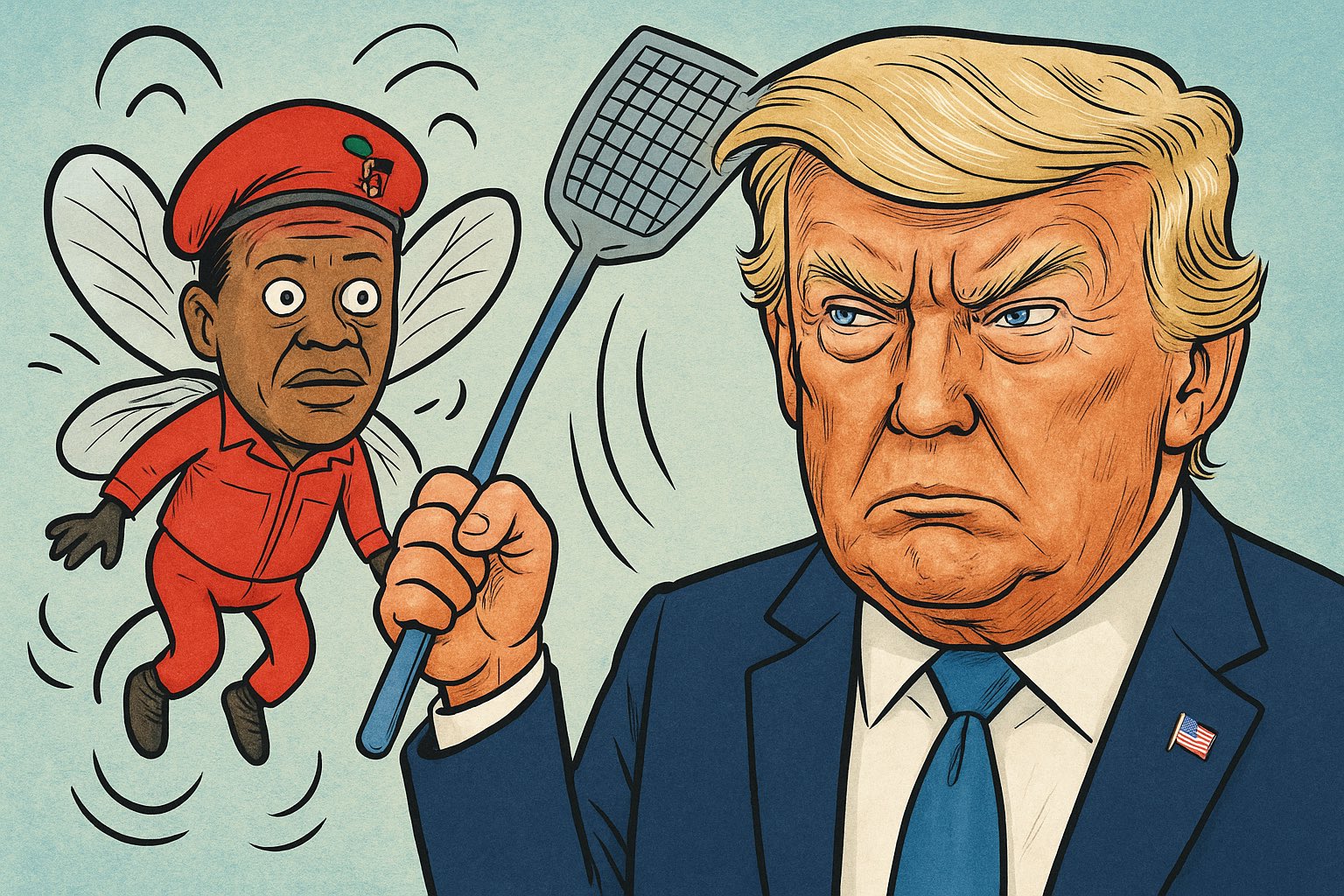
Malema’s act was a direct response to criticism from U.S. President Donald Trump. Trump had a recent diplomatic meeting with President Cyril Ramaphosa. During this meeting, he questioned why Malema had not been arrested for singing the song. The incident sparked renewed global debate about race, resistance, and freedom of expression in South Africa.
“I will never stop singing a song that Winnie Mandela sang before she died. That would be a betrayal to the struggle of our people,” Malema declared to a crowd of energised supporters.
The EFF leader accused President Ramaphosa of failing to defend the Constitutional Court’s 2022 ruling. This ruling recognized the song, also known by its Zulu title, “Dubul’ ibhunu” (Shoot the Boer), as protected heritage expression. It is not considered incitement to violence. Malema claimed Ramaphosa’s silence during his U.S. visit was a failure to uphold South Africa’s sovereignty and constitutional principles.
“When Trump says ‘Why is this man not in jail?’, he is simply saying ‘Why is this man still alive?’” Malema said. “He doesn’t scare me. I am not intimidated by America.”
The rally took on a defiant tone. Malema blended revolutionary rhetoric with militant symbolism. At one point, he exclaimed, “Shoot to kill, Nyamazana!”—a phrase evoking the enduring fight against systemic oppression. “Nyamazana,” roughly referring to a fierce or hunted figure, added emotional weight to the fiery call for resistance and justice.
Struggle Song or Hate Speech?
The song “Kill the Boer” has long sparked fierce debate in post-apartheid South Africa. In 2011, the Equality Court ruled it as hate speech. However, that decision was overturned in 2022. The Constitutional Court affirmed that the song, when performed in a political context, was not literally inciting violence. When the song is performed in a historical context, it is not literally an incitement to violence. Instead, it was a reflection of the pain and resistance of the past.
For the EFF and its leadership, singing the song is not about promoting racial hatred. It is about preserving the symbols of a liberation history. Many feel this history is being sanitized or erased to appease powerful interests.
The rally served as a response to international criticism. It was also a mobilization event ahead of the Ngwathe Local Municipality by-elections. Malema described the ANC-run municipality as a “disgrace” and called on residents to vote for radical change.
Beyond electoral politics, the rally in Koppies reaffirmed the EFF’s revolutionary identity. It was a moment that blended memory, defiance, and identity. Malema drew on South Africa’s painful past to argue for a bolder, unapologetic future.
“This struggle continues—not just in the courts, but in the hearts of our people,” Malema said. “We will not rewrite our history to comfort the privileged.”
About the Author