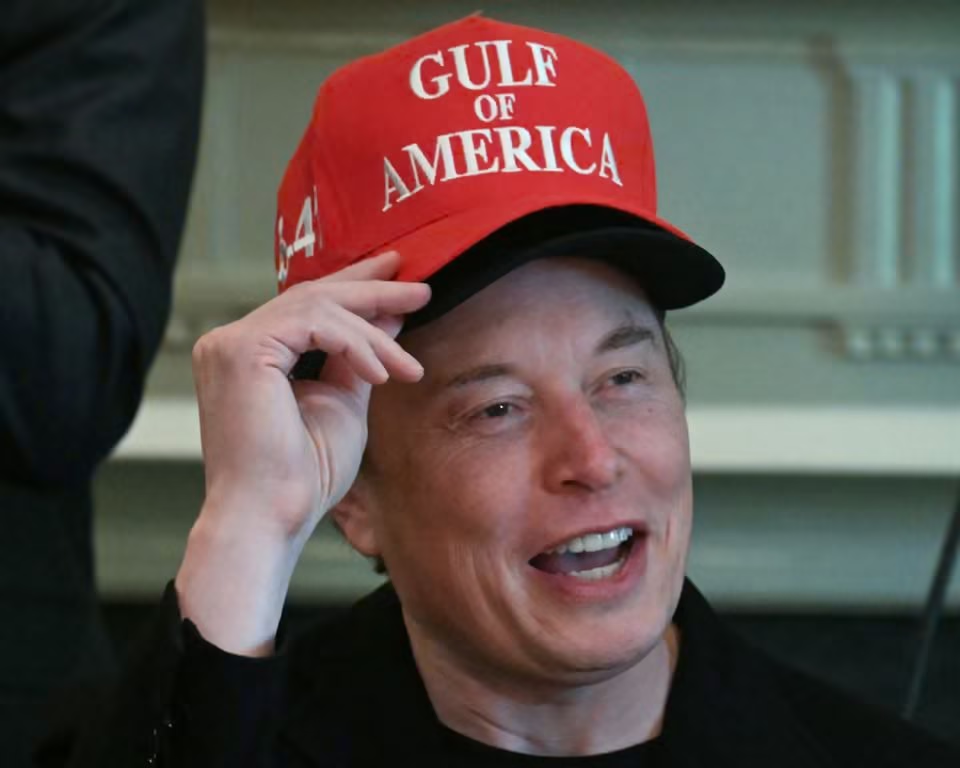
Elon Musk’s 130-day stint in the Trump administration ends in controversy, as speculation swirls around policy clashes, internal rivalries, and personal scandals. image: AFP/Getty
(The Post News)- After just 130 days in his role as head of the Department of Government Efficiency (DOGE) under President Donald Trump, Elon Musk made a dramatic and highly publicized departure that sent shockwaves through both political and corporate circles. While Musk’s exit was officially marked by praise from Trump, who hailed the tech mogul’s “terrific contributions,” behind the scenes, a series of conflicts and controversies may have spelled the end of his short-lived political chapter.
At the core of Musk’s departure was a growing policy rift between himself and the administration. One of the most contentious issues was a significant tax bill that Musk believed ran counter to DOGE’s central mission reducing government waste and spending. According to insiders, Musk felt increasingly marginalised as fiscal policies moved in a direction he could not support.
But policy was only one part of the storm. Internal tensions also played a key role. Musk’s rising influence within the administration reportedly led to clashes with Trump’s long-time aides. Sources say his involvement in discussions around cabinet appointments areas traditionally reserved for Trump loyalists sparked resentment among senior staff, many of whom viewed Musk as overstepping his bounds.
Business pressures added yet another layer of complexity. As Musk juggled his government role with his leadership responsibilities at Tesla and SpaceX, concerns emerged about his ability to manage it all. His father openly criticised the arrangement, warning that the political distraction could harm Musk’s companies. Coinciding with this criticism, Tesla reported a dip in sales, which some analysts linked directly to the CEO’s polarizing political entanglement.
Compounding matters were personal controversies that threatened Musk’s credibility. A bombshell report surfaced alleging frequent ketamine use during his time in government, raising questions about his judgment and fitness for such a demanding role. While Musk did not directly address the allegations, the media frenzy surrounding the claims further destabilised his position.
Finally, public backlash over DOGE’s aggressive cost-cutting measures began to mount. Entire programs were slashed, thousands of federal jobs were eliminated, and critics including philanthropist Bill Gates accused Musk of prioritising numbers over people. The fallout tarnished his image as a visionary reformer and painted him instead as a ruthless technocrat.
In the end, Musk’s exit was cloaked in formality and flattery. President Trump, ever the showman, lauded Musk’s work at a farewell press event. But the real story, whispered in political hallways and debated across news networks, is one of conflict, contradiction, and the challenge of translating entrepreneurial boldness into bureaucratic governance.
Musk’s foray into Washington, while brief, remains a fascinating case study of what happens when Silicon Valley idealism collides with the entrenched machinery of American politics.
About the Author