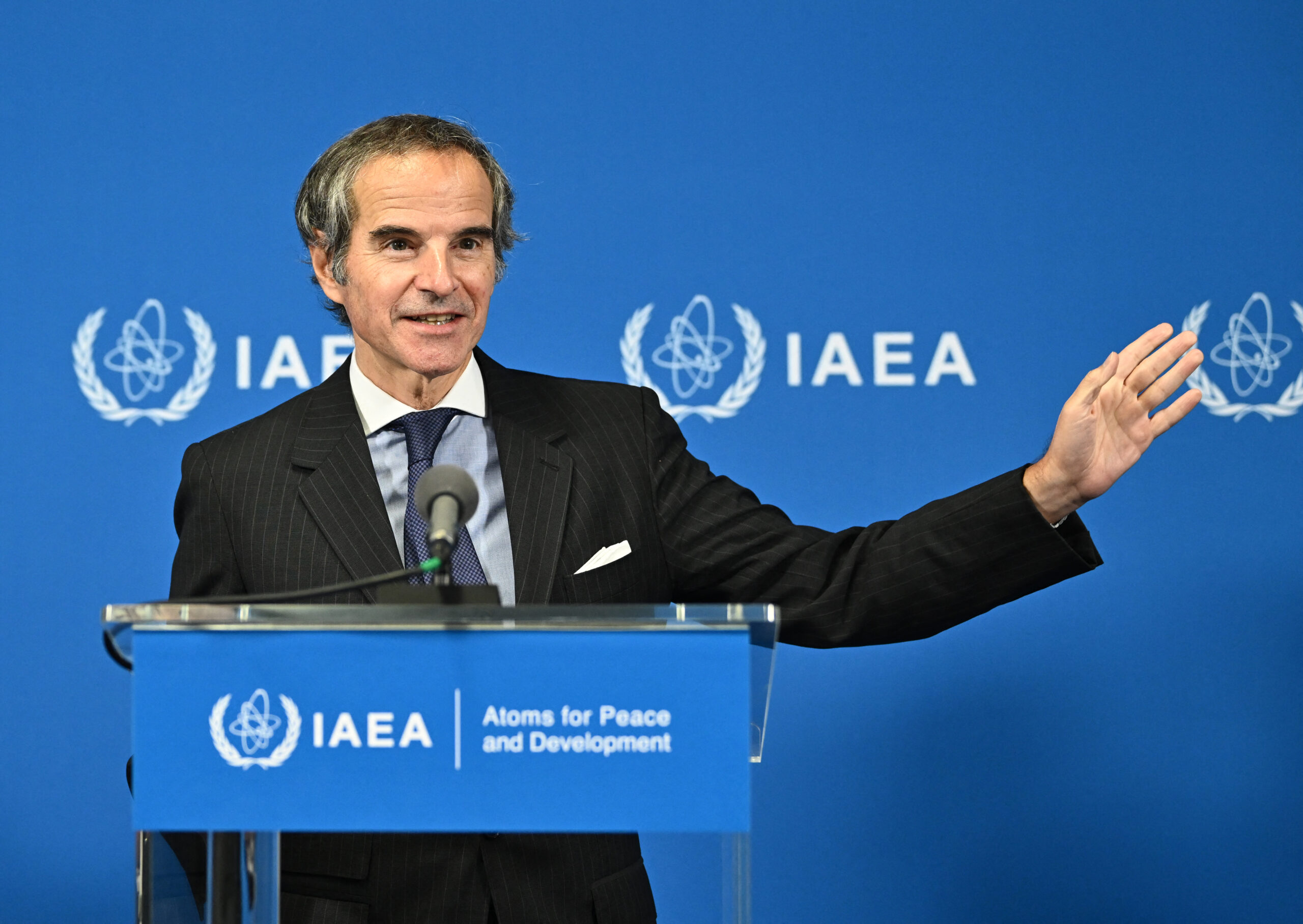
Rafael Grossi, Director General of the International Atomic Energy Agency (IAEA), speaks to journalists during a press conference, shortly after the IAEAs Board of Governors meeting at the agency's headquarters in Vienna, Austria on June 9, 2025. (Photo by Joe Klamar / AFP)
(The Post News)- Global nuclear tensions soared this week as the United Nations nuclear watchdog’s Board of Governors formally declared Iran non-compliant with its international safeguards obligations. The International Atomic Energy Agency (IAEA) resolution, a rare censure not seen in nearly two decades, immediately drew a forceful and retaliatory response from Tehran, casting a long shadow over impending diplomatic efforts and raising concerns of broader regional instability.
The IAEA Board of Governors’ resolution, approved on Thursday, saw 19 votes in favor, three against, and 11 abstentions. Notably, Russia, China, and Burkina Faso opposed the measure, which highlighted Iran’s “many failures to uphold its obligations since 2019.” The agency specifically pointed to Tehran’s ongoing lack of “full and timely cooperation” regarding undeclared nuclear material and activities at several undisclosed locations – an issue that has frustrated IAEA investigators for years. These breaches, according to the resolution, constitute non-compliance with the agreements designed to prevent the proliferation of nuclear weapons.
Iran wasted no time in condemning the IAEA’s decision as “political” and lacking “technical and legal basis.” In a joint statement, the Iranian Foreign Ministry and the Atomic Energy Organization of Iran (AEOI) announced concrete steps to escalate their nuclear program. They confirmed the construction of a third nuclear enrichment facility in a “highly secure” location and revealed plans to replace first-generation centrifuges at the Fordow nuclear site with more “advanced” models.
Further ratcheting up the stakes, Iran has reportedly warned the UN that if the IAEA resolution leads to sanctions, it could withdraw from the Treaty on the Non-Proliferation of Nuclear Weapons (NPT). This move would be a drastic step, signaling an unprecedented deepening of the international nuclear standoff.
The IAEA’s censure comes at a critical juncture for diplomatic engagement. Oman’s Foreign Minister Badr Albusaidi had announced on Thursday that the United States and Iran are scheduled to hold a sixth round of talks on Sunday to discuss Tehran’s advancing nuclear program. However, observers in Tehran suggest the IAEA’s resolution will “highly influence” these already fragile negotiations.
US President Donald Trump and his Middle East envoy, Steve Witkoff, are pushing for a new nuclear deal, yet Trump recently expressed “less confidence” about reaching an agreement. He reiterated his firm stance against Iran developing an atomic bomb, amidst growing speculation in Israel about potential airstrikes on Iranian nuclear facilities should negotiations fail. In a show of alignment, Israeli Strategic Affairs Minister Ron Dermer and Mossad intelligence agency head David Barnea are reportedly meeting Witkoff ahead of the Oman talks.
The current climate is fraught with warnings of potential conflict. A diplomatic source close to the matter cautioned that Iran has a “very small window to answer the resolution,” or face “massive, massive repercussions, including the potential of further isolation and a wide range of sanctions.” Israel’s foreign ministry has urged the international community to “respond decisively.”
Indeed, fears of a “massive conflict” in the Middle East persist, as articulated by President Trump. Iran has already threatened to target US military bases in the region if hostilities break out. As a sign of mounting anxiety, the US has begun evacuating non-essential government staffers from several countries in the Middle East, including the Gulf region, reflecting the heightened state of alert.
IAEA Director General Rafael Grossi has consistently voiced concern over the agency’s dwindling “continuity of knowledge” regarding Iran’s nuclear program, a consequence of Tehran’s restrictions on IAEA access and surveillance equipment since 2022, compounding the international community’s challenges in verifying the peaceful nature of Iran’s nuclear ambitions.
About the Author