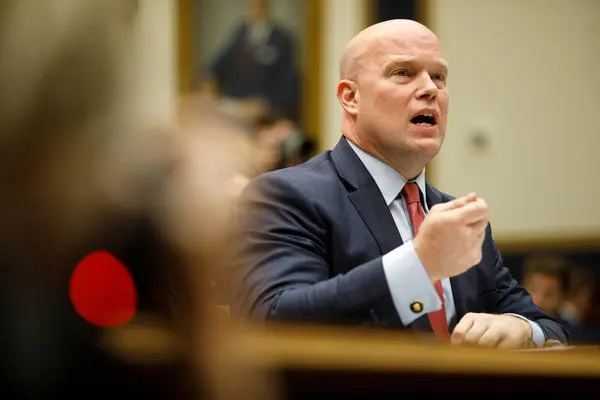
During the Nato meeting, the United States ambassador, Matthew Whitaker, said the Ukrainian drone attack on Russian strategic bomber their airbases earlier this month was “badass” but also “a little bit reckless. Source image: New York Times
(The Post News)- During the Nato meeting, the United States ambassador, Matthew Whitaker, said the Ukrainian drone attack on Russian strategic bomber their airbases earlier this month was “badass” but also “a little bit reckless, and a little bit dangerous”, echoing similar sentiments from Pesident Donald Trump.
Trump reportedly called the operation “strong” and “badass” but admitted it would likely complicate ceasefire negotiations, especially because Ukraine “didn’t have the cards on their side”—as if war were a high-stakes poker game rather than a warfare at the cost of human life.
The June 1st operation, in which Ukraine smuggled 117 drones into Russian territory to strike four separate airbases, was the country’s “largest single-day attack” since the war began. The targeted bases—Engels, Dyagilevo, Shaykovka, and Morozovsk—house Russia’s long-range strategic bombers, including those capable of delivering nuclear weapons. Although footage circulated online appears to show damaged aircraft, Russia’s Deputy Foreign Minister Sergei Ryabkov maintained that the country’s nuclear capability remains largely unaffected.
While the tactical implications of the strike are significant, the framing of the event by U.S. political figures raises deeper concerns. Western leaders describing a major military escalation in casual or celebratory terms signal a disturbing shift in how warfare and the use of military force is discussed by those in power. This issue becomes even more pressing when seen in the context of Trump’s recent comments following the violent state crackdown on protesters in Los Angeles. It indicates a growing comfort among these political leaders with using and glorifying force — whether abroad or at home.
The normalisation of warfare through language like “badass” becomes even more problematic when set against the backdrop of staggering casualties. According to Mirror UK, over 1,000,340 Russian personnel have been killed or seriously wounded since the full-scale invasion began in February 2022. On the Ukrainian side, The Wall Street Journal estimates over 80,000 troops killed and 400,000 more wounded by the end of 2024. These figures don’t even account for civilian deaths, which continue to rise.
The language transforms an act of war — one that holds real, devastating consequences for thousands — into a moment of geopolitical theatre. Moreover, such rhetoric, particularly from figures like Trump and Whitaker, doesn’t just trivialise violence—it risks encouraging it.
About the Author