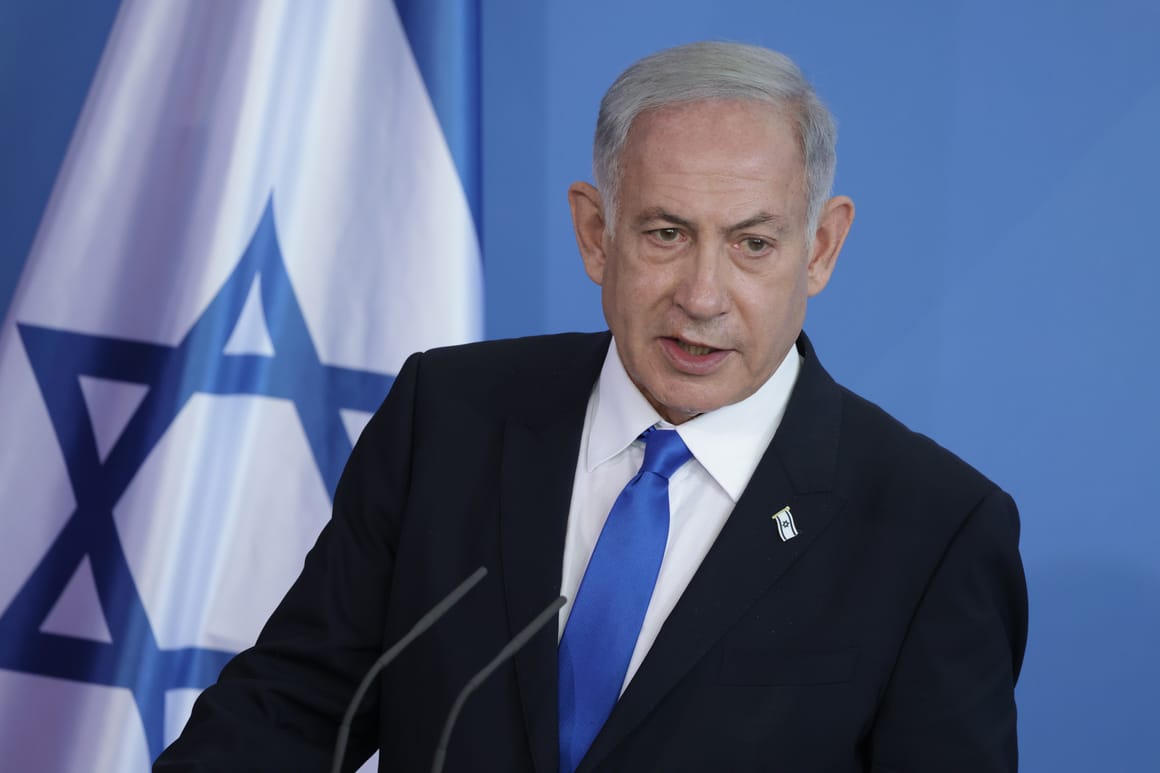
Prime Minister Benjamin Netanyahu vows Iran will "pay a heavy price" after missile strike on Soroka Hospital. Image: Sean Gallup/Getty Images.
(The Post News)– In a forceful declaration following a ballistic missile strike on Soroka Hospital in Beersheba, southern Israel, Prime Minister Benjamin Netanyahu vowed Thursday that “Iran will pay a heavy price.” His words signal an intensified response directly tied to what Israel calls a deliberate attack on a civilian medical facility.
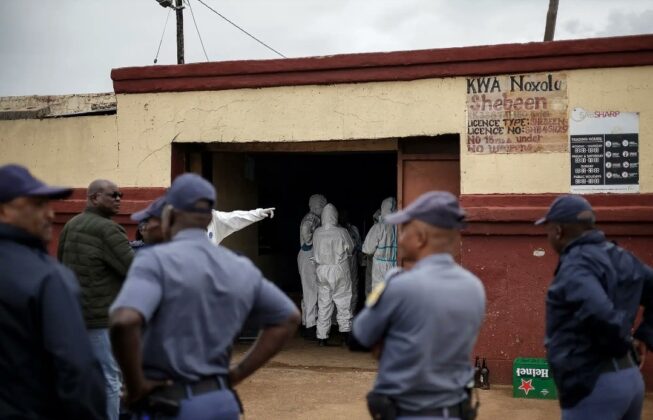
The missile, which Israeli officials attribute to Iran, caused extensive damage to an old surgical ward at Soroka Hospital. While that section had been pre-emptively evacuated—a crucial measure that limited casualties—the attack still left widespread damage and sent debris through the building.
65 people were reported wounded across Israel from Thursday’s missile barrage, with several at Soroka suffering light injuries mainly from the blast shockwave. The hospital has since restricted new admissions to only life-threatening emergencies.
Netanyahu’s threat was quickly reinforced by his defence minister, Israel Katz, who stated that both he and the prime minister had already “instructed the IDF to increase the intensity of attacks against strategic targets in Iran and against government targets in Tehran.” This direct order outlines the specific nature of the “heavy price” Iran is expected to pay, moving beyond military infrastructure to target the very heart of the Iranian regime.
Health Minister Uriel Buso condemned the hospital strike as a “war crime committed by the Iranian regime”, framing Israel’s intended response within a context of accountability.
Iran, however, has vehemently denied intentionally striking the hospital. Iranian state media asserted that their missiles were aimed with “direct and precise” intent at military intelligence facilities and an IDF base located adjacent to Soroka, claiming the hospital was “exposed only to the blast wave” from these nearby explosions.
Some Iranian-affiliated outlets suggested the specific building hit within the hospital complex was a “medical building used by soldiers”, offering an alternative justification for the impact.
This direct hit on a hospital significantly escalates a conflict already on its seventh straight day of direct missile exchanges. Netanyahu’s explicit threat to target governmental centres marks a dangerous new phase, as Israel clearly intends to use this incident to justify a more forceful and expansive retaliation.
The international community, while often calling for restraint, now faces the stark reality of this direct escalation. International humanitarian law strictly protects medical facilities; deliberate attacks on hospitals not being used for “hostile acts” are considered war crimes. Human rights organizations have condemned the loss of life on both sides and reiterated that international law prohibits the intentional targeting of civilians.
As Netanyahu’s government signals its intent to strike Tehran, the immediate aftermath of the Soroka Hospital attack has placed the region on a knife-edge, with the profound implications of Israel’s promised “heavy price” hanging heavy in the air.
About the Author