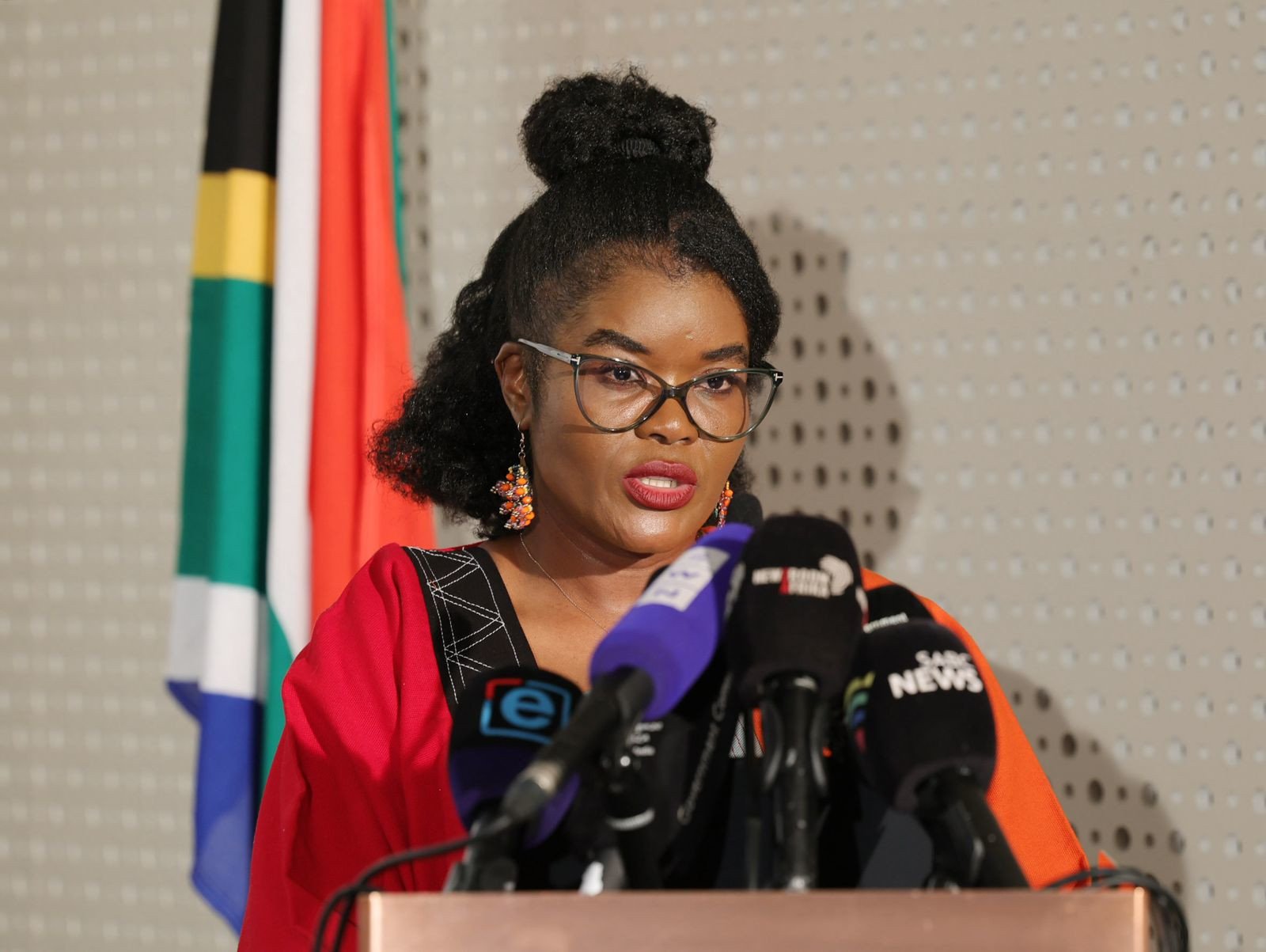
Advocate Motau denies role in Nkabane’s SETA panel, fueling scandal and calls for investigation. image: @GovernmentZA/X
(The Post News)- Deputy Minister of Higher Education Dr. Nobuhle Nkabane is facing mounting political and legal pressure after Advocate Terry Motau SC publicly distanced himself from a board appointment process she claimed he was involved in. The controversy, which centres on the appointments of board members to the Sector Education and Training Authorities (SETAs), has raised serious questions about political interference, transparency, and the misuse of official authority in public governance.
In a letter that has since been widely circulated on social media, Advocate Motau made it clear that he was unaware his name had been associated with the selection panel for SETA board appointments until he learned about it in the media. He explicitly stated that he did not chair or participate in any such panel, had not received documentation, had not met with any members, and had not produced any recommendations. In his own words: “I did not assist you or your office in reviewing and assessing the nominations received for the appointment of Accounting Authorities per Sector Education and Training Authorities. I did not participate in this process.” He further clarified, “The upshot of all of this is that you intended to appoint me to chair the committee, which intention never materialised.”
Motau’s denial has sent shockwaves through Parliament and prompted calls for both ethical and legal consequences for Nkabane. Members of Parliament, led by Democratic Alliance MP Karabo Khakhau, have accused the Deputy Minister of misleading the legislature. Khakhau confirmed she had submitted an affidavit to Parliament’s Ethics Committee and publicly stated that Nkabane must be held accountable for allegedly lying to Parliament and, by extension, to the people of South Africa. ANC MP David Kgabo added his voice to the criticism, suggesting that the so-called independent panel functioned more as an extension of the department’s executive leadership than as a credible body. He argued that the integrity of the entire appointment process had been compromised.
Parliamentary portfolio committee chairperson Tebogo Letsie confirmed that Parliament is actively considering legal action under the Powers, Privileges and Immunities of Parliament and Provincial Legislatures Act. He affirmed that Parliament had received official correspondence listing Advocate Motau as the chair of the panel a claim now publicly contradicted by Motau himself. “We will not be complicit in attempts to undermine parliamentary oversight,” said Letsie, underlining the seriousness of the matter.
The controversy initially erupted when Nkabane appointed several politically connected individuals to SETA boards in May. Among the appointees were Buyambo Mantashe, the son of Minister of Mineral Resources and Energy Gwede Mantashe; former KwaZulu-Natal Premier Dr. Nomusa Dube-Ncube; KZN Transport Department head Siboniso Mbhele; and ANC Johannesburg deputy regional secretary Loyiso Masuku. These appointments raised immediate concerns of political patronage and cadre deployment, particularly given the opaque nature of the selection process. Nkabane had resisted multiple calls from lawmakers to disclose the identities of the panel responsible for the appointments. When the names were finally revealed Asisipho Solani, Nelisiwe Semane, Mabuza Ngubane, Rhulani Ngwenya, and Advocate Terry Motau the inclusion of Motau’s name triggered alarm and led to his public disavowal.
Although the board appointment process has since been scrapped, Members of Parliament have argued that the damage to public trust in the SETAs, and to the credibility of the Higher Education Ministry, has already been done. Critics say the incident reflects a deeper institutional crisis, where political interests are prioritised over transparency, due process, and the merit-based selection of leadership in public institutions.
Nkabane has yet to issue a direct public response to Advocate Motau’s claims. Her office has, however, stated that she remains ready to respond to Parliament and account for her actions. As calls intensify for her resignation or formal investigation, the outcome of this growing scandal may prove pivotal not only for her political career but for the credibility of public sector governance in South Africa.
About the Author