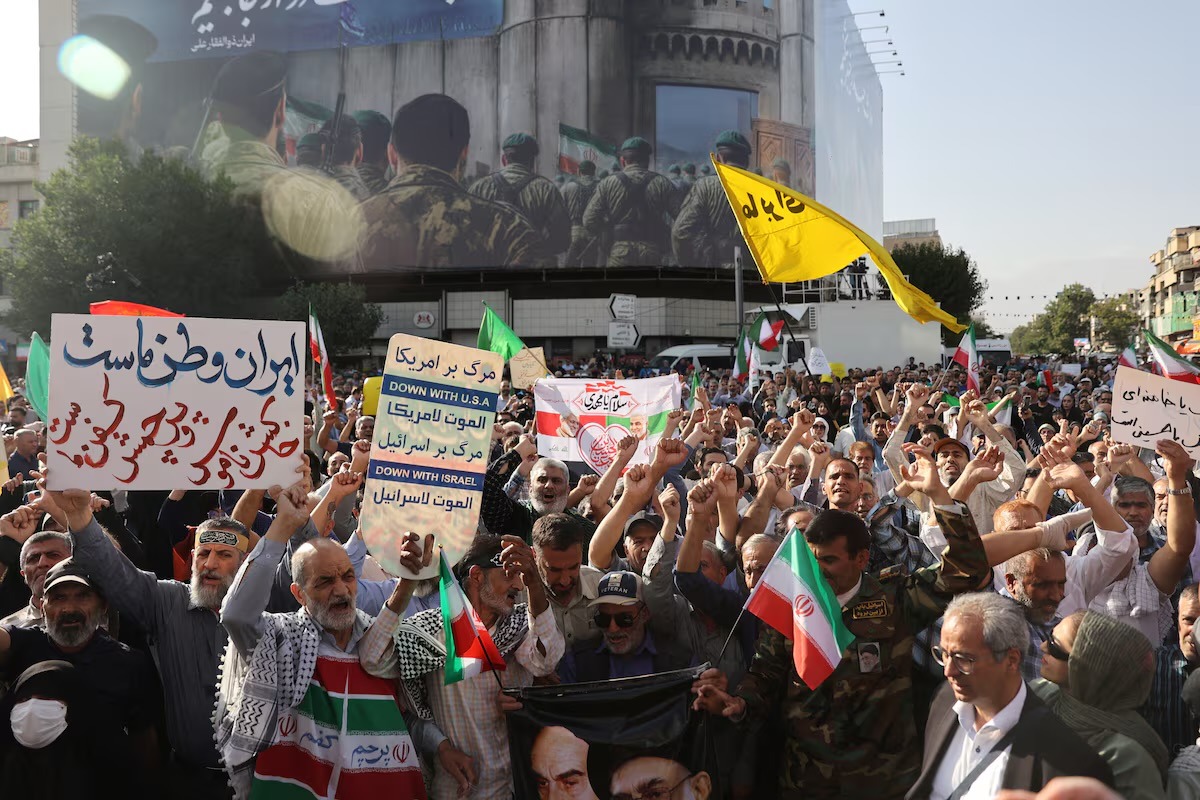
Iranians take to the streets in protests, condemning the U.S and Israel strikes on their nuclear sites and demanding resistance against foreign aggression. Image: Reuters
(The Post News)- Iran’s Supreme Leader Ayatollah Ali Khamenei has vowed to punish “the Zionist enemy” following coordinated U.S. and Israeli airstrikes on Iranian nuclear facilities over the weekend. Khamenei, breaking his silence since the attacks began, delivered his first public comments on Monday, promising retribution and vowing that Iran would not remain passive in the face of Western aggression. The strikes mark the most significant Western military action against Iran since the 1979 Islamic Revolution and have ignited fears of a broader regional conflict.
The escalation came after the United States launched precision strikes on three major Iranian nuclear sites Fordow, Natanz, and Isfahan alongside Israeli forces. According to U.S. military officials, the operation included 75 precision-guided munitions, including bunker-buster bombs and Tomahawk missiles, aimed at crippling Iran’s underground nuclear infrastructure.
Iranian President Masoud Pezeshkian responded by calling the strikes “aggression” and promised retaliation. “The Americans must receive a response to their aggression,” he said. Iran later fired missiles at Israeli targets, wounding several and damaging infrastructure in Tel Aviv. However, Tehran has not yet acted on broader threats to strike U.S. military bases or close the Strait of Hormuz, a critical global oil passage.
Iran claims that over 400 people have been killed and more than 3,000 wounded since Israel began its offensive on June 13. Israeli authorities say at least 24 people have died from Iranian retaliatory strikes.
Behind the public saber-rattling, some analysts believe diplomacy may still be the endgame. Former White House National Security Council official Matthew Bryza told news media that Trump’s true objective could be to force Iran back to the negotiating table.
“Trump lost faith in the negotiating process and decided to use force. But at the end of the day, he wants an agreement,” Bryza said. “He wants to be seen as the diplomatic hero.” He added that while Trump may be posturing, Israeli Prime Minister Benjamin Netanyahu likely supports actual regime change in Tehran—a difference that could spark tension between the two allies.
Meanwhile, international leaders have called for de-escalation and a return to diplomacy, warning that any disruption of the Strait of Hormuz could derail the global economy and spark a larger war.
As Iran vows revenge and regional powers brace for the next move, the world waits to see whether diplomacy or destruction will prevail.
About the Author