![Lebanon and Qatar Call for Israeli Withdrawal from Southern Lebanon and Reinforced Regional Ceasefires [Image by Daily Pakistan]](https://www.thepostnews.net/wp-content/uploads/2025/06/qatar-lebanon-welcome-iran-israel-ceasefire-call-for-halting-israeli-aggression-in-gaza-news-285380.jpg)
Lebanon and Qatar Call for Israeli Withdrawal from Southern Lebanon and Reinforced Regional Ceasefires [Image by Daily Pakistan]
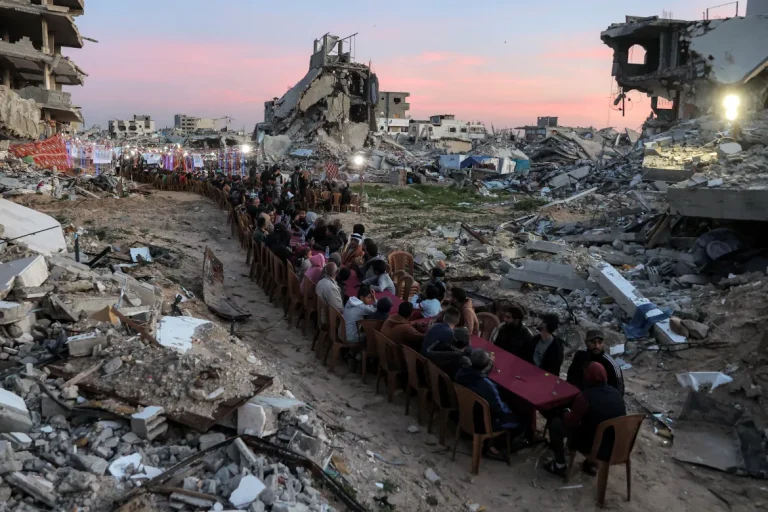
(The Post News)- At a high-stakes joint press conference, the top diplomats of Lebanon and Qatar called for de-escalation in the region and called for Israel to pull out of five contested positions across Lebanese borders. The press conference took place amid fragile attempts at ceasefires after recent military encounters between Israel and Iran, with continued Israeli military action in Lebanon and Gaza.
Lebanon’s Foreign Minister, speaking to his Qatari counterpart, reaffirmed his country’s determination to regain complete sovereignty over all Lebanese territory. “We are making every effort in a bid to prove and impose our authority on all of Lebanon’s territories on the basis of an agreement which we are committed to adhere to,” he declared. He said that despite Israel’s unrelenting occupation of five posts along Lebanon’s southern border, Beirut is trying to mobilize Arab and international pressures to force Tel Aviv to pull back.
“On numerous occasions, I have met with His Excellency asking for Qatar’s help to Lebanon in this regard,” the Lebanese minister went on to say, referring to the Qatari Foreign Minister.
On the broader regional crisis, he hailed the recent Israel-Iran ceasefire as a result of a combined diplomatic effort by the powers of the region—led by Qatar—as having averted total war. “Thank God, we held our collective efforts hand in hand in Lebanon to steer the country away from all-out war,” he said.
In Gaza, the Qatari Foreign Minister said that indirect negotiations between Israel and Hamas, facilitated by Qatar, Egypt, and the United States, have registered incremental progress. “But we continue with our efforts, searching and seeking any opportunity to have indirect negotiations being conducted… towards the aim of reaching an agreement.”
Despite the Iran-Israel ceasefire, Qatar was concerned that Israel might utilize the truce to grow operations in Gaza. “We hope that the Israelis wouldn’t take advantage of the situation… to vent their aggressiveness on Gaza,” warned Qatari minister.
The minister assured that Qatar had made a formal declaration to the UN Security Council and convened an emergency GCC session, stressing that Doha prefers diplomacy to confrontation. “We are not seeking escalation… We can’t be at the forefront of any escalation.”
Qatar delivered a forceful message to any foreign nation that was contemplating aggression against its soil: “There is a clear understanding that any violation or attack on the state of Qatar… is unacceptable.”
Meanwhile, reporting to journalists from Beirut, journalist Zaina Hodder did an on-the-spot report citing the Israeli attacks continuing in southern Lebanon. “While I’m speaking to you now, there’s an Israeli drone flying overhead at very low altitude… in the middle of the Lebanese capital,” stated Hodder.
She reported that Israel has maintained airstrikes against Hezbollah positions despite the ceasefire agreement that was signed in November. “Last night, it conducted a wave of airstrikes across southern Lebanon—over a dozen. A few hours ago, there was an Israeli drone attack that targeted a car in southern Lebanon, killing at least three.”
In response to a question about Israel’s ongoing breaches and disregard for dialogue, Lebanon’s Foreign Minister again insisted that pressure must now be applied by the international community. “We are doing our best… to put pressure on Israel, starting from the Arab world until the UN Security Council permanent member states,” he emphasized, declaring that recent Israeli behavior is tantamount to a breach of the ceasefire agreement.
The press conference concluded with both of the ministers once again denouncing war, regional stability, and the rule of law. They also called on international media and publics to only use confirmed sources of information so as not to circulate misinformation to fuel tensions.
Although the region is still tense, the message of peace is clear: ceasefires have to be respected, incursions into territory addressed, and negotiations approached—not war.
About the Author