Syria's president condemns Israeli airstrikes in Damascus and pledges Druze protection as a U.S.-led ceasefire halts fighting in Sweida after 360 are killed. Image: Haaretz.
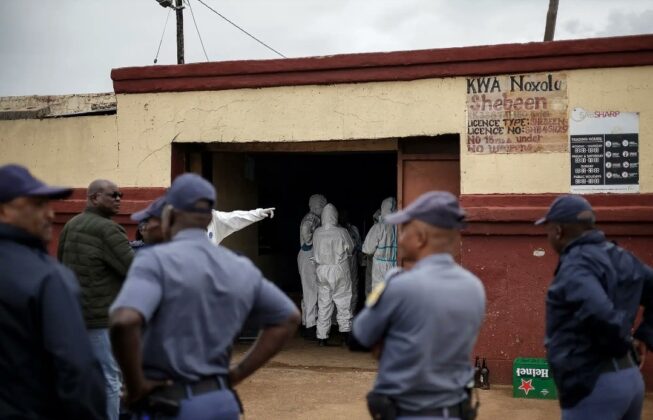
(The Post News)– Syria’s interim president Ahmed al-Sharaa has condemned Israel in strong terms for the “large-scale targeting of governmental and civilian installations.” This followed an unprecedented Israeli bombing of Damascus’ center on Wednesday, in revenge for deadly clashes between Druze militiamen and Syrian government forces in the southern province of Sweida.
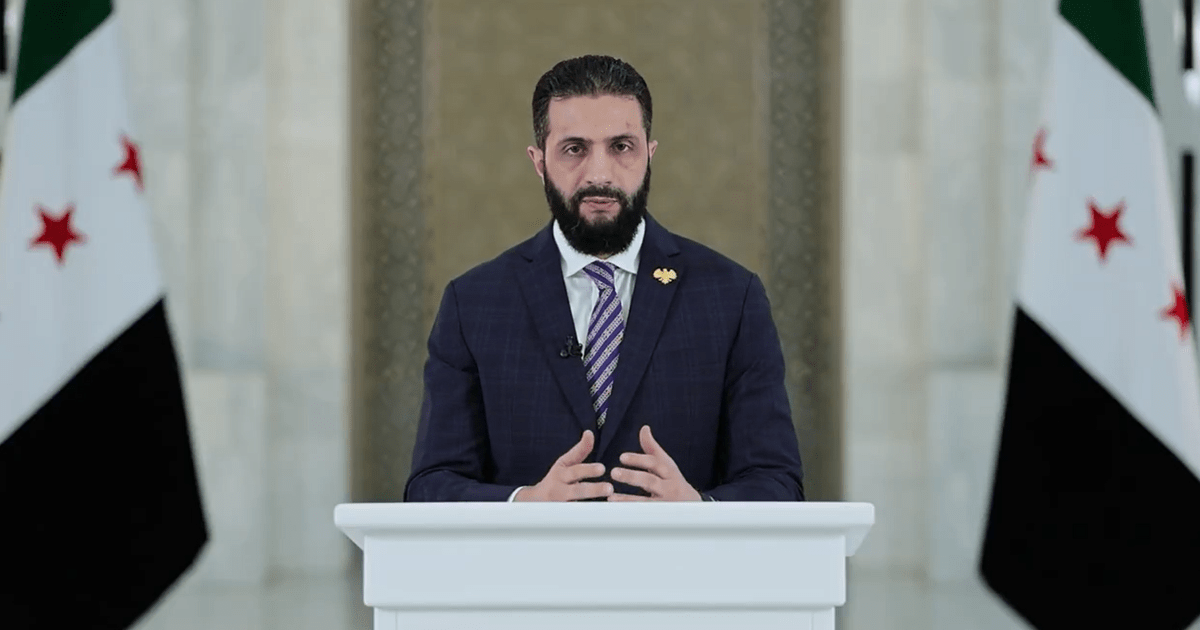
In his first television address since the attacks, Sharaa stated that Israel’s actions had possibly “pushed things to a large-scale escalation,” were it not for last-minute mediation by the United States, Turkey, and Arab nations. According to Shara, the intervention of the U.S., Turkey, and Arab nations spared the region from an uncertain fate.
Sharaa, a former jihadist leader who became leader after Bashar al-Assad’s ouster in December 2024, vowed to protect the Druze minority and pledged that those responsible for violence in Sweida would be held accountable. “The Druze are the responsibility and under the protection of the state,” he said, adding that security tasks in the region would now be left to local religious elders and communal factions.
A minimum of 360 people have died in days of fighting in Sweida, the UK-based Syrian Observatory for Human Rights (SOHR) reported, among them 27 Druze civilians who were executed summarily, it said. The violence has been the worst sectarian crisis in the south since the beginning of the war and threatens to destroy the fragile post-Assad balance.
The Israeli airstrikes on Wednesday targeted parts of Syria’s Ministry of Defence and struck near the presidential palace. The Israeli army stated the attack was intended to convey a message to Damascus regarding its role in the Sweida crackdown and its deployment of troops to the Druze-majority region.
Israeli Prime Minister Benjamin Netanyahu said the strikes were aimed at protecting the Druze people, who he referred to as “natural allies of Israel.” The Israeli army admitted it had also targeted Syrian tanks and conducted drone strikes against government forces during the week, killing several soldiers. Tensions mounted as dozens of Israeli Druze burst through the border fence into Syria on Wednesday to meet their counterparts in Sweida in a symbolic display of solidarity. The Israeli military later said it was attempting to return those civilians safely.
United States Secretary of State Marco Rubio said on Wednesday that there was a mutual agreement between parties to restore calm. “We have agreed on specific steps that will bring this troubling and horrifying situation to an end tonight,” Rubio said in a post on X. He described the violence as “the product of historic rivalries” and urged both sides to “deliver on their commitments.”
The Syrian army began withdrawing from Sweida overnight, following U.S. insistence that government forces withdraw from the region. While the ceasefire appeared to be holding on Thursday morning, skepticism remains. One of the highest-ranking Druze religious figures, Sheikh Yousef Jarbou, backed the truce, but another, Sheikh Hikmat al-Hijri, rejected it and vowed to fight on, referring to the Damascus authorities as “armed gangs.”
The Druze, a small but influential religious minority in Syria and Israel, have enjoyed a precarious position in the country’s political and sectarian hierarchy for a while. While some leaders accepted the ceasefire and government assurances, others view Sharaa’s government with intense suspicion, citing reports of abuse by security forces and the Islamist roots of the current government.
The Israeli side has never stopped aiming at our stability and is attempting once again to render our holy land a stage of endless turmoil,” Sharaa said in his Thursday speech, portraying Israel’s entry as an opportunistic attempt to capitalize on sectarian rifts. The Syrian government admitted to “unlawful criminal acts” by its troops in Sweida, which analysts say provided Israel with a pretext for intervention and helped further its longtime strategy of cultivating ties with regional minorities.
The Israeli escalation has drawn severe denunciations from Syria’s allies and neighbors. Saudi Arabia, Iran, Egypt, and Turkey denounced the strikes. Turkey called them “a deliberate sabotage of Syria’s stabilization efforts.” UN Secretary-General António Guterres denounced the Israeli airstrikes as “escalatory and dangerous.” The UN Security Council will be convening Thursday evening to discuss the spiraling crisis.
By Thursday morning, residents of Sweida reported a “tense calm,” as Syrian military vehicles withdrew from the city overnight. It is uncertain whether the ceasefire will hold amid a bitterly divided Druze leadership and increasing mistrust between the community and the central government.
Fighting in the province was sparked on July 13 when a Druze trader was reportedly kidnapped by members of local Bedouin tribes, triggering tit-for-tat violence. Government soldiers who were sent in soon found themselves in open battles with Druze militias, most of which have operated independently since Assad’s downfall.
Israel’s entry into the conflict on July 15 was a dramatic escalation, followed a day later by direct assaults on Damascus—the most intense Israeli assault on the Syrian capital in over a decade.
Sharaa concluded his speech with a call for unity: “The building of a new Syria requires all of us. We must place the country’s interests above every sectarian or personal interest. We reject every attempt to draw our people towards external agendas.” With sectarian tensions seething, international diplomacy scrambling to avert more bloodshed, and Israeli bombing adding to Syria’s frailty, Sweida’s fragile ceasefire may prove to be no more than the lull in the eye of the storm.
About the Author