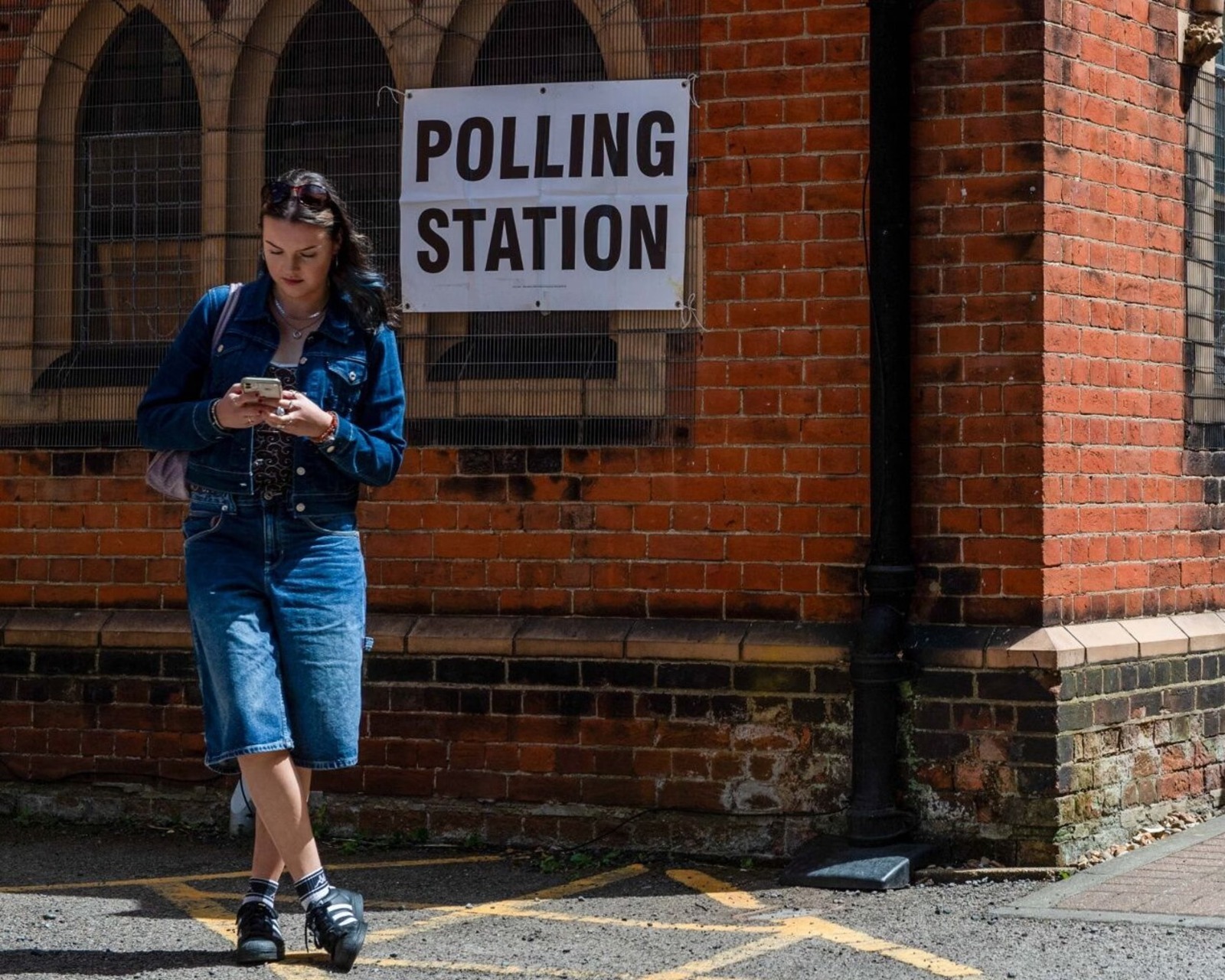
The UK government argues that giving 16- and 17-year-olds the vote is a matter of fairness, pointing out that many already hold jobs, pay taxes, and can enlist in the military, yet still have no say in choosing their leaders. Image: Getty Images.
(The Post News)– The UK government has announced that 16- and 17-year-olds will be able to cast their votes in the next general election, a shift that could significantly change the makeup of the country’s electorate.
Deputy Prime Minister Angela Rayner revealed the decision as part of a wide-ranging Elections Bill designed to increase public involvement in the democratic process and rebuild trust in the system. Framing the changes as a democratic reset, Rayner told reporters that they are taking initiatives to eliminate barriers and increase engagement. The last time the voting age was lowered, from 21 to 18, was back in 1969.
If passed, the law will mark the most significant change to voting rights in over half a century. Rayner said the move honours a Labour manifesto promise and reflects the reality that 16-year-olds already contribute to society through work, taxes, and even military service—they ought to have a say in the voting box.
This expansion would bring the rest of the UK in line with Scotland and Wales, where 16-year-olds already vote in local and devolved elections. However, it would be a first for general elections in England and Northern Ireland.
Not everyone is on board. Conservative shadow minister Paul Holmes raised concerns in Parliament, questioning the logic of letting teens vote while still barring them from activities like buying alcohol or getting married without consent. “This policy seems all over the place,” he said.
The bill also introduces other election changes. Voters will soon be able to use UK-issued bank cards as valid ID at polling stations, a shift from the more restrictive rules introduced in 2023. That law faced criticism after the Electoral Commission reported that 4% of non-voters cited ID requirements as a reason they didn’t cast a ballot.
Rushanara Ali, the minister behind the bill, said the government would roll out the ID changes gradually and safely, stressing the need to avoid fraud or confusion. There are also plans to simplify voter registration. A new automated system would share information between government agencies, like the Passport Office, so eligible voters can be added directly to the register.
To clamp down on foreign interference, political parties will need to vet donors more carefully. Companies wishing to donate will have to prove they’re earning income in the UK or Ireland. The Electoral Commission will gain new powers to fine rule-breakers up to £500,000.
The National Union of Students welcomed the changes as a “win for youth democracy” but urged the government to go further by scrapping voter ID laws altogether and introducing political education in schools.
Email: journalist-nkosinathi@thepostnews.net
About the Author