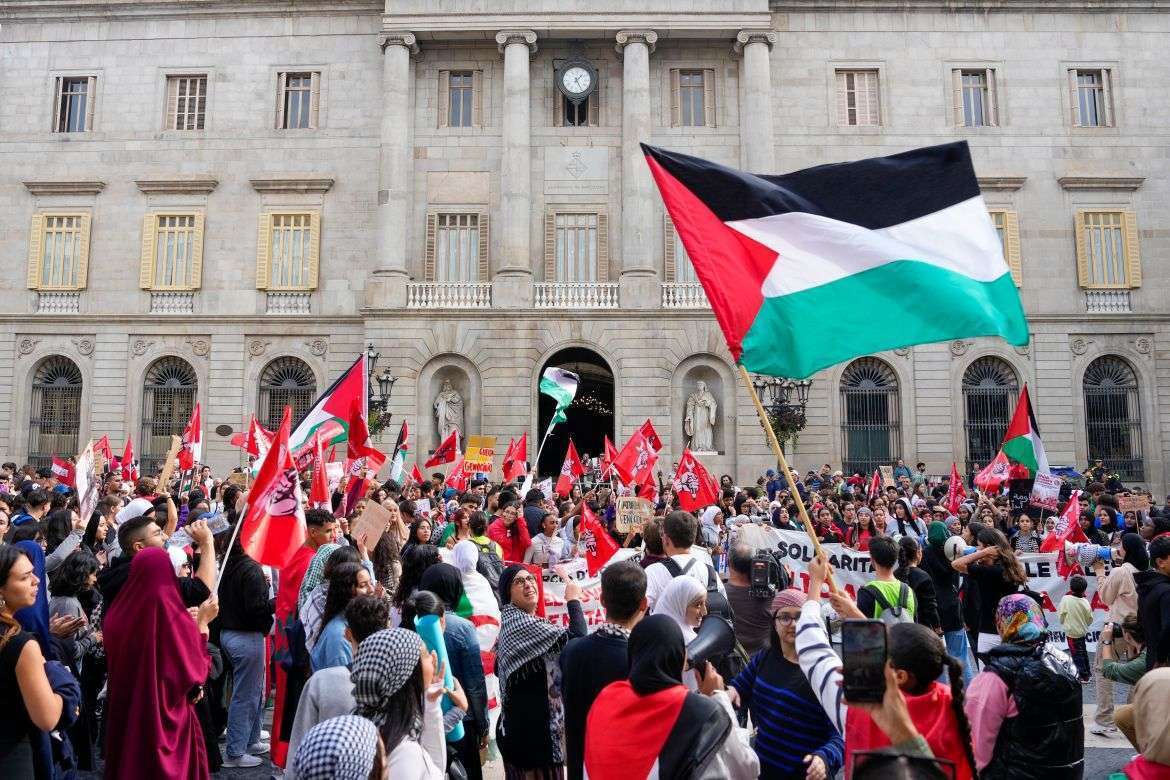
Barcelona, Spain, wave Palestinian flags and rally as part of the worldwide Gaza War protests, calling for action against Israel and demanding an end to the conflict. Credit: Alejandro Garcia
The Gaza War protests are growing around the world, with thousands of people loudly demanding action against Israel to stop the fighting. A major sign of this global push is that 28 countries have now officially called for an end to the conflict. This article will explain these protests, the demands from countries, and the terrible situation inside Gaza that makes everyone want the war to stop. It will also look at how Israel and other groups are reacting.
People from all walks of life are protesting the Gaza War. This includes aid groups, students, and regular citizens in big cities like London, New York, and even inside Israel itself. Over 100 aid organizations have joined the call for urgent action. These groups are deeply concerned by the “drip feeding of aid and the inhumane killing of civilians, including children, seeking to meet their most basic needs of water and food.” They are demanding an immediate and lasting end to the violence. They are also furious that help is not reaching Gaza, pushing for all borders to open so food, water, medicine, and fuel can get in easily. There is a strong feeling that Israel is breaking international laws, leading to calls for investigations into civilian deaths and destruction. Many also strongly oppose any plans to move Palestinians out of Gaza by force or change who lives where. While focusing on Gaza, the protests also call for the release of all people held captive by Hamas, and an end to new Israeli settlements in the West Bank and violence from settlers.
A very important event is that 28 countries, many of them allies of Israel, have signed a joint statement saying the war “must end now.” These countries include Australia, Austria, Belgium, Canada, Cyprus, Denmark, Estonia, Finland, France, Greece, Iceland, Ireland, Italy, Japan, Latvia, Lithuania, Luxembourg, Malta, the Netherlands, New Zealand, Norway, Poland, Portugal, Slovenia, Spain, Sweden, Switzerland, and the UK. Their strong words show how serious the global concern is. They said the suffering in Gaza has reached “new depths” and that Israel’s way of giving aid is “dangerous,” “fuels instability,” and “deprives Gazans of human dignity.” They have told Israel to follow international law and immediately let more aid in. They also said that forcing Palestinians to move is against international law. Nine of these 28 countries now recognize Palestine as a state, which shows a shift in how some nations view the conflict. The UK has even warned of “further action” if Israel does not comply, though Germany, a close friend of Israel, has been slower to add pressure.
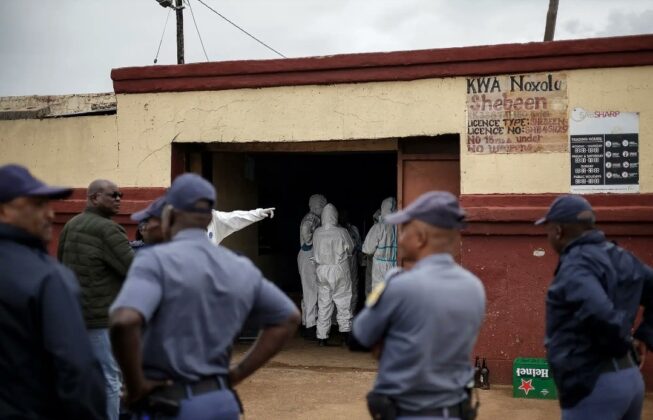
The reason for all these protests is the terrible situation in Gaza. As of July 2025, a full-blown famine is not just expected but intensifying. The World Health Organization WHO reported on July 23, 2025, a “deadly surge in malnutrition-related deaths,” with severe acute malnutrition centers completely full. At least 21 children under five have died from malnutrition this year alone. Food distribution sites have become incredibly dangerous, with health authorities reporting over 1,000 people killed trying to get food from these sites since late May.
The health system has completely fallen apart. Hospitals are destroyed or barely working due to attacks, and there’s almost no medicine, fuel, or medical staff. Even basic items like oxygen cylinders and painkillers are missing because Israel has restricted them under “dual-use” claims. Diseases like jaundice and diarrhea are spreading fast due to malnutrition, lack of vaccinations, and destroyed sewage systems. Access to clean water is almost non-existent, with 95% of households facing severe shortages.
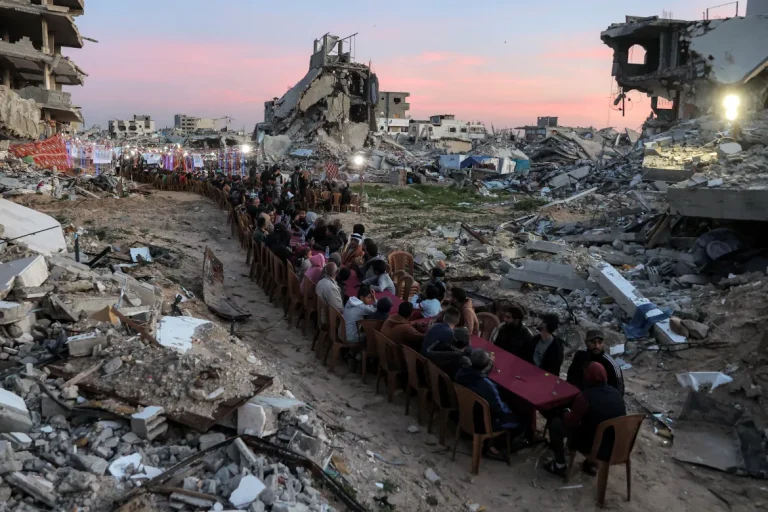
Most people in Gaza have been forced to move many times, some as many as 10 times, with over 1.9 million displaced in total. Their homes are destroyed, forcing them into dangerously overcrowded areas. Between July 9 and 16 alone, 648 Palestinians were killed and over 2,000 injured.
Getting help into Gaza faces massive obstacles. Limited entry points and slow, complicated checks at the borders severely restrict aid flow. UN agencies report constant denials and delays for aid movements. UNRWA, a key UN agency, has been unable to bring in any humanitarian supplies for over four months. Fuel shortages are critical, threatening to shut down hospitals, water systems, and all aid operations. Security risks are extremely high, with UN officials describing aid distribution sites as “sadistic death-traps” where “snipers open fire randomly.”
The various parties involved are reacting differently to this global pressure. Israel has rejected the joint statement from the 28 countries, calling it “disconnected from reality” and saying it “sends the wrong message to Hamas.” Israel insists it is acting for its security and to retrieve hostages, claiming Hamas is to blame for the war continuing by not accepting ceasefire deals. Defense Minister Israel Katz has even stated that operations will expand to “clear areas of militants and infrastructure” and urged Gazans to “overthrow Hamas.”
Hamas, on its part, claims Israel has rejected a “comprehensive deal” for captive release. They demand a permanent ceasefire, a full withdrawal of Israeli forces, and unrestricted humanitarian aid in exchange for the remaining 59 captives, around 20 of whom are believed to be alive. Hamas has also released disturbing propaganda videos of captives, threatening that all remaining captives will return in “coffins” if Israel continues its military operations.
The United Nations plays a crucial role in setting international norms and providing aid, but its efforts are heavily challenged. The UN Security Council, responsible for global peace, often struggles to act decisively due to disagreements among its powerful member countries, particularly the US, which has previously used its veto power to block resolutions. Many UN resolutions lack strong ways to enforce them, and both Israeli and Palestinian groups have at times resisted UN calls. UN agencies like UNRWA are severely hampered by blockades and insecurity, with their main warehouse for vital medicines recently damaged and over 100 aid workers killed since the start of the conflict. The UN Relief Chief has warned that the “erosion of rules of war in Gaza demands urgent response” as aid facilities are often in militarized zones.
Adding to the complexity, Israel is facing growing protests at home. Thousands are demanding Prime Minister Benjamin Netanyahu’s resignation, frustrated by his handling of the war and the captive crisis. Many captive families believe the government is prioritizing military action over negotiations. There is also anger over Netanyahu’s attempts to fire the Attorney General and the head of Shin Bet, Israel’s domestic security agency. Critics view these moves as politically motivated efforts to protect Netanyahu and his allies from legal issues, weakening democratic checks and balances.
As July 2025 draws to a close, the intense global demand for an end to the Gaza War, from many nations and millions of protesters, highlights the profound international frustration with the ongoing disaster. This external pressure, combined with significant internal protests within Israel, creates a highly unstable situation. The Future remains uncertain, with deep disagreements on all sides, but the loud calls from around the world clearly show that many want this terrible conflict to end now and for humanitarian relief to reach those desperately in need.
About the Author