Efforts to keep the spread of Foot-and-Mouth Disease (FMD) under control have been compromised. Image credit: Getty Images.
(The Post News)- Australia’s decision to lift its ban on certain US beef imports marks a significant development in the Trump-era trade landscape, acting as a potential truce following escalating tariff tensions. The move is being hailed as a major breakthrough by the US administration, but its practical impact on the Australian market is expected to be minimal, highlighting a diplomatic overture rather than a dramatic shift in consumer choices.
For years, Australia maintained stringent biosecurity restrictions on US beef, primarily concerning cattle raised in Canada or Mexico but processed in the United States. This de facto ban, rooted in concerns over Bovine Spongiform Encephalopathy (BSE), or “mad cow disease,” dating back to a 2003 outbreak, meant that while beef originating and processed solely within the US gained access in 2019, the broader North American supply chain was restricted.
US President Donald Trump frequently cited these US beef import restrictions as a grievance. In April, he announced sweeping tariffs, including a 10% levy on all Australian imports and a 50% tariff on steel and aluminum. Trump publicly stated, “Australia won’t take any of our beef, they don’t want it, they don’t want it to affect any of their farmers,” despite the US importing billions of dollars of Australian beef annually.
Now, Australia has lifted these specific restrictions, with Australian Agriculture Minister Julie Collins asserting the decision is “purely based on science.” Collins stated that a “rigorous science and risk-based assessment over the past decade” confirmed that new, more robust US movement controls, introduced in late 2024 and early 2025, effectively manage biosecurity risks by improving cattle traceability. Australian businesses can begin applying for import permits from July 28.
The Trump administration has swiftly declared victory. US Agriculture Secretary Brooke Rollins lauded the decision as a “major trade breakthrough,” decrying previous “non-scientific trade barriers” and celebrating a win for American farmers. However, the tangible effect on Australia’s domestic beef market is largely anticipated to be negligible.
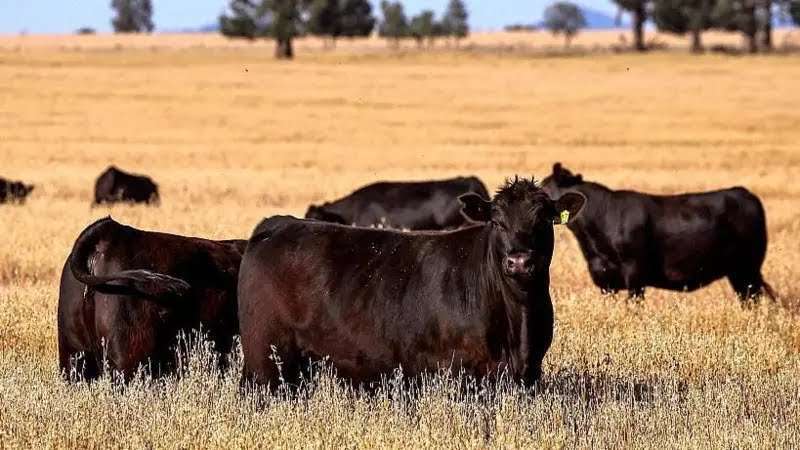
Australia’s cattle industry, a powerhouse that exports approximately 70% of its production, believes the influx of US beef will be minimal due to several key factors: the US’s own robust domestic demand, a US cattle herd at its lowest point in over 70 years, and the strength of the Australian dollar. Furthermore, Australian consumers overwhelmingly prefer locally sourced beef, which is often grass-fed, perceived as higher quality, and typically more affordable, with more than 99% of the beef in supermarkets, pubs, and restaurants being Australian.
Despite the 10% tariff imposed by the US, demand for Australian beef across the Pacific remains exceptionally strong. Australian beef exports to the US actually rose by 24% year-on-year in June 2025, with the US remaining the largest single destination for Australian beef.
This move is a calculated diplomatic play, serving as an “olive branch” to the Trump administration, aiming to de-escalate the tariff tiff and facilitate crucial negotiations over broader trade exemptions and strategic partnerships like AUKUS. Critics, including opposition lawmakers, have questioned the timing and suggested it risks Australia’s biosecurity in an effort to “appease Donald Trump.”
Ultimately, Australia’s decision to lift the US beef ban is less about dramatically altering supermarket shelves in Sydney or Melbourne and more about navigating the complex, politically charged waters of international trade under the current Trump-era administration.
About the Author