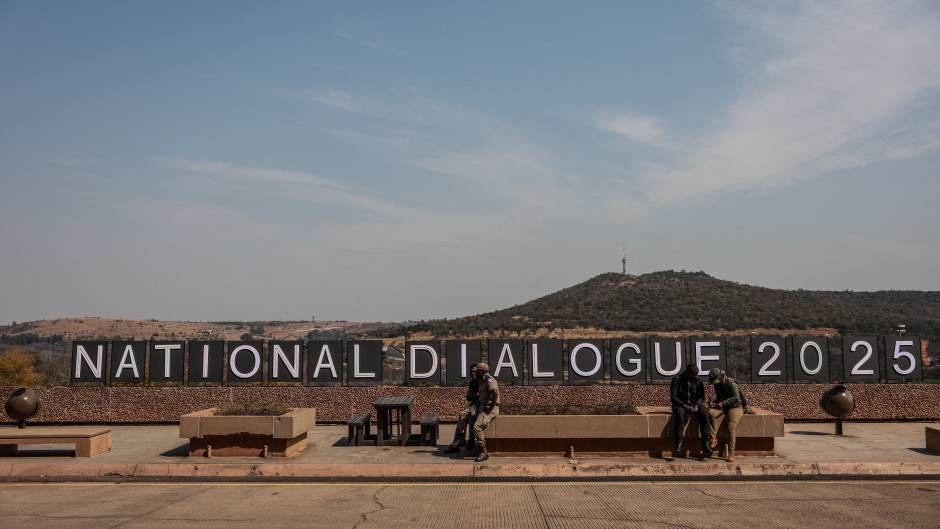
Participants gather at the University of South Africa (UNISA) in Pretoria for the inaugural National Dialogue 2025 Convention on August 15, 2025.People sit beside a "National Dialogue 2025" sign at UNISA, Pretoria, during the first National Convention on August 15, 2025.
(The Post News)– President Cyril Ramaphosa launched a national forum, urging South Africans to unite and tackle poverty, inequality, unemployment, crime, and land reform.https://www.thepostnews.net/2025/08/15/national-convention-opens-in-pretoria-with-broad-representation/
Reducing Entrenched Inequality
The national forum begins as South Africa continues facing poverty and inequality three decades after apartheid, requiring immediate, inclusive dialogue among all citizens. Addressing over 1,000 attendees, Ramaphosa declared the national forum essential for repairing systems that remain fractured despite decades of democratic progress.
In addition, he explained the national forum will develop plans for six-to-nine-month community discussions, ensuring citizens actively contribute their voices nationwide.
Facing Severe Inequality
Ramaphosa emphasized the national forum must unite diverse perspectives to confront South Africa’s extreme inequality, which threatens long-term social stability. Similarly, organizers set national forum priorities: tackling unemployment above thirty-three percent, reducing rising violent crime, and promoting land reform amid white minority control.
Therefore, the African National Congress (ANC) actively promotes the national forum as a platform to shape a more inclusive, prosperous, and equitable South Africa. However, the Democratic Alliance criticized the national forum as wasteful, refusing participation and insisting funds should address urgent social and economic needs. To address cost concerns, the presidency pledged the national forum will reduce expenses by using free venues, transportation, and community partnerships.
Participation, Ambassadors, and Public Engagement
Ramaphosa also urged all sixty-three million citizens to participate in the national forum, questioning persistent inequality between white and Black children after apartheid. He insisted the national forum must create a unified vision ambitious enough to inspire citizens yet realistic enough to achieve measurable results.
Additionally, thirty prominent South Africans, including John Kani and Mia le Roux, accepted roles as national forum ambassadors to encourage wide public participation. Furthermore, humanitarian Dr. Imtiaz Sooliman explained the national forum promotes open debate, enabling participants to challenge and improve each other’s proposals effectively.
Meanwhile, supporters argued celebrity ambassadors will attract public attention to the national forum, while critics questioned whether fame alone can generate real policy change. Nevertheless, ambassadors’ participation increased visibility for the national forum, boosting public trust and motivating citizens to engage actively in the process.
Responsibility, Issues, Future Perspective
The presidency promised to compile national forum results into a strategic plan, while civil society will monitor transparency and ensure accountability. Meanwhile, opposition parties warned the national forum could become political theater without concrete actions, undermining public confidence in democratic problem-solving mechanisms.
Thus, Ramaphosa described the national forum as a moral and practical necessity for overcoming apartheid’s legacy and fostering unity among South Africans. Finally, the national forum moves forward amid hope, skepticism, and public scrutiny, with its success potentially defining Ramaphosa’s legacy and South Africa’s democratic trajectory.
About the Author