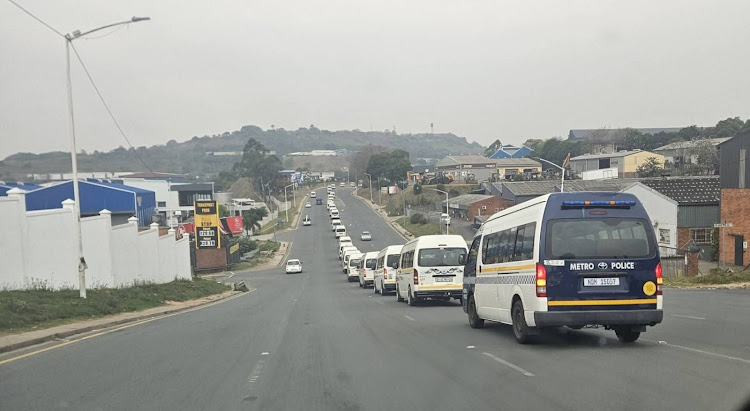
KZN Taxi Strike causes major disruption for daily commuters across KwaZulu-Natal, urging urgent transport planning. Image: Supplied.
(The Post News) – The KZN Taxi Strike has forced thousands of KwaZulu-Natal commuters to urgently seek alternative transport options as minibus taxi operators announced a two-day stoppage starting Thursday. This strike is in support of the Clermont and KwaDabeka Taxi Owners Association, following recent violent incidents between taxi drivers and e-hailing operators.
On Wednesday, a notice circulated widely on social media, warning residents that no taxi services would be available during the strike. Consequently, employers were advised to inform their staff, and parents were encouraged to arrange other means for their children’s travel to school. While updates could follow if the situation changes, the immediate message was clear: prepare for disruption.
This KZN Taxi Strike was triggered by events last Friday, when 25 taxis were impounded after confrontations escalated between members of the Clermont and KwaDabeka Taxi Owners Association and e-hailing drivers. During these clashes, one driver was shot and another was assaulted, resulting in heightened tensions. Subsequently, police arrested 15 taxi owners and drivers linked to the violence, further intensifying the conflict.
The ongoing tensions between taxi operators and e-hailing services in KwaZulu-Natal reflect a broader transformation in the country’s transport landscape. While minibus taxis have long been the backbone of public transit, technological advancements and changing commuter preferences are reshaping how people travel.
E-hailing platforms offer convenience and digital payment options that appeal to younger and more tech-savvy passengers, but they also challenge the traditional operators’ livelihoods. Efforts to integrate these competing modes of transport remain complex, as regulatory frameworks struggle to keep pace with innovation.
Stakeholders, including government agencies, taxi associations, and e-hailing companies, face the challenge of creating an inclusive system that accommodates new technologies without undermining the economic stability of established operators. This evolving dynamic underscores the importance of proactive dialogue and policy reform to foster coexistence and sustainable development within South Africa’s public transport sector.
KZN Taxi Strike Follows Impounding of 25 Taxis
Although many fear a complete shutdown, Santaco KwaZulu-Natal chairperson Boy Zondi has clarified that some taxi services will still operate outside Durban, even if availability within the city remains severely limited. Therefore, commuters outside Durban may experience less disruption, but those in urban centers should expect significant challenges.
KZN Taxi Strike Prompts Government and Police Response
Moreover, the KwaZulu-Natal Department of Transport, led by MEC Sboniso Duma, has acknowledged the strike and is actively engaging with taxi associations to seek a long-term resolution. Duma expressed regret over the inconvenience caused to passengers and students, emphasizing the department’s commitment to ensuring safety by deploying law enforcement to monitor the situation.
Similarly, Durban Metro Police spokesperson Colonel Boysie Zungu confirmed police are aware of the strike and have put contingency plans in place. Officers will be stationed at key transport hubs to maintain order and protect public safety throughout the strike period.
It is important to recognize that the KZN Taxi Strike is not an isolated event but part of a recurring pattern of industrial action in the province’s minibus taxi industry. This sector remains the primary mode of transport for a majority of residents, and such strikes regularly cause widespread disruption. Historically, taxi associations like the South African National Taxi Council (Santaco) play crucial roles in managing disputes, although responses can vary by region and situation.
Furthermore, the provincial Department of Transport’s involvement highlights ongoing efforts to mediate between conflicting parties. With the arrest of several taxi operators related to recent violence, law enforcement’s presence is expected to be heightened during the strike to prevent further escalation.
Consequently, commuters, employers, and schools have been urged to plan ahead by securing alternative travel arrangements, especially for students who rely heavily on minibus taxis. While ride-hailing services and municipal buses might offer some relief, these options are often limited or experience increased demand during strikes.
In summary, the KZN Taxi Strike continues to disrupt daily travel and expose underlying tensions within KwaZulu-Natal’s transport system. As stakeholders seek solutions behind the scenes, it remains critical for commuters to stay informed and prepare for possible changes in transport availability in the coming days.
Please share your thoughts contact Thembeka via email: Journalist-thembeka@thepostnews.net
About the Author