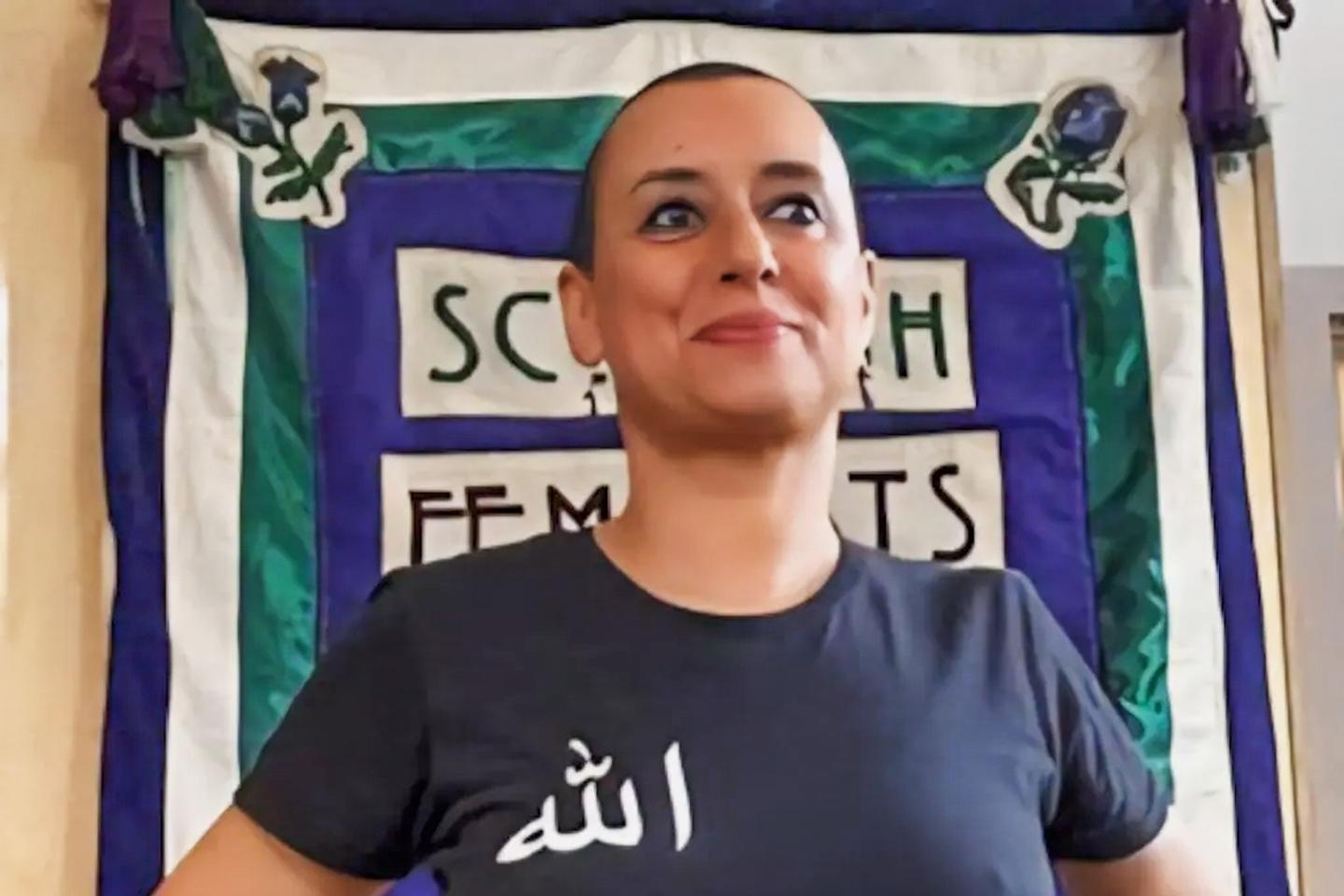
Ibtissame in Moroccab court after wearing a controversial T-Shirt during a feminist. Image: Le Monde.
(The Post News) – Moroccan authorities sentenced prominent feminist and LGBTQ+ rights campaigner Ibtissame Lachgar to 30 months in prison and fined her 50,000 dirhams ($5,500) after convicting her of insulting Islam. The verdict has enraged human rights activists and triggered controversy about freedom of expression in Morocco.
Moroccan authorities sentenced prominent feminist and LGBTQ+ rights campaigner Ibtissame Lachgar to 30 months in prison and fined her 50,000 dirhams ($5,500) after convicting her of insulting Islam. The verdict has enraged human rights activists and triggered controversy about freedom of expression in Morocco.
Lachgar, 50, a co-founder of the Alternative Movement for Individual Liberties (MALI), posted a photo online wearing a T-shirt bearing the Arabic word “Allah” followed by the words “is lesbian.” Moroccan prosecutors charged her under Article 267-5 of the Penal Code, which sanctions public offenses against Islam with up to five years in prison if committed electronically.
The activist has a long history of battling Morocco’s conservative traditions. She has fought for sex outside marriage to be legalized, campaigned for LGBTQ+ rights, and organized high-profile protests, including a public “kiss-in” in front of Parliament in 2013.
Lachgar Defends Her Intentions
During her court appearance in Rabat, Lachgar explained to the judge that the slogan on her shirt was a feminist statement and not an insult to religion. “The slogan condemns sexist ideologies and violence against women,” she explained. “It has nothing to do with the Islamic faith.”
Despite her defense, the court found her guilty of publicly insulting Islam, a ruling Lachgar’s lawyers described as unconstitutional. Defense lawyer Mohamed Khattab announced that they would appeal the ruling immediately. Another attorney, Naima El Guellaf, commented, “As a Muslim, I don’t feel offended. This was obviously a political expression, not blasphemy.”
Lachgar, imprisoned in El Arjat prison close to Rabat since August 12, is facing serious health issues. Her lawyers affirmed that she has cancer and was supposed to have urgent surgery on her left arm in September. Doctors alerted them that delaying the operation would lead to amputation.
Her lawyers are now preparing a petition for alternative sentencing based on her health. “There’s a new law on alternative sentences, and we will pursue every legal path available to us,” Khattab said.
Members of her family and supporters wept outside the courtroom as the sentence was read. Various human rights organizations were quick to condemn the ruling.
Moroccan Association for Human Rights (AMDH) president Hakim Sikouk said the sentencing was “shocking” and “a direct attack on freedom of expression.” “Ibtissame Lachgar was prosecuted for having a personal opinion. There was no call to violence, no hate speech. This is censorship under the guise of justice,” he said.
Public Reaction and Online Backlash
The photo of Lachgar wearing the provocative top sparked an outraged response online. While some defended her message, others called for her to be arrested and threatened to rape and stone her. Lachgar had previously posted the same picture in May without suffering any legal consequences.
Despite the controversy, her supporters still vocalize their opinions. “This ruling highlights growing limitations on personal freedoms in Morocco,” a MALI spokesperson said. “Freedom of expression should not come at the cost of imprisonment.”
The prosecution of Ibtissame Lachgar, a prominent Moroccan resident who has famously challenged Morocco’s religious and patriarchal orders, underscores ongoing tensions in Morocco between religious values and individual rights. Her prosecution has already begun to mobilize international human rights groups, which are calling for her release and urging legislative reform of laws criminalizing expression in the interest of religious protection.
Pending appeal, Lachgar’s attorneys are hopeful of overturning the ruling and seeing her released before her health deteriorates further. Meanwhile, the case continues to be a hot topic across Morocco and beyond, raising urgent questions about the future of freedom of expression in the region.
About the Author