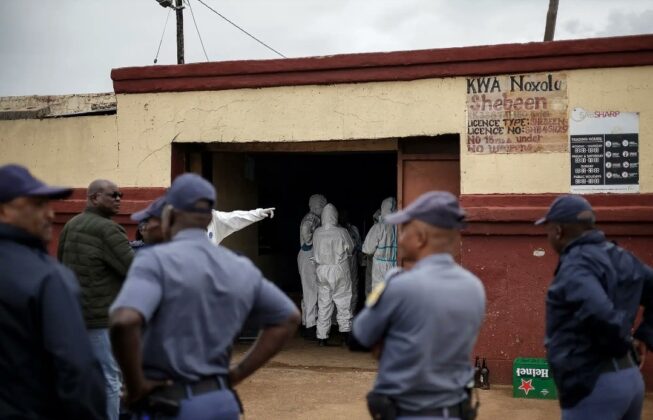
Illegal dwellings in Gauteng face demolition as government steps up efforts to stop unlawful settlements and protect public resources. Image credit: Itumeleng English/Independent Newspapers
(ThePostNews) – Illegal dwellings continue to pose a major challenge in Gauteng, prompting the provincial government to take decisive action. The administration, led by Premier Panyaza Lesufi, is gearing up to remove these unauthorized settlements, especially those predominantly inhabited by undocumented foreigners. This step comes amid growing concerns about uncontrolled expansion and unlawful land occupation.
Illegal dwellings: A growing crisis demanding urgent action
During a recent briefing in Johannesburg, following a high-level provincial meeting, Lesufi emphasized the urgency of addressing the rapid proliferation of illegal dwellings. He highlighted that over 400 new informal settlements have appeared recently, creating significant pressure on public services and infrastructure. Notably, the government intends to carry out demolition operations at 2 a.m., aiming to avoid confrontation and ensure effectiveness.
Although the exact timing of the demolition has not been specified, the Premier confirmed that early morning raids would become a key strategy. Furthermore, cooperation between the provincial government and local municipalities will be intensified to prevent further illegal land invasions. This collaborative approach aims to stop the growth of illegal dwellings while promoting lawful housing development.
An alarming pattern has emerged, particularly visible in areas like Ennerdale, where land is quickly seized by groups who then encourage others to settle without authorization. In these scenarios, illegal dwellings are established within days, often leading to demands for government services such as water, sanitation, and schooling. Lesufi expressed frustration over these recurring cycles, noting that government resources are stretched thin as a result.
Moreover, the Premier accused organized groups of exploiting the situation by charging fees to newcomers who settle illegally. These syndicates profit while burdening municipal services and the community. Despite this, the government plans to engage with affected residents to encourage voluntary relocation before enforcement actions begin. However, if cooperation fails, demolition will proceed.
It is important to note that most newly formed illegal dwellings are occupied by undocumented foreign nationals. This fact complicates the issue, as those individuals often expect access to essential services without legal entitlement. Consequently, the government insists that such unlawful settlements cannot be allowed to persist.
Illegal dwellings: Coordinated demolition efforts to restore order
The demolition operations will involve a coordinated effort between municipalities such as Johannesburg, Ekurhuleni, Soweto, and Sedibeng, along with law enforcement agencies. This united front intends to tackle illegal dwellings systematically, targeting one settlement at a time.
Lesufi underscored that illegal dwellings threaten Gauteng’s development goals. Allowing unregulated construction to continue undermines planning processes and encourages further unlawful land grabs. Therefore, the government is determined to uphold the rule of law and ensure orderly growth in the province.
Nevertheless, the Premier’s tough stance has attracted criticism from political analysts. Some suggest that the demolition campaign is a strategic move aimed at securing voter support ahead of the 2026 local elections. This viewpoint links the government’s actions to rising public concern over undocumented migrants and the influence of groups like Operation Dudula, known for their strict opposition to illegal immigration.
Critics also argue that while the government avoids harsh anti-immigrant rhetoric, it is using official resources to pursue similar objectives indirectly. However, legal experts caution that evictions must comply with laws that require alternative accommodation for those displaced, and court challenges may arise.
Additionally, officials from other political parties have echoed the concerns regarding illegal dwellings. For example, Johannesburg’s Human Settlements MMC has stated that taxpayer funds should not be used to service informal settlements mainly occupied by foreigners. This position reflects growing frustrations over resource allocation and service delivery.
Corruption allegations have further complicated the situation, with claims that some officials and law enforcement personnel profit from renting out structures within illegal dwellings. Such activities exacerbate the challenges facing the province.
Gauteng continues to grapple with severe housing shortages and infrastructure problems, including water scarcity, electricity outages, poor road conditions, and rising crime. Addressing illegal dwellings is seen as a critical step toward improving living conditions and stabilizing communities.
In conclusion, the government’s plan to demolish illegal dwellings is part of a broader effort to restore order, ensure sustainable development, and protect public resources. Through coordinated action and firm enforcement, Gauteng aims to curb unlawful settlements and promote legitimate housing solutions.
Breakthrough
Please share your thoughts contact Thembeka via email: Journalist-thembeka@thepostnews.net
About the Author