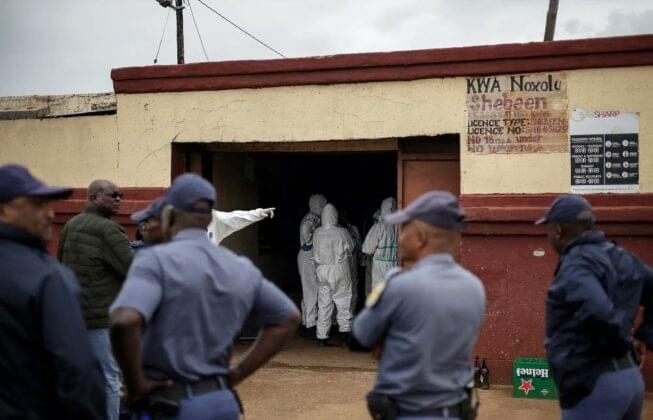
Former SA Tourism board members file legal papers to challenge Minister Patricia de Lille’s decision to dissolve the board. Image: SowetanLIVE.
(The Post News)– The SA Tourism Board legal challenge has begun in earnest as former board members move to contest Minister Patricia de Lille’s decision to dissolve the board, citing unlawful interference and misinterpretation of the Tourism Act. The legal action comes after a heated session in Parliament where the minister was grilled over her decision.
Tourism Month in South Africa has opened amid controversy. The former board members argue that Minister Patricia de Lille acted unlawfully by dissolving the board on the grounds of an alleged meeting that took place on 1 August. According to Lawson Naidoo, a former board member, “There was no board meeting held on the 1st of August. Any decisions we took were via a round-robin resolution circulated electronically.”
Former SA Tourism Board Members Fight Back in Court
The dissolved board’s members are confident in their legal position, arguing that the minister’s decision to dissolve the board was “incorrect, unlawful, and invalid.” The legal action, filed in the High Court just hours after the parliamentary proceedings, aims to challenge the minister’s decision and the appointment of an interim board.
Naidoo elaborated: “The minister’s decision is premised only on the fact that there was an alleged meeting on the 1st of August. That is not true. We have now instituted legal proceedings to challenge her action. We stand on solid legal ground.”
SA Parliamentary Proceedings Reveal Confusion
During the session before the Portfolio Committee on Tourism, it became evident that Minister de Lille struggled to provide coherent answers regarding the alleged meeting. Naidoo said, “The minister evaded questions posed to her and did not respond meaningfully to submissions we made. Clearly, she does not have adequate responses to the critical issues raised by us and members of the committee.”
The controversy revolves around the use of a round-robin resolution. The Tourism Act, in Section 20, explicitly allows boards to take resolutions electronically when they cannot meet physically or at the same time. Paragraph 9 of the board charter also provides a framework for such resolutions. “The minister seems confused between a meeting, a special meeting, and a resolution,” Naidoo said.
Accountability and Allegations
The former board members were acting within their mandate when they sought to hold the CEO accountable for alleged violations of the Public Finance Management Act, as found by the Auditor General and confirmed through a forensic investigation. The minister allegedly failed to respond to requests for concurrence in instituting disciplinary action.
Naidoo emphasized, “We provided all documents requested, including a separate legal opinion to satisfy the minister, yet she did not respond. This lack of action has blocked our ability to hold the CEO accountable for serious financial irregularities.”
Impact on SA Tourism Operations
The legal and administrative turmoil has affected South African Tourism’s ability to function effectively. With key positions suspended, including the chief marketing officer, the organization struggles to fulfill its mandate of supporting private sector tourism growth and marketing South Africa internationally.
“This is part of the crisis,” Naidoo said. “The private sector, including the Tourism Business Council and SATSA, has expressed support for the former board members. They trust us to steer SA Tourism towards playing its intended role in job creation and economic growth, especially as we approach the spring and summer tourism season.”
Ministerial Oversight and Alleged Mismanagement
Former board members also highlighted the minister’s failure to appoint a deputy chair since September last year, which hampered governance and decision-making. Naidoo added, “The minister’s excuses about board factions are unfounded. We were united in our actions, and the Portfolio Committee confirmed this yesterday.”
The dispute underscores ongoing challenges within SA Tourism, where ministerial oversight, board governance, and financial accountability intersect. “The minister claimed to be committed to fighting maladministration and corruption,” Naidoo said, “yet she has not acted to address confirmed material irregularities. This is why we have been forced to seek judicial intervention.”
The SA Tourism board legal challenge will now proceed in the High Court, where the former members aim to have the dissolution declared unlawful and to prevent the appointment of an interim board. The case highlights the critical role of governance in South Africa’s tourism sector and the tension between ministerial authority and board independence.
Naidoo concluded, “Tourism is vital for economic growth and job creation. Despite this crisis, we remain committed to ensuring that SA Tourism fulfills its mandate effectively, transparently, and in accordance with the law.”
About the Author