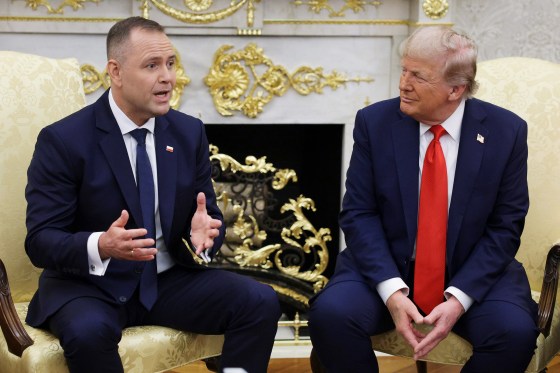
President Donald Trump meets with Polish President Karol Nawrocki, pledging continued U.S. military support. Image: NBC News.
(The Post News) – United States President Donald Trump pledged to send additional U.S. troops to Poland during a joint appearance with Poland’s newly elected President Karol Nawrocki at the White House on Wednesday. The move strengthens ties between two nationalist leaders and sets eyebrows raising in Brussels and Kyiv.
“We’ll put more there if they want,” Trump said in the Oval Office. “We’re with Poland all the way, and we’ll help Poland protect itself.” The statement reassured Polish officials, who have grown increasingly concerned about potential changes to the U.S. military posture in Europe amid the ongoing war in Ukraine. Trump’s comments signal that Poland remains central to Washington’s strategy on NATO’s eastern flank.
United States President Donald Trump pledged to send additional U.S. troops to Poland during a joint appearance with Poland’s newly elected President Karol Nawrocki at the White House on Wednesday. The move strengthens ties between two nationalist leaders and sets eyebrows raising in Brussels and Kyiv.
“We’ll put more there if they want,” Trump said in the Oval Office. “We’re with Poland all the way, and we’ll help Poland protect itself.” The statement reassured Polish officials, who have grown increasingly concerned about potential changes to the U.S. military posture in Europe amid the ongoing war in Ukraine. Trump’s comments signal that Poland remains central to Washington’s strategy on NATO’s eastern flank.
President Nawrocki, inaugurated recently after a surprise victory backed by Poland’s populist right-wing Law and Justice party (PiS), thanked Trump for the commitment and called the meeting a “historic moment” in Polish-American relations.”Those relations to me, to Poland, and to Poles are essential to our sovereignty and security,” Nawrocki said.
A Nationalist Alliance
Nawrocki campaigned under the slogan “Poland First, Poles First,” and modeled much of his political messaging after Trump’s populist style. Trump endorsed Nawrocki before the election, a rare move, and later praised his win as “very impressive.” “I don’t endorse too many people, but I endorsed him, and I was proud of that,” Trump said.
The U.S. president welcomed Nawrocki with a flyby of military aircraft, including a “missing man” formation honoring a Polish pilot killed while practicing for an airshow. The show of force underscored the symbolic and strategic weight of the meeting.
Trump’s Security-Centered Talks
Security was the focus of a lengthy discussion between the two leaders, with Russia’s conflict in Ukraine taking top billing. Trump expressed frustration with stalled diplomacy with Moscow and threatened tougher action if Russian President Vladimir Putin fails to de-escalate. “If we’re not pleased with what’s happening here, you’ll see events,” Trump warned. “Putin knows exactly where I stand.”
While Ukraine has called for stronger Western commitments and NATO membership to push back against Russian aggression, Nawrocki has been more cautious. While he has spoken in favor of Ukrainian independence and provided humanitarian aid, he still resists NATO expansion and has proposed reducing benefits for Ukrainian refugees living in Poland.
The White House visit fueled a long-standing struggle for power between President Nawrocki and Poland’s Prime Minister Donald Tusk, a centrist and former president of the European Council. Nawrocki excluded Tusk’s government from the Washington delegation and took part in a pre-summit call with Trump without even notifying the prime minister.
Tusk, who had previously represented Poland in international talks, was sidelined from discussions and forced to join only preparatory and debriefing calls. In response, the government leaked a memo outlining suggested talking points for Nawrocki’s White House meeting. Presidential aides publicly ridiculed the document, calling it “amateurish.”
The diplomatic snub underscored Nawrocki’s intent to pursue a foreign policy separate from the government’s, further straining internal unity.
NATO Tensions
Poland’s role as a border state within NATO has grown with Russia’s full-scale invasion of Ukraine. With over a million Ukrainian refugees hosted and significant NATO infrastructure within its borders, Warsaw has become a logistical hub for Western military and humanitarian aid. The internal battle for power, however, can undermine Poland’s influence on NATO’s policy towards Russia.
“The success of Nawrocki’s special relationship with the MAGA movement and President Trump would be if the U.S. increased its presence in Poland,” said Polish Foreign Minister Radoslaw Sikorski, who has criticized the president’s unilateral diplomacy.
Meanwhile, Trump’s pledge to potentially deploy additional troops to Poland comes as he is under fire both at home and abroad for recent military actions, including a disputed raid on a Venezuelan vessel in the Caribbean that killed at least 11. Human rights experts have called the operation likely illegal, with Trump saying it was a “strong message” to drug smugglers.
Despite growing concern among European allies about Washington’s reliability, the Trump-Nawrocki meeting sent a clear message: both leaders are going to do their own thing, regardless of multilateral consensus. Trump will sit down with Ukrainian President Volodymyr Zelenskyy in the coming days, though Poland will not be included. Warsaw sidestepped a key meeting between Zelenskyy and other European leaders in the White House, which fueled rumors of discord.
Still, Trump and Nawrocki appear unfazed. Both leaders ended the day projecting strength and solidarity. “Poland is a great ally. We’re going to work closely, and we’re going to protect our interests together,” Trump concluded. As Europe braces for another winter of war, the Trump-Nawrocki partnership may reshape not only Poland’s position in NATO but also the broader Western response to Russia.
About the Author